
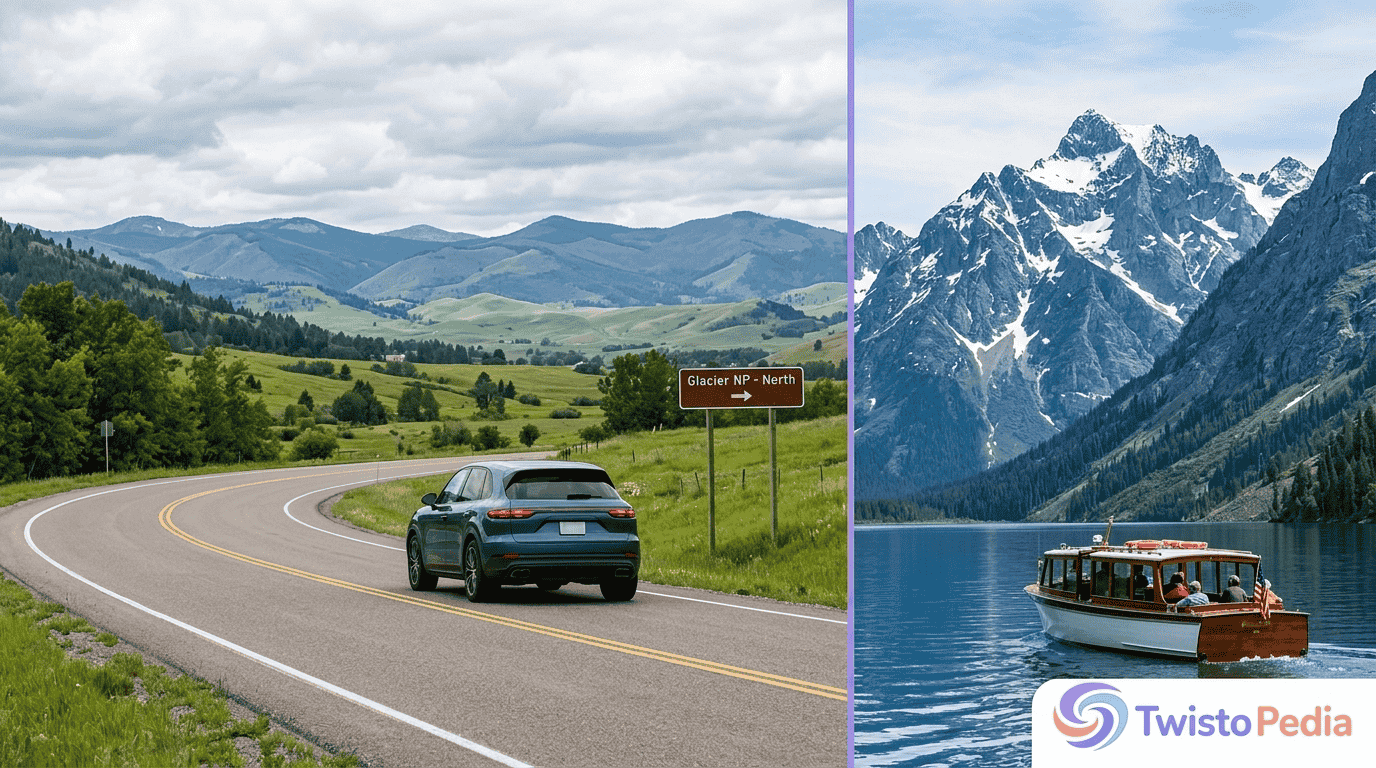
Bozeman to Glacier National Park is a Montana road trip of roughly 315 miles by road, with a typical nonstop driving time of about 5 to 7 hours depending on the route, traffic, weather, and stops. The journey connects Bozeman’s mountain setting with Glacier’s forests, alpine terrain, lakes, and dramatic Rocky Mountain landscapes.
- Bozeman to Glacier National Park
- Bozeman to Glacier National Park Flight
- Bozeman to Glacier National Park Distance
- Train from Bozeman to Glacier National Park
- Bozeman to Glacier National Park Road Trip
- Bozeman to Glacier National Park Bus
- How Far Is Glacier National Park From Bozeman Airport
- Best Way to Get From Bozeman to Glacier National Park
- Scenic Route From Bozeman to Glacier National Park
- Madison Buffalo Jump State Park
- Butte
- Last Chance Ranch
- Helena
- Gates of the Mountains
- Roe River
- Giant Springs State Park
- Great Falls
- Choteau
- Old Trail Museum
- Bozeman Before Starting the Road Trip
- Lewis and Clark Caverns State Park
- Landscapes Along the Drive
- Glacier National Park
- Preparing for the Journey
- Staying Safe and Responsible
- Accommodations
- Glacier Highline Adventure Park
- Missoula Extension
- Environmental Preparation
- Frequently Asked Questions
For travelers with a rental car, the drive is usually the most practical choice because it allows flexibility around scenic stops and overnight stays. The journey can be treated as a direct transfer or expanded into a multi-day itinerary through places such as Three Forks, Butte, Helena, Great Falls, and Choteau.
The route also answers several different travel intents. A flight can reduce the time spent on the road, while bus and train combinations provide an alternative for travelers who prefer not to drive. However, each option changes where the traveler can stop and how easily they can reach attractions outside the main transportation corridors.
Bozeman to Glacier National Park
The most useful way to plan the journey is to separate the transportation decision from the sightseeing plan. Driving provides the greatest control over the itinerary, while flying is more time-efficient when the priority is reaching the Glacier area quickly.
The road journey generally moves through a changing sequence of landscapes rather than remaining visually uniform. Open fields and rolling terrain give way to mountain ranges, river corridors, forests, and the Rocky Mountain Front. That progression is one reason the drive works well as a road trip rather than simply a point-to-point transfer.
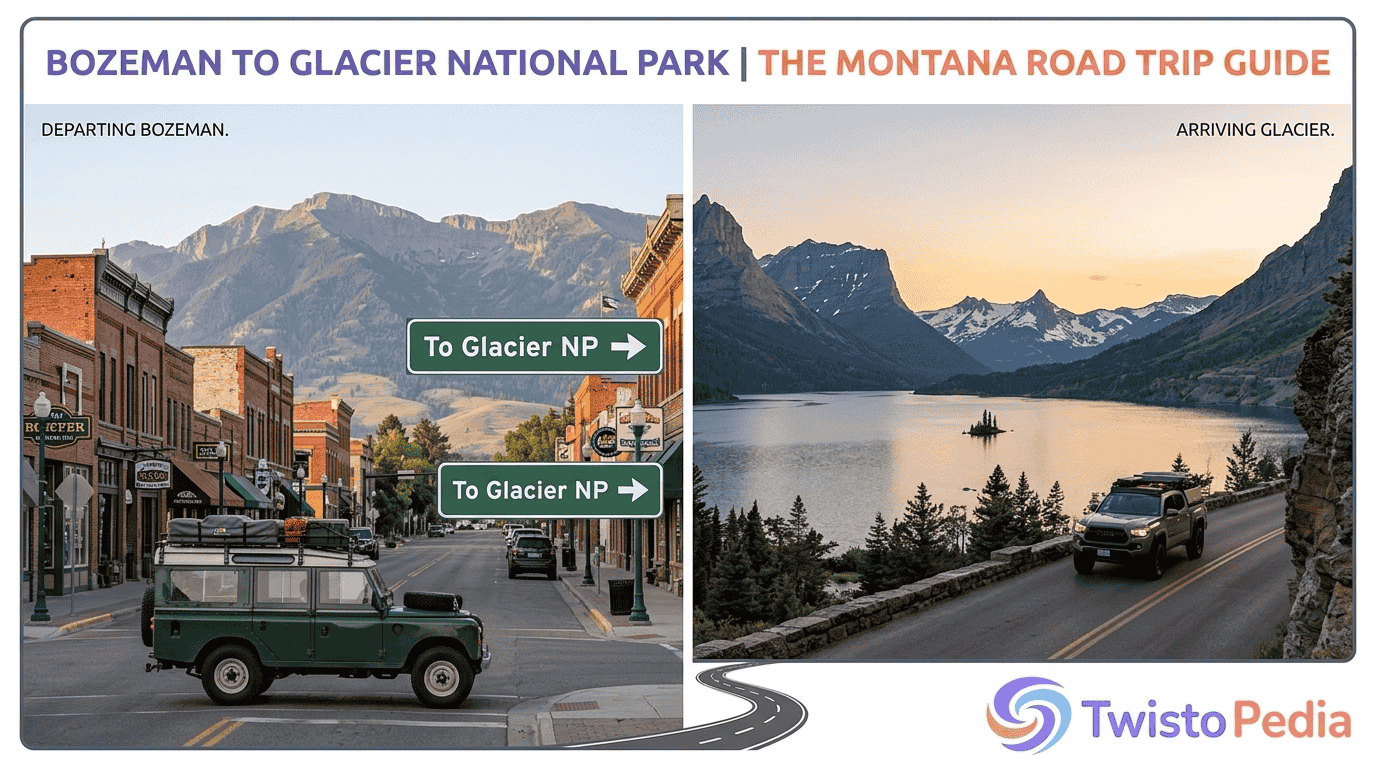
For travelers starting at Bozeman-Yellowstone International Airport, a rental car can also make sense because Glacier National Park has limited parking and seasonal road restrictions once inside the park. The National Park Service advises visitors to monitor current road conditions because closures and access conditions can change quickly.
Bozeman to Glacier National Park Flight
A flight can shorten the long-distance portion of the journey, with Bozeman’s airport and Glacier Park International Airport serving as the relevant aviation points in the supplied travel information. Depending on the itinerary, connections may be required, so travelers should compare the complete journey rather than looking only at airborne time.
Flying is most useful when the primary goal is reaching the Glacier region quickly. It is less convenient for travelers whose itinerary depends on scenic stops between Bozeman and the park.
A flight-based plan also requires attention to the final ground transfer. Arriving near Glacier does not eliminate the need to arrange transportation to a particular entrance, lodging area, trailhead, or visitor center.
Bozeman to Glacier National Park Distance
The supplied travel data places the straight-line distance at about 263 miles and the road distance at approximately 315 miles. A listed driving estimate is around 5 hours 22 minutes, although a realistic road-trip schedule can take longer when meals, fuel, sightseeing, traffic, construction, weather, and scenic stops are included.
The distinction between straight-line and road distance matters. A map may show a shorter geographic separation, but highways must follow the available terrain and road network.
For a road trip, treating the distance as simply a five-hour transfer can lead to an overly compressed itinerary. A traveler who wants to visit Helena, Great Falls, Choteau, or other attractions should allow additional time rather than trying to complete every stop on the same day.
Train from Bozeman to Glacier National Park
A train journey is not as straightforward as driving between the two destinations. The supplied transportation information describes a combined journey involving buses, connections, and Amtrak, with locations such as Boulder, Great Falls, Shelby, and Essex appearing in the route.
This makes rail travel better suited to travelers who value the transportation experience itself or prefer not to drive. It is considerably less direct than taking a rental car.
Montana’s broader rail network includes Amtrak’s Empire Builder, which serves the state’s northern corridor and has several stations near Glacier National Park.
The practical issue is the final connection. A train station is not necessarily beside the trail, lodging property, or park entrance that a visitor wants to reach. Travelers should therefore evaluate the complete door-to-door itinerary, including transfers and local transportation.
Bozeman to Glacier National Park Road Trip
The road trip is the most flexible option because travelers can choose where to stop and how long to stay. A practical route can use I-90, Highway 287, I-15, and Highway 89, connecting Bozeman with several Montana communities before reaching the Glacier region.
Rather than treating the route as one long drive, travelers can divide it according to their interests:
- History: Helena, Lewis and Clark sites, mining heritage, and Native American history.
- Nature: rivers, forests, mountain terrain, state parks, and wildlife areas.
- Family stops: museums, short trails, and accessible attractions.
- Scenic driving: the Rocky Mountain Front, rolling hills, open fields, and mountain views.
The route also connects with broader Montana road-trip corridors. Official state tourism information highlights Highway 89 and the Rocky Mountain Front as routes combining mountain scenery, historic communities, state parks, and outdoor attractions.
Bozeman to Glacier National Park Bus
Bus travel can be considered when driving is not desirable, but it is not as simple as taking one direct bus from Bozeman to Glacier National Park. The supplied itinerary describes multiple connections involving Boulder, Great Falls, Shelby, and other transportation points.
That makes bus travel a planning-heavy option. The traveler must account for connection times, station locations, schedules, luggage, and the final transfer to the desired Glacier destination.
For someone primarily interested in reaching the park efficiently, driving is generally easier to manage. For someone without a vehicle, however, combining bus, train, and local transportation can still provide a workable alternative if the schedules align.
How Far Is Glacier National Park From Bozeman Airport
From the Bozeman airport area, the road journey to Glacier National Park is approximately 315 miles, while the straight-line distance is about 263 miles. A listed driving estimate is approximately 5 hours 22 minutes, but the actual road-trip duration can be longer.
The airport is useful as a starting point because travelers can pick up a rental car and immediately begin the route. However, the final destination inside Glacier matters: the park covers a large area, and reaching a western entrance, eastern entrance, Logan Pass, Many Glacier, or another location involves different driving conditions.
This is an important planning distinction because “Glacier National Park” is not a single roadside destination. The final park location should be entered into navigation before calculating fuel, lodging, and arrival time.
Best Way to Get From Bozeman to Glacier National Park
For most road-trip travelers, driving is the most flexible option because it combines transportation with sightseeing. Flying becomes more attractive when saving travel time is the priority, while bus-and-train combinations can work for travelers who do not want to drive.
| Travel Method | Best For | Main Consideration |
| Driving | Scenic road trip | Longer travel time with stops |
| Flying | Saving road time | Final ground transportation still required |
| Bus | Travelers without a car | Multiple connections may be necessary |
| Train + Bus | Travelers who prefer rail travel | Less direct and longer overall journey |
The best choice therefore depends less on one universal “fastest” answer and more on whether the traveler values flexibility, sightseeing, simplicity, or reduced driving.
Driving
Driving gives travelers control over the route, departure time, stops, meals, overnight stays, and scenic detours. The approximately 315-mile road distance can be covered in a day, but a more enjoyable itinerary leaves room for attractions along the way.
A rental car is particularly useful because some of the most interesting locations are not positioned directly beside major transportation hubs. Travelers can also respond more easily to changing weather or road conditions.
Before entering Glacier, the vehicle itself should be checked carefully. Fueling opportunities inside the park are limited, and the National Park Service specifically warns that there are no fueling stations within Glacier’s boundaries.
Flying
Flying is useful when the traveler wants to reduce the long-distance road portion of the journey. The supplied information identifies Bozeman and Glacier-area airports as the primary aviation points, with possible connections through major hubs.
However, the airport-to-park transfer should be considered part of the flight itinerary. A lower airfare is not necessarily the better option if it creates difficult connections or requires expensive local transportation afterward.
For travelers planning several scenic stops, driving remains more practical because the attractions are spread across Montana rather than concentrated at one airport.
Bus and Train
Bus and train travel can reduce the need to drive, but the journey involves more coordination. The supplied transportation data includes bus connections and Amtrak as components of longer itineraries.
Montana’s rail network is particularly useful along the northern part of the state, where the Empire Builder provides access to stations near Glacier.
The main trade-off is flexibility. A private vehicle can stop whenever conditions or interests change, while a scheduled bus or train requires travelers to work around fixed departure times.
Scenic Route From Bozeman to Glacier National Park
A scenic road-trip route can connect Bozeman, Three Forks, Butte, Helena, Great Falls, Choteau, and the Glacier region through a combination of I-90, Highway 287, I-15, and Highway 89.
The scenery changes gradually. The route begins with open skies, fields, and rolling terrain before reaching more pronounced mountain landscapes. Farther north, the Rocky Mountain Front becomes a stronger visual feature, with forests, rivers, and larger mountain views appearing along the journey.
The route can also be reversed or adapted depending on the final destination. Official Montana tourism routes show that Highway 89 and the Rocky Mountain Front can form part of longer multi-day itineraries connecting Glacier with other parts of the state.
Madison Buffalo Jump State Park
Madison Buffalo Jump State Park near Three Forks provides a historical and outdoor stop early in the journey. Short trails and the surrounding landscape give travelers an opportunity to break up the drive while learning about Native American history.
Its location makes it useful for travelers who want the first part of the road trip to include more than highway miles. The Missouri River and the Lewis and Clark expedition also provide historical context for the wider region.
Butte
Butte adds a strong mining-history element to the route. Its historic Uptown district contains preserved architecture, while mining attractions provide context for Montana’s industrial past.
A traveler interested in history can use Butte as more than a meal stop. The city creates a useful contrast with the natural scenery encountered later in the journey.
Last Chance Ranch
Last Chance Ranch provides an option for travelers looking for an overnight stay or meal around the Helena portion of the journey. A wagon ride and dinner experience can turn a transportation break into part of the itinerary.
This type of stop can be useful when a same-day drive would otherwise leave too little time for sightseeing.
Helena
Helena combines Montana’s capital-city history with a compact sightseeing opportunity. Historic downtown areas, the Montana State Capitol, gold-rush history, and the Great Northern Carousel give travelers several different experiences without requiring a major detour.
For a road trip, Helena is also a practical point to divide the journey because it sits along the broader northbound route toward Great Falls.
Gates of the Mountains
Gates of the Mountains Wilderness adds a river-based experience to a drive otherwise dominated by highways and mountain scenery. Boat tours can provide views of dramatic cliffs and wildlife while connecting the area to the history of the Lewis and Clark expedition.
Because this is an optional excursion rather than a quick roadside attraction, travelers should check the operating schedule before building it into a tightly timed itinerary.
Roe River
The Roe River provides a short natural stop near Great Falls. Its small scale makes it suitable for travelers who want a quick break rather than another lengthy attraction.
The river can be combined with Giant Springs State Park, creating a more complete nature stop before continuing north.
Giant Springs State Park
Giant Springs State Park is a useful place to combine food, walking, freshwater scenery, and a short break from driving. The park’s spring and trout-related features add a different type of landscape to the road trip.
Its proximity to Great Falls also makes it convenient for travelers who want to combine several attractions in the same area rather than adding repeated detours.
Great Falls
Great Falls is one of the more substantial stops on the route. In addition to natural attractions, the Lewis and Clark Interpretive Center provides historical context about the expedition and its journey through the region.
Travelers who prefer a balance of history and outdoor scenery can use Great Falls as an overnight stop or a longer midday break.
Choteau
Choteau is a smaller community that works well as a quieter stop before the final approach to Glacier. Main Street and local attractions provide a change from larger cities such as Helena and Great Falls.
Its position near the Rocky Mountain Front also makes the landscape increasingly relevant to the final Glacier portion of the journey.
Old Trail Museum
Old Trail Museum provides a family-friendly stop focused on regional history, dinosaur fossils, and Native American artifacts.
For families, a museum stop can break up several hours of driving without requiring a long hike. The surrounding Choteau area also provides opportunities for a short meal or refreshment break before continuing toward Glacier.
Bozeman Before Starting the Road Trip
Bozeman works well as more than an airport departure point. Travelers with extra time can explore Main Street, local shops and restaurants, the Museum of the Rockies, Gallatin Canyon, or Bridger Bowl Ski Area depending on the season.
The best choice depends on the departure schedule. Someone leaving early for Glacier may prefer to keep the previous evening relaxed, while a traveler with an additional day can use Bozeman as the first destination in the itinerary rather than simply the starting point.
Lewis and Clark Caverns State Park
Lewis and Clark Caverns State Park provides a geological detour for travelers who want to add underground exploration to the road trip.
The caverns create a useful contrast with Montana’s open landscapes and mountain scenery. Because an underground attraction requires more time than a quick roadside photo stop, travelers should account for the activity duration before setting a strict arrival time at the next destination.
Landscapes Along the Drive
The landscape changes significantly between Bozeman and Glacier. Open skies, wheat fields, plains, and rolling hills dominate portions of the earlier journey, while mountain ranges and the Rocky Mountain Front become increasingly prominent farther north.
River corridors and tree-covered terrain add another layer to the route. By the time the journey approaches Glacier, forests and larger mountain formations become central to the scenery.
This gradual transition is one of the strongest reasons to make the journey a road trip rather than treating it only as transportation. Montana’s official tourism material similarly emphasizes routes where plains meet mountain landscapes and where historical communities sit between major natural areas.
Glacier National Park
Glacier National Park changes the scale of the journey. The park contains alpine meadows, forests, lakes, glaciers, and mountain landscapes, with the 50-mile Going-to-the-Sun Road crossing the park from west to east. The road reaches Logan Pass at 6,646 feet and provides access to some of the park’s most recognizable scenery.
The park is not simply one attraction at the end of the highway. Travelers need to decide which entrance, road, trail, lake, or visitor area fits their itinerary.
Popular areas mentioned in the supplied database include Lake McDonald, Logan Pass, Trail of the Cedars, and Grinnell Glacier. Wildlife such as mountain goats, grizzly bears, bald eagles, elk, and deer can also become part of the experience.
Going-to-the-Sun Road
Going-to-the-Sun Road is the central scenic drive through Glacier National Park. It stretches approximately 50 miles and crosses the Continental Divide at Logan Pass.
For 2026, travelers should pay particular attention to current access rules. Vehicle reservations are not required anywhere in Glacier National Park during 2026, but Logan Pass introduced a ticketed shuttle system and three-hour timed parking during the summer season.
As of September 8, 2026, the National Park Service announced that the Logan Pass shuttle and three-hour timed parking had ended for the season. Parking at Logan Pass returned to first-come, first-served availability until the alpine section of Going-to-the-Sun Road closes for winter.
Road conditions remain seasonal. The alpine section normally opens later than lower portions of the road and can close because of winter weather. Travelers should therefore check the official road-status information immediately before departure rather than relying on an old itinerary.
Hiking in Glacier National Park
Hiking ranges from relatively accessible forest experiences to demanding alpine routes. Trail of the Cedars offers a shorter nature-focused experience, while routes toward Grinnell Glacier require considerably more time and physical preparation.
A road-trip itinerary should not assume that every hike can be added between driving stops. Trail distance, elevation, weather, parking, daylight, and current trail status can substantially change the amount of time required.
The National Park Service also advises visitors to check trail conditions because snow and other hazards can affect alpine routes even after the main road has opened.
Wildlife
Glacier provides habitat for wildlife including grizzly bears, mountain goats, bald eagles, elk, and deer. Wildlife viewing should always remain secondary to safe driving and responsible park behavior.
Food waste is particularly important around roadways. The National Park Service warns visitors not to throw food waste from vehicles because it can attract wildlife and increase the risk of wildlife collisions.
Travelers should also remain on marked trails, maintain appropriate distance from animals, and follow current park instructions when wildlife is present.
Preparing for the Journey
Preparation is more important for this road trip than simply entering the destination into GPS. Montana weather can change quickly, while mountain roads and park access can have seasonal restrictions.
A practical vehicle checklist should include:
- Tires and spare tire
- Brakes
- Oil and fluids
- Lights
- Emergency supplies
- Navigation
- Food and water
- Reliable communication
- Road maps as a backup
Layers are useful because temperatures can change significantly between lower elevations and alpine areas. A waterproof jacket, fleece, and sturdy footwear are sensible additions even when conditions appear comfortable at the beginning of the day.
Travelers should also download or save important information before entering areas with limited cell service. The National Park Service specifically recommends staying informed about current road conditions and notes that parking can fill early during busy periods.
Staying Safe and Responsible
Safety on the Bozeman-to-Glacier journey depends on both road awareness and outdoor preparation. Sudden weather changes, wildlife, mountain terrain, limited parking, and seasonal road conditions can all affect the itinerary.
Inside Glacier, visitors should park only in designated spaces, avoid stopping in unsafe roadway locations, and follow posted instructions. The park has warned that congestion can temporarily affect access to busy areas.
Bear country also requires responsible behavior. Food should be stored and discarded appropriately, and travelers should never approach wildlife simply to obtain a photograph.
Leave No Trace principles are equally relevant. Reusable bottles and containers can reduce waste, while staying on marked trails helps protect vegetation and fragile natural areas.
Accommodations
Accommodation planning depends heavily on whether the journey is completed in one day or divided into multiple stops. Overnight options can be considered around Bozeman, Helena, Great Falls, Choteau, and the Glacier area.
A one-night road-trip plan can use a central Montana community as a midpoint, while a longer itinerary allows travelers to stay closer to the park before beginning a full day of hiking.
Travelers should distinguish between staying near Glacier and staying inside the park. The location of the accommodation can significantly affect morning driving time, parking strategy, and access to trailheads.
Glacier Highline Adventure Park
An aerial adventure park can provide an additional recreational option for travelers who want activities beyond sightseeing. High ropes, climbing, zipline, and inflatable water-slide activities can work particularly well for families or groups looking for active entertainment.
Because these activities operate separately from the national park experience, travelers should verify operating schedules and allow enough time before continuing the road trip.
Missoula Extension
Travelers with additional time can extend the Montana itinerary toward Missoula before continuing toward Glacier. A one- or two-day extension changes the journey from a direct transfer into a broader Montana road trip.
Missoula can also provide another transportation option for travelers arranging flights at the end of the trip. The practical advantage is flexibility, although adding another city increases total driving and requires a separate itinerary.
Environmental Preparation
Environmental preparation should be part of the road-trip plan rather than an afterthought. Reusable bottles and containers reduce disposable waste, while careful food storage helps prevent wildlife encounters around roads and campsites.
Leave No Trace principles are especially important in Glacier because high visitor numbers can place pressure on trails, parking areas, vegetation, and wildlife habitat.
The most useful approach is simple: carry waste out when appropriate, use designated facilities, stay on established trails, follow park restrictions, and leave natural features undisturbed. Glacier’s current visitor guidance emphasizes responsible parking and wildlife-safe waste disposal as part of protecting the park.
Frequently Asked Questions
Is The Drive From Bozeman To Glacier National Park Worth It?
Yes, the drive from Bozeman to Glacier National Park is worth it for travelers with at least 4 to 5 days for the overall trip. The scenic journey across Montana turns the drive into part of the vacation rather than simply transportation. Depending on the route, stops, traffic, and road conditions, the driving time can take several hours. Travelers can enjoy changing landscapes, mountain scenery, valleys, and scenic roads along the way. For a well-planned road trip, the journey adds adventure and gives visitors more opportunities to experience Montana before reaching the national park.
Which Is Better To Visit, Yellowstone Or Glacier National Park?
Neither park is objectively better. Yellowstone is better suited to travelers interested in geothermal wonders, roadside wildlife viewing, and unusual natural features. Glacier National Park is a stronger choice for visitors seeking dramatic alpine scenery, mountain landscapes, and serious hiking. For travelers planning a Bozeman to Glacier National Park road trip, the decision depends on the desired experience. Yellowstone favors sightseeing and wildlife, while Glacier offers more opportunities for active outdoor exploration, scenic trails, and dramatic mountain views.
What Town Is Best To Stay In For Glacier National Park?
For a Bozeman to Glacier National Park road trip, Whitefish and Columbia Falls are strong places to stay when exploring the park’s west side. Whitefish offers a wider choice of lodging, dining, restaurants, and amenities, while Columbia Falls provides convenient access and a practical location near the western entrance. Travelers can choose between hotels, other accommodation options, and local services based on budget and sightseeing plans. Staying in either town also reduces unnecessary driving, giving visitors more time for Glacier’s trails, scenery, and nearby attractions.
Other Post
How I Travel to Epic Adventures Beyond the Ordinary: My Guide
The Great Pyramid Of Cholula Explained: History, Builders, Secrets, And Surprising Facts
Our Guide To Places To Visit In Rhode Island: From Newport To Block Island