
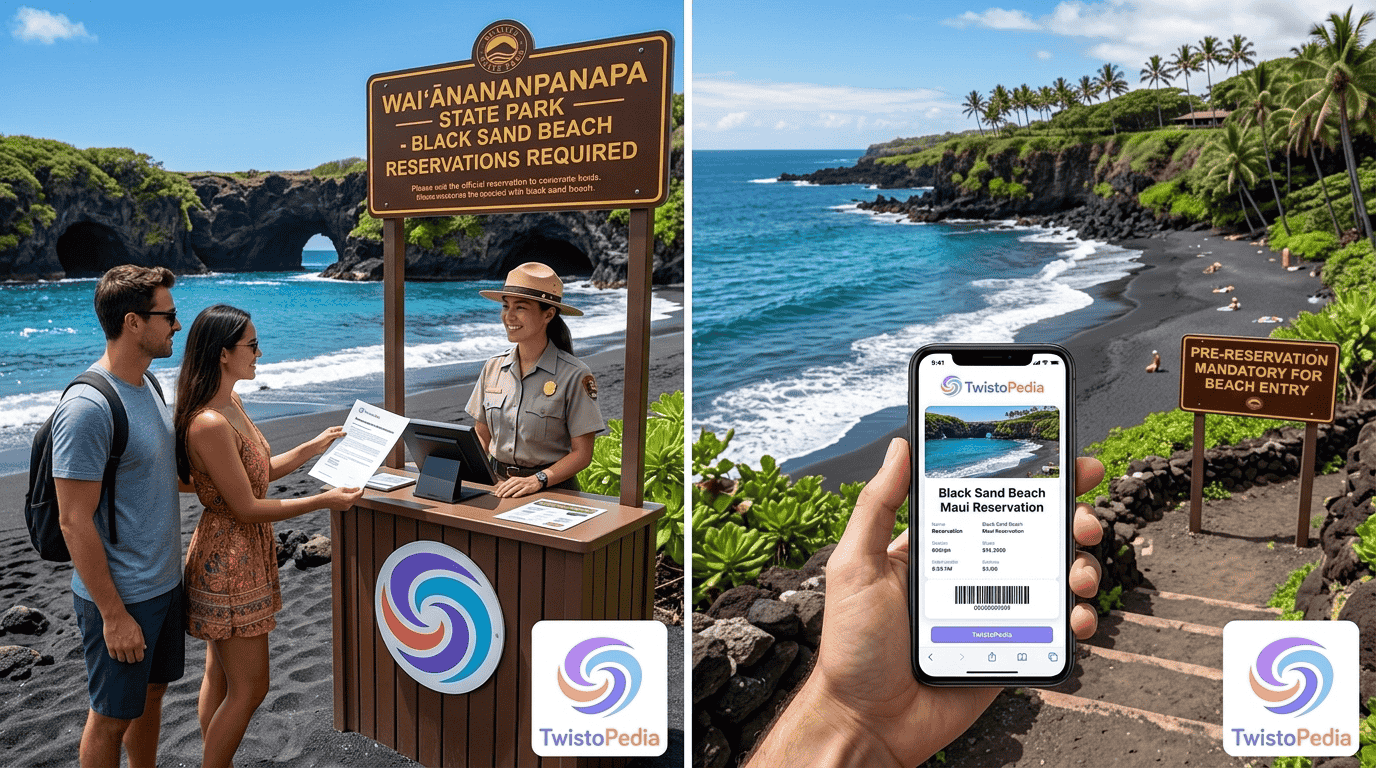
Black Sand Beach Maui reservation is required for non-Hawaiʻi residents visiting Waiʻānapanapa State Park, with online entry and parking reservations available up to 30 days ahead. The system uses timed reservations to manage visitation and protect the volcanic coastal environment.
- Black Sand Beach Maui Reservation
- Maui Black Sand Beach Reservation Online
- Black Sand Beach Maui Tickets
- Do You Need A Reservation For Black Sand Beach Maui?
- How Far In Advance Can You Make A Reservation?
- Black Sand Beach Maui Reservation Time Slots
- How To Make A Black Sand Beach Maui Reservation
- What Time Should You Book?
- How Long Can You Stay At Black Sand Beach?
- Black Sand Beach Maui Location
- Getting To Black Sand Beach Maui
- Black Sand Beach Maui Park Hours
- What Is Black Sand Beach Maui Known For?
- Things To Do At Black Sand Beach Maui
- Natural And Cultural Attractions At Waiʻānapanapa State Park
- Hawaiian Legends And Historical Significance
- What To Bring To Black Sand Beach Maui
- Black Sand Beach Maui Safety
- Conservation And Park Rules
- Amenities At Waiʻānapanapa State Park
- Black Sand Beach Maui Reservation FAQs
- Do I Need A Reservation?
- Can I Get A Same-Day Reservation?
- How Early Can I Book?
- What Are The Reservation Windows?
- Do I Need A Parking Reservation?
- Can Hawaiʻi Residents Visit Without A Reservation?
- Can I Park Outside The Park?
- Are There Lifeguards?
- Can I Swim Or Snorkel?
- What Are The Current Fees?
- Current Conditions
Black Sand Beach Maui Reservation
A black sand beach Maui reservation is the key requirement for non-residents planning a visit to Paʻiloa Beach at Waiʻānapanapa State Park. Visitors arriving by car need an entry reservation for each applicable person as well as a parking reservation; people arriving on foot, by bicycle, or through drop-off transportation only need the required entry tickets.
The reservation system is more than a ticketing step. It controls how many visitors enter during particular periods, helps distribute vehicles throughout the day, and reduces pressure on a remote coastal park where parking and surrounding infrastructure are limited. Hawaiʻi residents with valid state-issued identification are exempt from the reservation and fee requirements.
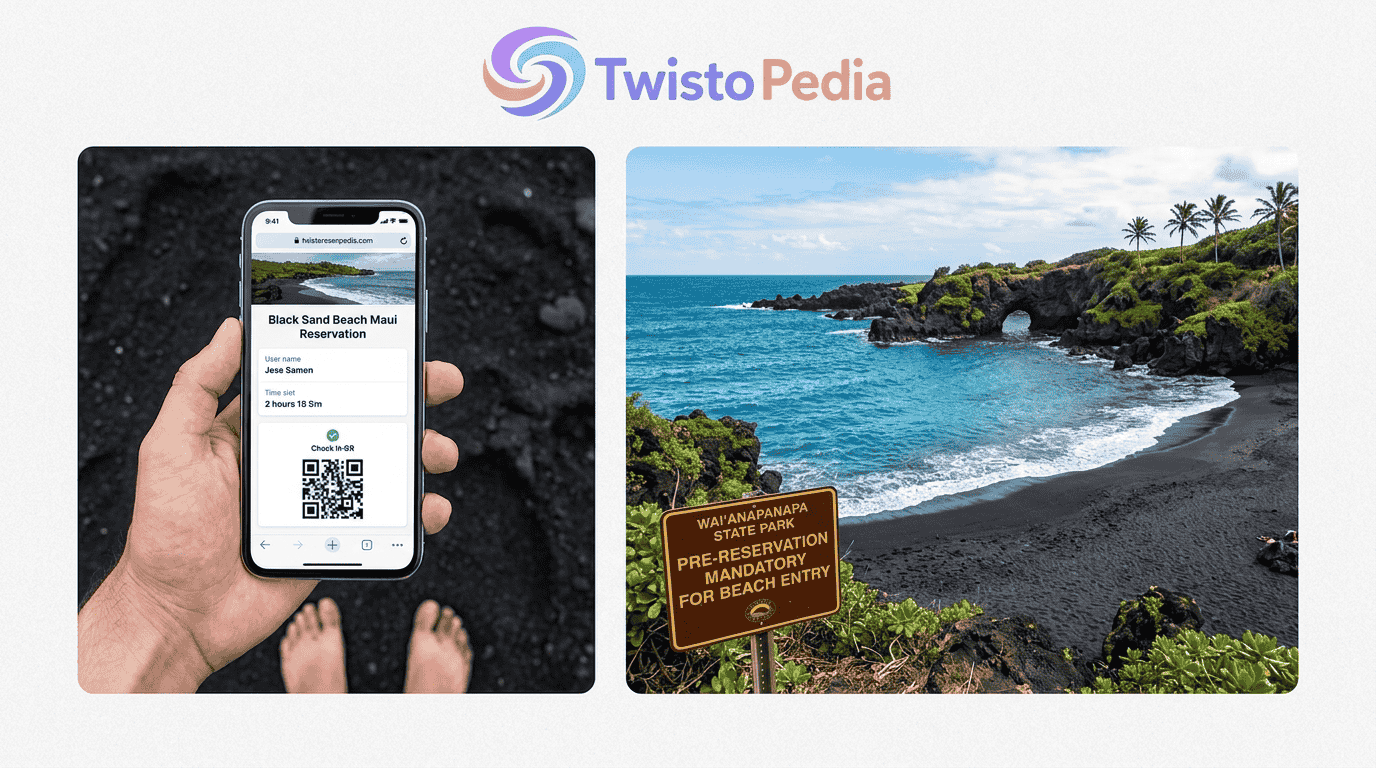
The park sits along the Road to Hāna near Hāna and combines volcanic black sand, lava formations, sea caves, coastal scenery, native vegetation, historic Hawaiian sites, and hiking opportunities. That combination makes the reservation time important because a visit is usually part of a broader East Maui travel itinerary rather than an isolated beach stop.
Maui Black Sand Beach Reservation Online
The Maui black sand beach reservation online process is handled through the official Waiʻānapanapa State Park reservation system. Visitors select an available date and reservation period, purchase the appropriate entry tickets, and add parking when arriving by vehicle.
Reservations can be made up to 30 days in advance and are released one day at a time at midnight Hawaiʻi Standard Time. Because popular periods can sell out, checking the system when the preferred date becomes available is more practical than waiting until the trip is close.
The online confirmation should be kept accessible during the drive. The Road to Hāna passes through areas where reliable cell service should not be assumed, so having reservation information available before reaching the park can make arrival smoother.
Black Sand Beach Maui Tickets
Black sand beach Maui tickets cover the applicable entry requirement, while parking is a separate reservation when a visitor arrives in a non-commercial vehicle. The current state-park information lists $5 per non-resident person and $10 per non-commercial vehicle, while children age three and under are free.
A parking reservation does not automatically replace individual entry tickets. A visitor driving with passengers should account for the people in the vehicle when purchasing the reservation. The official FAQ specifically states that parking and entry are separate requirements for non-resident visitors.
| Visitor Type | Entry | Parking |
| Hawaiʻi resident with valid state ID | Free | Free |
| Non-resident | $5 per person | $10 per non-commercial vehicle |
| Child age 3 or younger | Free | Vehicle fee still applies where applicable |
Commercial PUC vehicles use different parking rates, so tour operators should use the commercial reservation system rather than ordinary visitor parking.
Do You Need A Reservation For Black Sand Beach Maui?
Yes, non-Hawaiʻi residents need an advance reservation to visit Black Sand Beach at Waiʻānapanapa State Park. Visitors arriving by vehicle need both entry and parking reservations, while those arriving by foot, bicycle, or drop-off need the applicable entry tickets.
The important distinction is that a Hawaiʻi resident’s presence does not make accompanying non-residents exempt. Out-of-state guests still need their own reservations and applicable tickets, even when traveling with a Hawaiʻi resident.
Visitors should also avoid assuming that an entry voucher alone solves the parking problem. There are no suitable parking options outside the park for someone who has only purchased entry, and the access road is privately owned.
How Far In Advance Can You Make A Reservation?
Waiʻānapanapa reservations are available 30 days in advance, with dates released individually at midnight HST. The system can sell out during popular periods, so early booking is particularly useful for travelers with a fixed Road to Hāna itinerary.
There is an important difference between the reservation release window and late arrival. Booking 30 days early secures the date and time period, but the visitor still has to arrive within the permitted arrival window. The official reservation system says visitors should arrive within the first 30 minutes of their reservation period.
Black Sand Beach Maui Reservation Time Slots
Black Sand Beach Maui reservation time slots divide park access into defined periods rather than allowing visitors to arrive at any point during the day. The available periods commonly cover morning, late morning, midday, and afternoon visits.
| Reservation Period | Practical Use |
| 7:00 AM–10:00 AM | Early Road to Hāna itinerary |
| 10:00 AM–12:30 PM | Late-morning visit |
| 12:30 PM–3:00 PM | Midday itinerary |
| 3:00 PM–6:00 PM | Afternoon visit |
The state park opens at 7:00 AM and the final reservation period ends at 6:00 PM. Visitors using the final period must enter no later than 5:30 PM.
The selected time slot also matters for parking. The official reservation system explains that parking must turn over for later visitors, so a parking reservation is not intended to provide unlimited access beyond its period.
How To Make A Black Sand Beach Maui Reservation
The simplest approach is to complete the reservation before beginning the Road to Hāna drive.
Reservation Steps
- Open the official Waiʻānapanapa State Park reservation system.
- Select the intended visit date.
- Choose an available reservation period.
- Purchase entry tickets for the non-resident members of the party.
- Add the appropriate parking reservation if arriving by vehicle.
- Check the reservation details before leaving for Hāna.
- Keep the confirmation accessible during the trip.
The official system states that parking and entry fees must be purchased online and that visitors without the required reservation can be turned away.
A useful planning distinction is transportation. Someone who already has an entry ticket but does not have a parking reservation may still arrive through an eligible method such as walking, cycling, rideshare, taxi, or a Hawaiʻi-resident vehicle arrangement, subject to the applicable rules.
What Time Should You Book?
The best reservation time depends on where a traveler begins the Road to Hāna and how many stops are planned before Waiʻānapanapa. A visitor should allow additional time for waterfalls, viewpoints, traffic, narrow sections of road, and unplanned scenic stops rather than choosing a reservation that leaves only a small travel buffer.
For an early start from Paʻia, a late-morning reservation can fit naturally into a day-trip itinerary. A midday or afternoon period may work better for travelers who intend to make several stops before reaching Waiʻānapanapa.
The practical issue is not simply the clock time. A reservation should be treated as a fixed checkpoint in the day’s route. Arriving late can create a genuine access problem because the official system warns that visitors arriving more than 30 minutes after the start of their reservation period may be denied access or parking.
How Long Can You Stay At Black Sand Beach?
A visitor can stay during the selected reservation period, but the parking reservation does not provide unlimited access beyond that period. The official reservation system requires vehicles to leave by the end of the selected period so the same parking capacity can serve later visitors.
This makes the reservation window useful for planning more than a quick photograph. The area includes the black sand beach, volcanic coastline, trails, sea caves, lava formations, and other natural features, so travelers who want to explore should avoid building an itinerary that allows only a few minutes at the park.
Black Sand Beach Maui Location
Black Sand Beach Maui is located at Paʻiloa Beach, within Waiʻānapanapa State Park near Hāna on Maui. The park occupies a remote volcanic coastline along the Road to Hāna and is known for its black sand beach and coastal landscape.
The location is significant for itinerary planning because the beach is not simply a short urban beach stop. It is part of a larger state park surrounded by volcanic rock, coastal trails, native vegetation, sea cliffs, blowholes, and cultural sites.
Getting To Black Sand Beach Maui
Getting to Black Sand Beach Maui requires traveling along the Road to Hāna toward Waiʻānapanapa State Park. The journey involves winding sections and should be planned with enough time for traffic, weather, scenic stops, and careful driving.
The route itself is part of the experience. Waterfalls, viewpoints, coastal scenery, and other attractions can easily extend the journey, which is why selecting a reservation immediately after an estimated arrival time can be risky.
A useful approach is to work backward from the reservation period rather than simply estimating driving time. The selected window should leave enough margin for unavoidable delays and the possibility of stopping along the way.
Black Sand Beach Maui Park Hours
Waiʻānapanapa State Park is open daily from 7:00 AM to 6:00 PM. The final reservation period is the afternoon period ending at 6:00 PM, and visitors must enter by 5:30 PM for that final period.
The park’s opening hours should not be confused with unlimited visitor access. Non-residents still need the appropriate reservation, and the selected reservation period determines when they should arrive and when their parking access ends.
What Is Black Sand Beach Maui Known For?
Black Sand Beach Maui is known for its volcanic black sand, lava rock coastline, sea caves, blowholes, coastal scenery, and distinctive volcanic landscape. Waiʻānapanapa State Park also contains native hala forest, a heiau, sea stacks, a natural stone arch, and an ancient Hawaiian coastal trail.
The dark beach is part of a broader volcanic environment rather than an isolated patch of unusual sand. Lava formations and coastal erosion shape much of the shoreline, giving the area its rugged appearance.
Things To Do At Black Sand Beach Maui
Visitors can combine sightseeing with hiking and exploration around Waiʻānapanapa State Park. The main attractions include the black sand shoreline, coastal trails, volcanic formations, sea caves, lava tubes, blowholes, sea cliffs, and other natural and cultural features.
Swimming and snorkeling should be treated differently from sightseeing. Ocean conditions can change, and the absence of lifeguards means visitors should not assume that calm-looking water is automatically safe.
Hiking
Hiking is one of the stronger reasons to allow enough time inside Waiʻānapanapa State Park. Coastal trails provide views toward the Pacific, cliffs, lava formations, native vegetation, and shoreline.
The park includes an ancient Hawaiian coastal trail that leads toward Hāna, giving the landscape historical importance as well as recreational value.
Swimming And Snorkeling
Swimming and snorkeling depend heavily on ocean conditions. Strong surf, surge, shorebreak, or poor visibility can make water activities inappropriate, and visitors should follow posted warnings rather than treating snorkeling as a guaranteed part of the visit.
Because the beach has no lifeguard service, sightseeing from the shoreline can be the better choice when conditions are uncertain.
Sea Caves And Lava Tubes
Sea caves and lava tubes reflect the area’s volcanic geology. These formations occur along the lava coastline and contribute to the distinctive appearance of Waiʻānapanapa.
They are best viewed as geological features rather than places that automatically invite exploration. Uneven volcanic rock and changing coastal conditions can make entering confined areas hazardous.
Blowholes
Blowholes occur along the lava coastline where waves force seawater through openings in volcanic rock. Water spray can become more dramatic when surf is elevated.
Visitors should maintain a safe distance from exposed coastal edges because wave energy can be unpredictable.
Camping
Waiʻānapanapa State Park offers camping and cabins by permit, but overnight reservations are separate from ordinary day-use reservations. Current state information lists camping and cabin arrangements separately from the standard parking and entry system.
The current state information lists non-resident camping at $30 per campsite per night and non-resident cabins at $100 per cabin per night.
Natural And Cultural Attractions At Waiʻānapanapa State Park
Waiʻānapanapa combines natural attractions with culturally significant Hawaiian sites. Visitors can encounter sea caves, lava tubes, coastal forests, sea cliffs, stone arches, sea stacks, blowholes, wildlife, and historic structures within the park.
The presence of heiau and burial grounds makes respectful behavior particularly important. A visit is therefore not only a beach outing; it takes place within a landscape carrying environmental and cultural significance.
Hawaiian Legends And Historical Significance
Waiʻānapanapa has a strong connection with Hawaiian history and traditions. Its coastal landscape contains historic Hawaiian sites, including a heiau, while the surrounding area has cultural stories associated with the coastline and caves.
The historical significance changes how the site should be approached. Visitors should avoid treating cultural structures or burial areas as ordinary sightseeing props and should follow signs, trails, and park guidance.
What To Bring To Black Sand Beach Maui
Useful items include water, snacks, mineral sunscreen, sturdy footwear, a camera, picnic supplies, and a reservation confirmation. Water shoes may also be useful around uneven volcanic terrain, although footwear does not eliminate the need to respect ocean warnings.
A practical packing list is:
- Water and snacks
- Sun protection
- Sturdy footwear
- Camera or phone
- Reservation confirmation
- Light hiking gear
- Picnic supplies
- Snorkeling equipment only when conditions and park rules make water activity appropriate
The combination of hot black sand and irregular lava rocks makes suitable footwear more useful than ordinary beach sandals.
Black Sand Beach Maui Safety
Black Sand Beach Maui has no lifeguard service, so visitors should make ocean decisions based on current conditions, posted warnings, surf, surge, shorebreak, and visibility.
The volcanic landscape also introduces hazards that are easy to underestimate. Lava rocks can be uneven and sharp, coastal edges can become slippery, and blowholes can produce powerful water movement.
Wildlife, plants, cultural sites, and natural resources should be left undisturbed. Staying on marked trails is particularly important where coastal terrain or protected areas make informal shortcuts unsafe.
Conservation And Park Rules
Conservation is central to the reservation system because controlled visitation helps reduce crowding and pressure on sensitive park resources. Hawaiʻi State Parks explains that the reservation approach was created partly to manage visitor numbers, traffic, local-community impacts, and sensitive resources.
Visitors can support that goal by:
- Taking trash with them
- Staying on marked trails
- Avoiding damage to vegetation
- Keeping distance from wildlife
- Respecting cultural sites
- Following posted park rules
- Avoiding unauthorized drone launching and landing
- Leaving volcanic and cultural features where they are
The reservation itself is therefore part of the park-management strategy rather than merely an online payment requirement.
Amenities At Waiʻānapanapa State Park
Waiʻānapanapa State Park provides visitor facilities associated with recreation, picnicking, camping, cabins, and hiking. The park’s remote character means visitors should not approach it as though it were a full-service resort area.
Planning water, food, sun protection, footwear, and reservation details before arrival reduces the need to rely on services during the Road to Hāna journey.
Black Sand Beach Maui Reservation FAQs
The most important reservation facts are straightforward: non-residents need advance access arrangements, parking is separate when arriving by vehicle, reservations open 30 days ahead, and the selected time period matters for arrival and departure.
Do I Need A Reservation?
Yes. Non-Hawaiʻi residents need an advance entry reservation, and those driving generally need a parking reservation as well. Hawaiʻi residents with valid state identification are exempt.
Can I Get A Same-Day Reservation?
No. The official FAQ states that same-day reservations cannot be purchased at the park. Reservations must be made in advance.
How Early Can I Book?
Reservations can be made 30 days ahead, with availability released one day at a time at midnight HST.
What Are The Reservation Windows?
The reservation system uses timed periods during the day. The park opens at 7:00 AM, and the final reservation period ends at 6:00 PM. The official FAQ says visitors entering during the final period must arrive no later than 5:30 PM.
Do I Need A Parking Reservation?
A non-resident arriving by vehicle needs a parking reservation in addition to entry tickets. Someone arriving on foot, bicycle, or eligible drop-off transportation does not need vehicle parking.
Can Hawaiʻi Residents Visit Without A Reservation?
Yes. Hawaiʻi residents with valid state-issued identification are exempt from the reservation and fee requirements. Out-of-state guests traveling with them are not exempt.
Can I Park Outside The Park?
Visitors should not plan on roadside parking outside Waiʻānapanapa. The official FAQ warns that there are no parking options outside the park without the appropriate parking voucher and that the access road is privately owned.
Are There Lifeguards?
No lifeguard service should be assumed at Paʻiloa Beach. Visitors should independently evaluate ocean conditions and follow safety warnings before entering the water.
Can I Swim Or Snorkel?
Swimming and snorkeling are condition-dependent activities. Surf, surge, shorebreak, and visibility can change the risk level, so visitors should prioritize current conditions and posted warnings over a predetermined water itinerary.
What Are The Current Fees?
The current state-park listing gives non-resident entry as $5 per person and non-commercial vehicle parking as $10 per vehicle. Children age three and under are free, while Hawaiʻi residents with valid identification are exempt from the standard entry and parking fees.
Current Conditions
Current conditions should be checked before traveling because park access, weather, ocean conditions, construction, and official notices can change. The Hawaiʻi State Parks reservation system is the better source for the actual reservation availability and access rules rather than relying only on older travel articles.
The official state park page currently lists daily hours of 7:00 AM–6:00 PM, reservations as required, and the current non-resident entry and parking fees.
For a trip planned around a specific date, checking the official park notices shortly before departure is especially important because weather or emergency closures can affect reservations and access.
Other Post
Americas Best Value Inn Denham Springs: Rooms, Amenities, Location & Stay Guide
Bozeman to Glacier National Park: The Ultimate Road Trip Itinerary
Best Dolomites Hut to Hut Hiking Routes for Mountain Escape
How I Travel to Epic Adventures Beyond the Ordinary: My Guide
The Great Pyramid Of Cholula Explained: History, Builders, Secrets, And Surprising Facts