
South America can be one of the more affordable continents for independent travel when a traveler combines hostels, local food, long-distance buses, shoulder-season travel, and carefully chosen destinations. Cheap solo travel South America can often work around a backpacker budget of roughly $30–$50 per day in lower-cost destinations, although major attractions, domestic flights, private rooms, and premium tours can push the daily cost considerably higher.
- Cheap Solo Travel South America
- Backpacking South America Solo Female
- South America Travel Route 3 Months
- Travelling South America As A Couple
- Backpacking South America Cost
- Why Is It Affordable To Travel In South America?
- The Currency Rate Exchange
- Countries Still In Development
- Is It Safe To Travel In South America?
- How Much Does It Cost To Travel To South America?
- Cheap Places To Fly In South America
- How Much Local People Earn And What You’ll Spend In South America
- Local People Earnings
- Daily Budget To Travel For Each Country
- 17 Cheap Places To Visit In South America
- 1. Cusco & Machu Picchu, Peru
- 2. La Paz, Rurrenabaque & Uyuni, Bolivia
- 3. Cartagena, Tayrona National Park & Minca, Colombia
- Galapagos: Affordable Cruising For Solo Explorers
- Quito & Cusco: Hostels Designed For Solo Travelers
- Cartagena: Hostels & Walking Tours
- Machu Picchu & The Inca Trail: Group Trek Pricing
- Patagonia: Group Hiking & Shared Lodges
- Easter Island: Group Tours & Cultural Immersion
- Your Solo Travel Savings Strategy
- Getting Around Solo
- Meeting People
- Solo Travel Budget
- Essential Tips
- FAQ
Cheap Solo Travel South America
Cheap solo travel South America works best when the itinerary is built around affordable countries, social hostels, local transportation, and experiences that do not require expensive private guides. Bolivia, Colombia, Peru, Ecuador, and Paraguay provide different combinations of low-cost accommodation, local food, cultural experiences, hiking, wildlife, colonial architecture, beaches, mountains, and jungle.
The biggest budget mistake is often treating the entire continent as one price category. A dorm bed and local meal in Bolivia can have a very different impact on a travel budget than a private room and organized adventure in Patagonia. A practical backpacker can therefore reduce costs by choosing where to spend rather than simply trying to spend less everywhere.
| Travel style | Approximate daily planning range |
| Very budget-focused | $25–$40 |
| Comfortable backpacker | $40–$70 |
| Mid-range solo travel | $60–$100+ |
| Activity-heavy itinerary | $80+ |
These are planning ranges rather than fixed 2026 prices. Accommodation, exchange rates, seasonality, route length, and activities can change the actual total.
Colombia is a useful example of how local infrastructure can support budget travel. Affordable interregional buses, inexpensive hostels, low-cost airlines, local lunch menus, and inexpensive outdoor attractions can keep spending manageable.
Backpacking South America Solo Female
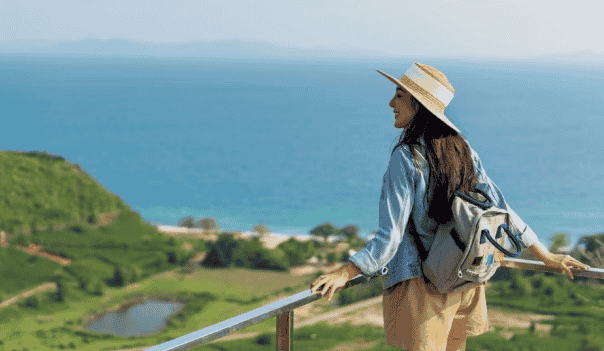
Backpacking South America as a solo female traveler requires the same budget planning as other independent travel, but accommodation location, transportation choices, communication, and nighttime routines deserve additional attention.
Social hostels can reduce both accommodation costs and the isolation that sometimes comes with solo travel. Dormitory rooms, women-only hostel floors, communal areas, walking tours, language exchanges, salsa classes, and organized group tours can create natural opportunities to meet fellow travelers without paying for private experiences.
A practical safety setup includes:
- Choosing established neighborhoods with reliable transport.
- Checking recent local information before arriving in a new city.
- Using registered taxis or reputable ride-sharing services.
- Keeping valuables discreet and limiting the amount of cash carried.
- Avoiding isolated night walks.
- Saving accommodation and emergency contact details offline.
- Keeping a local SIM and WhatsApp available for communication.
- Having travel insurance that covers medical treatment and evacuation.
The word “safe” should not be treated as a country-wide label. Risk can differ sharply between cities and even between neighborhoods. Current advisories, for example, identify specific higher-risk areas in Colombia, Peru, Bolivia, Ecuador, and Brazil rather than treating every part of those countries identically.
Altitude is another consideration. Cusco sits at about 3,400 meters, so travelers heading toward the Sacred Valley, Machu Picchu, or highland trekking routes should allow time for acclimatization rather than scheduling strenuous activities immediately after arrival.
South America Travel Route 3 Months
A three-month South America travel route works better as a slow-travel framework than as a checklist of every major attraction. The continent is too large for a rushed itinerary to remain inexpensive, because frequent flights and constant transfers can consume a substantial part of the budget.
A practical route can connect Colombia, Ecuador, Peru, Bolivia, Chile, Argentina, and Brazil, with additional stops depending on transport prices and personal interests.
One possible structure is:
Month 1 — Colombia and Ecuador: Bogotá, Medellín, Salento, Cartagena, Minca, Quito, Cotopaxi, and Baños.
Month 2 — Peru and Bolivia: Lima, Huacachina, Paracas, Arequipa, Colca Canyon, Cusco, Sacred Valley, Machu Picchu, Lake Titicaca, La Paz, and Uyuni.
Month 3 — Chile, Argentina, and Brazil: Santiago, Atacama Desert, Salta, Jujuy, Buenos Aires, then selected destinations in Brazil such as Rio de Janeiro, Florianópolis, Salvador da Bahia, or Paraty.
Travelers who want a longer and slower route can substitute additional destinations such as Rurrenabaque, Tayrona National Park, Isla del Sol, Torres del Paine, El Calafate, El Chalten, Chapada Diamantina, Ilha Grande, or Paramaribo.
Long-distance buses are particularly useful on a three-month route because an overnight journey can combine transportation with accommodation. Domestic flights become more useful when a bus journey would consume an excessive amount of travel time.
Travelling South America As A Couple
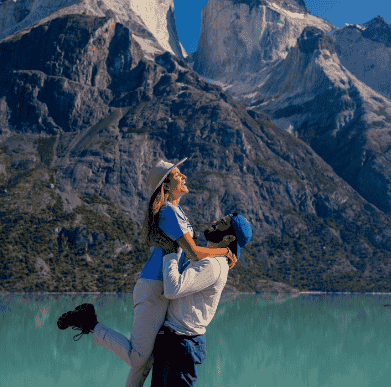
Travelling South America as a couple can reduce certain per-person expenses because a private room, apartment, taxi, or shared guide can be divided between two travelers. It does not automatically make every part of the trip cheaper, however, because couples may choose private accommodation and more expensive activities than solo backpackers.
Hostels with double rooms can provide a middle ground between dormitory accommodation and conventional hotels. Local restaurants, markets, shared tours, overnight buses, and budget hotels can also keep transportation and food costs under control.
For couples, a useful approach is to divide the trip into three spending categories:
| Expense | Budget approach |
| Accommodation | Double room, hostel, budget hotel |
| Transportation | Buses, shared transfers, occasional flights |
| Activities | Group tours, self-guided hikes, shared guides |
The same principle applies to larger-ticket experiences. A four-day trek, shared lodge, or organized wildlife excursion can become more manageable when the accommodation and guide costs are distributed between two travelers.
Backpacking South America Cost
Backpacking South America cost depends more on route design than on one continent-wide daily figure. Bolivia and Paraguay can support very low daily budgets, while Patagonia, the Galápagos, premium cruises, and major trekking experiences can dramatically increase spending.
A useful budget framework is:
| Category | Approximate planning range |
| Dormitory accommodation | $8–$25 |
| Budget meals | $5–$15 |
| Local transportation | $2–$10 |
| Low-cost activities | $3–$20 |
| Long-distance transport | $20–$60+ |
| Domestic flights | $30–$100+ |
A traveler using local restaurants, street food, markets, hostel dorms, buses, and free walking tours can stay toward the lower end. Private rooms, restaurant dinners, guided adventures, internal flights, and entrance-heavy itineraries move spending toward the upper end.
Why Is It Affordable To Travel In South America?
South America can be affordable because several destinations combine relatively low local prices with inexpensive food, accommodation, buses, and everyday services. The strongest budget opportunities generally appear when travelers use local infrastructure rather than recreating the same trip through premium tourist services.
Currency exchange can also influence purchasing power, but exchange rates fluctuate. A budget that looks comfortable in one month can become tighter after currency movements or price increases, so travelers should leave some flexibility rather than calculating every expense from an old exchange rate.
The Currency Rate Exchange
Currency exchange affects almost every part of a solo trip, including accommodation, food, transportation, activities, and cash withdrawals. Travelers using US dollars or euros may find their purchasing power favorable in some destinations, but the advantage varies between countries and over time.
A practical budget should therefore be built in the local currency where possible, with the traveler’s home currency used for comparison. Exchange-rate changes should be treated as part of the planning margin rather than as guaranteed savings.
Countries Still In Development
Lower-cost destinations can offer simpler accommodation, inexpensive local meals, and basic transportation without requiring a premium tourist infrastructure. That can be useful for backpackers, although “cheap” should not automatically be interpreted as “better.”
A rustic guesthouse may cost much less than a modern hotel, while a smaller city can provide similar cultural experiences at lower prices than a heavily visited tourist center. The trade-off can involve fewer transport choices, simpler facilities, or longer travel times.
Is It Safe To Travel In South America?
South America requires destination-specific safety planning rather than a single continent-wide safety judgment. Travelers should research the current situation in each city and neighborhood, use established transportation, protect valuables, and check official travel information before moving into a new region.
Current advisories illustrate why broad assumptions can be misleading. Colombia currently has higher-risk areas linked to crime, terrorism, unrest, kidnapping, and natural disasters; Peru is under increased caution with specific restricted regions; Bolivia, Ecuador, Chile, and Brazil also have country- or area-specific risks. Argentina currently has a lower overall advisory level, although petty crime still occurs in tourist locations.
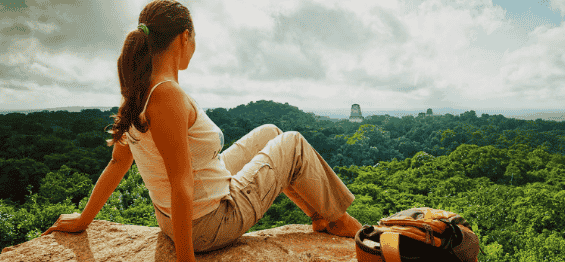
For budget travelers, safety and cost are connected. Choosing a hostel because it is several dollars cheaper is less useful if reaching it requires an unreliable nighttime transfer. A slightly more expensive accommodation in a convenient, established neighborhood can reduce transportation complications and unnecessary exposure.
How Much Does It Cost To Travel To South America?
A backpacker can plan around roughly $30–$50 per day in lower-cost destinations, while a more comfortable itinerary can reach $60–$100 or more. Major activities such as the Inca Trail, Uyuni Salt Flats tours, Patagonia trekking, Galápagos cruises, and internal flights should be budgeted separately.
Accommodation is usually one of the easiest categories to control. Dormitory beds can keep costs low, while private hotel rooms and apartments increase the daily average. Food can remain inexpensive when travelers choose local markets, menu del día meals, street food, and neighborhood restaurants.
The total trip budget also depends on whether the itinerary is built around buses or flights. A cheap flight can sometimes save an entire day compared with a 14- or 16-hour bus, but the cheapest option is not necessarily the best value when time is limited.
Cheap Places To Fly In South America
Cheap flights in South America are most useful when they replace extremely long overland journeys. Major hubs such as Bogotá, Lima, Santiago, Buenos Aires, São Paulo, Rio de Janeiro, Quito, and other large cities provide more route options than smaller destinations.
Travelers should compare the complete cost rather than only the advertised airfare. A low-cost ticket can involve baggage charges, airport transfers, inconvenient schedules, or transportation to a secondary airport.
For a three-month route, flights are best reserved for long geographic jumps while buses handle shorter regional connections. Booking several weeks ahead can also provide more choices, although prices remain route- and season-dependent.
How Much Local People Earn And What You’ll Spend In South America
Local earnings and tourist spending are related but should not be treated as interchangeable measurements. A traveler arriving with a stronger foreign currency can have considerably more purchasing power than a resident earning a local salary, while tourist areas can also charge prices far above ordinary local spending.
Food provides a clear example. A neighborhood menu del día can be substantially cheaper than a restaurant aimed at international tourists. The same distinction appears in accommodation, transportation, and guided activities.
Local People Earnings
Average earnings vary widely between South American countries and even between cities. Currency volatility also makes historical salary comparisons less useful for planning a current trip.
For a traveler, the practical question is not simply what local people earn but what a specific item costs in the location being visited. A low-priced meal, hostel bed, bus ticket, or museum entrance fee has a direct effect on the travel budget.
Daily Budget To Travel For Each Country
| Destination group | Practical budget position |
| Bolivia, Paraguay | Lower-cost backpacking options |
| Colombia, Ecuador, Peru | Moderate budget opportunities |
| Argentina | Highly dependent on destination and exchange conditions |
| Chile | Generally higher-cost |
| Brazil | Highly variable by city and season |
| Uruguay | Generally higher-cost |
| Suriname | Destination-specific costs can vary considerably |
The daily figures in the supplied research range from roughly $25–$40 for very budget-focused travel to $60–$100+ for greater comfort. These should be used as planning ranges rather than guaranteed current prices.
17 Cheap Places To Visit In South America
The most useful cheap destinations are not necessarily the cheapest countries overall. A destination becomes more budget-friendly when inexpensive accommodation, local transportation, affordable food, and low-cost activities are available in the same place.
1. Cusco & Machu Picchu, Peru
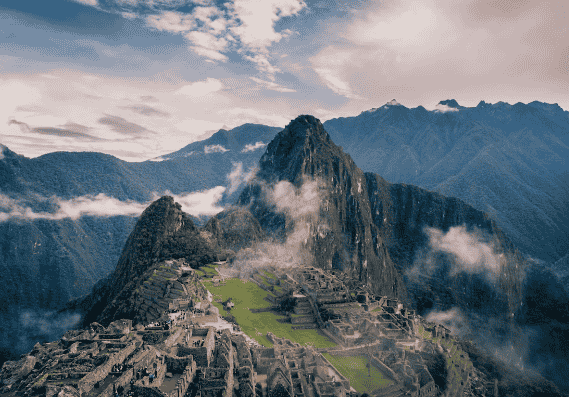
Cusco works well for budget travelers because hostels, local restaurants, walking opportunities, archaeological sites, and public transportation create several ways to control spending. Machu Picchu is the expensive part of the route, so the rest of the itinerary can be kept deliberately simple.
San Blas, Plaza de Armas, Coricancha, Pisac, Ollantaytambo, and the wider Sacred Valley provide multiple experiences around the main attraction. A traveler who compares a DIY route with group tours can decide where the extra cost is worthwhile.
2. La Paz, Rurrenabaque & Uyuni, Bolivia
Bolivia is one of the strongest choices for travelers prioritizing a low daily budget. La Paz combines indigenous markets, cable cars, colonial influences, and mountain scenery, while Rurrenabaque provides access to Amazon experiences.
Uyuni requires a separate activity budget because multi-day Salt Flats tours can represent a large share of a backpacker’s spending. Death Road, Valle de la Luna, Charquini, Huayna Potosí, and the Yungas provide additional options for travelers who want adventure.
3. Cartagena, Tayrona National Park & Minca, Colombia
Cartagena combines a historic walled city with Caribbean scenery, street food, hostels, and walking tours. Minca provides a different atmosphere with mountains, coffee experiences, and nature, while Tayrona National Park adds beaches and hiking.
Colombia is also a strong example of why travelers should compare local transportation. Interregional buses can be substantially cheaper than flying, and overnight routes can save one night’s accommodation.
Galapagos: Affordable Cruising For Solo Explorers
The Galápagos is not a conventional cheap destination, but solo travelers can reduce the single-traveler premium by comparing shared cabins, group activities, and smaller organized excursions.
Wildlife observation, snorkeling, kayaking, naturalist guides, and island exploration can make the trip expensive when purchased privately. Sharing accommodation and excursions can make the overall experience more manageable.
Quito & Cusco: Hostels Designed For Solo Travelers
Quito and Cusco have strong hostel infrastructure for backpackers. Social hostels can combine dormitory accommodation with communal dining, walking tours, hiking trips, group activities, cafes, bars, and traveler meetups.
For a solo traveler, the value is not limited to the room price. A social hostel can also reduce the need to pay separately for organized activities simply to meet other travelers.
Cartagena: Hostels & Walking Tours
Cartagena’s historic center and surrounding neighborhoods provide walking-based sightseeing opportunities, while social hostels can create a base for meeting other backpackers.
Walking tours, historic plazas, the waterfront, Getsemani, restaurants, cafes, and Castillo de San Felipe de Barajas allow a traveler to mix free or low-cost activities with occasional paid experiences.
Machu Picchu & The Inca Trail: Group Trek Pricing
The Inca Trail is a major example of an attraction where group pricing can matter. Shared treks distribute guide, chef, porter, camping, meals, and transportation costs across multiple travelers.
Permits and availability require advance planning, particularly during popular travel periods. A solo traveler who joins an established group can receive the trekking experience without paying the full cost of a private expedition.
Patagonia: Group Hiking & Shared Lodges
Patagonia is better treated as a higher-budget section of a South America itinerary. Torres del Paine, El Calafate, Perito Moreno Glacier, and El Chalten offer exceptional hiking and natural scenery, but transport, park logistics, accommodation, and guided activities can quickly increase spending.
Shared refugio accommodation and group hiking can reduce the cost compared with private lodges and private guides. Self-guided hikes around El Chalten can also provide a lower-cost alternative when conditions and trail rules allow.
Easter Island: Group Tours & Cultural Immersion
Easter Island, Isla de Pascua, or Rapa Nui is a specialist destination rather than a classic low-budget stop. Travelers can reduce costs by choosing shoulder-season accommodation, shared activities, and group tours.
Hanga Roa provides access to archaeological and cultural sites such as Ahu Tongariki, Rano Raraku, Orongo, Rano Kau, and Anakena Beach. A longer stay can justify the flight cost better than a rushed visit.
Your Solo Travel Savings Strategy
The most effective savings strategy is to control the expenses that occur repeatedly rather than obsessing over occasional small purchases.
Dorm accommodations, local food, public transportation, free walking tours, social hostels, and shared group activities can reduce the daily average. Early planning is more important for expensive activities such as Galápagos cruises, Machu Picchu treks, Patagonia accommodation, and limited-capacity experiences.
Shoulder seasons can also provide a useful compromise between weather and price. However, seasonality varies by destination, so a traveler should check the climate of the specific region rather than assuming that one continent-wide travel season exists.
Getting Around Solo
Long-distance buses remain one of the most practical budget transportation methods in South America. Overnight routes can combine transport with accommodation, while comfortable buses may include beds, meals, or WiFi on selected routes.
Domestic flights become useful when distances are enormous. A $60 flight that saves 16 hours can sometimes be better value than a $30 bus when the traveler has limited time.
Local transportation includes buses, colectivos, metro systems, walking, and ride-sharing apps. In major cities, travelers should also consider whether a cheap option creates a safety or convenience trade-off.
For example, current guidance for Brazil specifically warns about public buses at night and recommends registered rather than informal taxis.
Meeting People
Hostels are often the easiest social environment for solo backpackers. Communal dinners, walking tours, pub crawls, language exchanges, traveler meetups, and group excursions create opportunities to meet people without arranging expensive private activities.
The Gringo Trail around destinations such as Cusco, the Sacred Valley, and Aguas Calientes can also make it easier for independent travelers to encounter other backpackers following similar routes.
Salsa classes, volunteer opportunities, conservation projects, teaching English, and local community activities provide alternatives for travelers who prefer deeper interaction than a hostel bar or walking tour.
WhatsApp groups can also be useful for hostel activities, local tours, traveler communities, and transportation coordination.
Solo Travel Budget
A budget-focused solo traveler can begin with approximately $30–$40 per day in lower-cost destinations. A more comfortable backpacker budget of $60–$100 per day provides greater flexibility for private rooms, better restaurants, paid tours, and occasional flights.
The budget can be divided approximately like this:
| Category | Budget approach |
| Accommodation | $8–$25 dorm or budget room |
| Food | $5–$15 using local options |
| Activities | Free–$40 depending on destination |
| Transport | $5–$30 for local and regional travel |
| Flights | Occasional $30–$100+ fares |
The highest-cost experiences should be treated separately from ordinary daily spending. A five-day Patagonia trek or Galápagos cruise should not be averaged into the same daily figure as a normal hostel-and-bus day in Bolivia.
Essential Tips
Basic Spanish can make inexpensive travel substantially easier. Even an A1-level foundation can help with accommodation, food orders, directions, transportation, and everyday social interactions.
Health preparation also matters. Yellow fever considerations can apply to certain Amazon and lowland routes, while altitude sickness becomes relevant in destinations such as Cusco and the Bolivian highlands. Travelers should check destination-specific health requirements with an appropriate medical or government source before departure.
Travel insurance should cover medical treatment and, where appropriate, evacuation and trip cancellation. A low daily premium can protect a budget from a much larger unexpected expense.
A local SIM, offline maps, WhatsApp, copies of important documents, and emergency contact information are inexpensive forms of preparation.
Solo female travelers may additionally prefer women-only hostel floors, established neighborhoods, group tours, and conservative dress in areas where local customs make that more appropriate. Cultural awareness is particularly important around Indigenous communities, ceremonies, photography, and religious or historical sites.
FAQ
How Long Should I Spend In Each Country?
There is no universal number of days because Colombia, Peru, Argentina, Bolivia, and Brazil differ enormously in geographic size and the number of places worth visiting. A practical framework is roughly two to three weeks for a major country, one to two weeks for a focused stop, or three to five days for a specific region.
A three-month route becomes more enjoyable when travelers slow down in culturally or geographically rich areas such as Cusco and the Sacred Valley instead of changing cities every few days.
What’s The Best Time To Visit South America?
The best time depends on the region rather than the continent as a whole. September to November and March to May can work well for selected southern destinations, while May to September is commonly useful for parts of the Andes because of drier conditions.
May–June and September–October can also function as shoulder-season periods in some destinations, potentially balancing weather, crowds, and accommodation prices. Travelers should still check the specific destination because Patagonia, the Andes, the Amazon, coastal Brazil, and northern South America have different weather patterns.
Can I Travel With Just Cash?
Cash is useful but carrying only cash creates unnecessary risk. A better approach is to combine cash with at least one working card and maintain access to emergency funds.
Major cities generally offer ATMs and card payment, while smaller towns, rural areas, markets, buses, and independent businesses can be more cash-dependent. Smaller denominations such as $20 or $50 notes can also be easier to manage than large bills.
Is It Expensive To Fly Between South American Countries?
Flights between South American countries do not always have to be expensive, but prices depend heavily on route, airline, season, baggage, and booking timing. A budget traveler should compare the complete airfare with the cost and time of an overnight bus.
For example, spending more on a flight can make sense when a bus would consume most of a travel day. The reverse is true when the bus is dramatically cheaper and the traveler has sufficient time.
How Do I Handle Language Barriers?
Basic Spanish, offline translation tools, written addresses, and translation apps can solve many everyday communication problems. Travelers do not need fluent Spanish to begin, but learning common phrases can make transportation, accommodation, food ordering, and local interactions easier.
English is more common in international hostels and tourist businesses than in ordinary local neighborhoods. A traveler who combines a few Spanish phrases with Google Translate, offline language tools, and patience can usually handle routine situations without needing expensive private assistance.
Other Post
Cheap Solo Travel To Southeast Asia: Costs, Routes, and Tips
The Hammond At Greenmount Park: Apartments, Rent, Amenities & Location Guide
Embassy Suites by Hilton Philadelphia Airport: A Complete Guide to Rooms, Rates & Reviews
Black Sand Beach Maui Reservation: A Visitor’s Guide to Booking, Tickets & Time Slots