

Netviewer was a German IT company, established 2001 and headquartered in Karlsruhe, Germany, that built web conferencing solutions for desktop sharing, online meetings, webinars, and remote access. It became a leading European producer of collaboration software products before Citrix Systems Inc. (NASDAQ:CTXS) bought it in 2011 and placed it inside Citrix Online, its online services division.
Consultants who worked with Netviewer AG in its independent years tend to describe it the same way. It was a vendor focused on user-friendly solutions and secure solutions that a sales rep or trainer could launch without calling the IT department.
By the time of the deal, more than 35,000 companies and hundreds of thousands of individual users relied on its tools. They used them for sales, marketing, training, customer support, and other everyday service activities. The appeal was practical: teams could optimize their meetings and handle remote maintenance capabilities efficiently from an ordinary PC.
In web conferencing circles, the purchase marked a turning point. The Karlsruhe technology now sat alongside Citrix’s GoToMeeting, GoToWebinar, GoToAssist, and GoToMyPC, which strengthened the American firm’s push into global online collaboration.
Netviewer Company Profile / Overview
At its core, the company sold one idea: people in different places should be able to share screen views live and work together as if they sat at the same desk. Netviewer AG, a German IT company based in Karlsruhe Germany, packaged that idea into web collaboration and web conferencing solutions for Internet users.
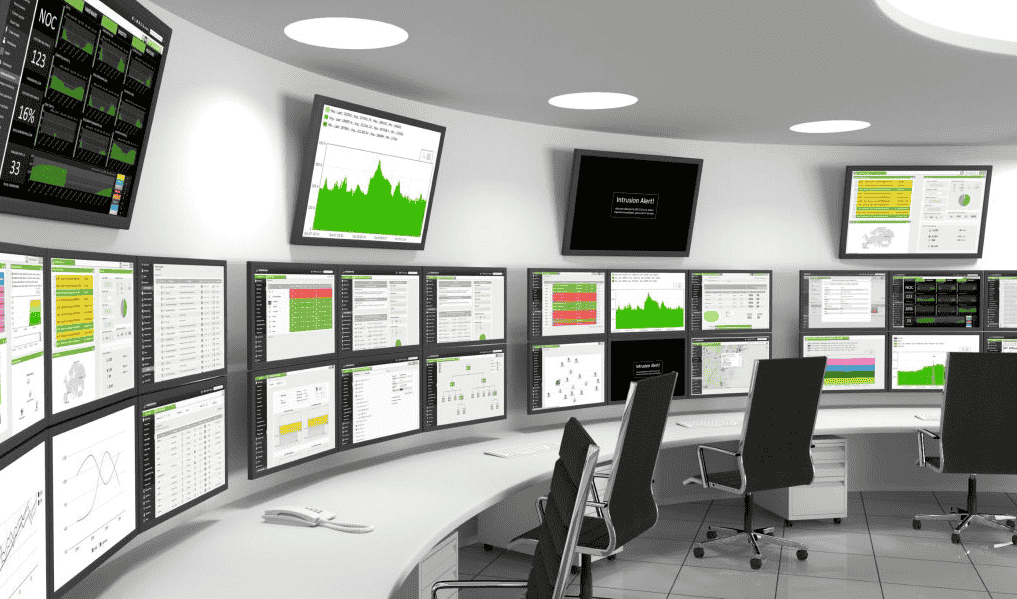
Practitioners who ran sessions on the platform point out that the shared content was rarely glamorous. It was everyday business material, and the tools handled it well.
| What Teams Shared | How It Was Typically Used |
| Documents | Contract walkthroughs with clients |
| Texts | Live editing of proposals and manuals |
| Graphics | Design reviews and product demos |
| Calculations | Spreadsheet checks during budget talks |
This was collaboration in real time, not file swapping by email. Real-time communication meant a question could be answered on screen before the call ended. That helps explain why sales, marketing, training, and service activities became the platform’s strongest use cases.
The Cost and Climate Argument Behind Adoption
The company built its pitch around money and the environment, not just convenience. When online communication replaced short business trips, travel costs and related costs were reduced substantially. Many customers also reported that productivity increased because staff spent less time in airports and more time doing actual work.
The vendor also framed its tools as an active contribution to climate protection and conservation of the environment. Fewer flights meant fewer emissions. Back in the early 2000s, that was a less common message from a European producer of software products than it is now.
Where the Profile Stands Today
Since 2011, the company’s identity has been tied to Citrix Online at Citrix Systems Inc. Its secure user-friendly solutions and remote maintenance capabilities were absorbed into a product family that already included GoToMeeting, GoToWebinar, GoToAssist, and GoToMyPC.
The customer base of roughly 35,000 companies gave Citrix an established foothold for global online collaboration in Europe. For anyone researching desktop sharing history, it remains a reference point. It traces back to a 2001 startup that proved small teams could compete in this space.
History
The story is easiest to understand from its ending: in 2011, Citrix Systems acquired the Karlsruhe vendor, and the company became part of the Citrix Online division as its German branch. Everything before that was a decade-long climb from an award-winning startup to the leading European producer of web conferencing solutions.
| Year | Milestone |
| 2001 | Netviewer founded in Karlsruhe, Germany |
| 2002 | Won a business plan competition for startup companies, sponsored by McKinsey Consulting and the German savings banks |
| 2002–2010 | Established itself as a major regional player in web conferencing |
| 2011 | Acquired by Citrix Systems (NASDAQ:CTXS) and folded into the Citrix Online division |
Industry observers often single out the 2002 competition win as the moment that changed things. A young firm from Germany suddenly had credibility with banks and corporate buyers. The backing of McKinsey Consulting and the German savings banks gave a company founded in 2001 a reputation it could not have bought.
Once established, the firm spent the following years building market share against larger American rivals. That track record is exactly what made it attractive to Citrix. The company did not disappear after the deal. It continued operating from Karlsruhe as part of a much larger organization.
Products
Netviewer products centered on the exchange of screen contents between two or more computers over the Internet, sold in four editions: Meet, Present, Support, and Admin. Each edition targeted a different business task rather than a different budget level.
| Edition | Main Job | Typical Users |
| Netviewer Meet | Online meetings and desktop sharing | Sales and marketing teams |
| Present | Webinars and webcasting | Training departments |
| Support | Help desk and customer support | Service activities teams |
| Admin | Remote access and maintenance | IT support staff |
Support desk managers who switched to the tool often noted that the Support edition cut call times. Agents could see a customer’s screen instead of guessing from a verbal description. Meet worked the same way for sales teams, who could walk prospects through a live demo.
Licensing: SaaS or On-Premises
Buyers could choose between software-as-a-service and on-premises licensing models. Companies with strict data rules often preferred on-premises licenses so that sessions ran on their own servers. Smaller teams usually went with the hosted option to avoid maintenance.
Why There Was No Freeware
A common assumption is that every screen-sharing tool from that era had a free tier. This one did not. There were no free versions and no freeware for private users. Only trial versions were available, because the products were built exclusively for commercial use.
That decision shaped the customer base. Instead of millions of casual accounts, the company served 35,000 companies and hundreds of thousands of individual users who paid for professional web conferencing.
After the Acquisition
Following the acquisition, Citrix released versions branded under its own GoToMeeting, GoToAssist, GoToWebinar, and GoToMyPC family. Customers could stay with familiar workflows while gaining access to Citrix’s wider product range.
Market / Growth
Netviewer competed in the web conferencing and web collaboration space, a billion-dollar global market that leading analysts expected to post high growth rates over the next few years at the time of the Citrix deal. Citrix Online framed the acquisition of Netviewer as a way to speed up market penetration in Europe.
Citrix already ranked as a major Software-as-a-Service (SaaS) provider, hosting millions of web conferencing sessions, webinars, and support sessions every year through its own data centers. What it lacked was deep reach into the European SaaS market. The Karlsruhe team brought highly qualified experts, local customer relationships, and proven sales and marketing strategies.
The Contrarian View on Growth
Strong growth rates did not mean easy wins. Analysts in the IT industry noted real challenges, including:
- Persuading smaller enterprises to trust web conferencing technology with sensitive data
- Competing in dynamically growing markets where new rivals appeared constantly
- Adapting a single product strategy to many European languages and buying habits
Practitioners who watched the deal argue that the merger solved problems for both sides. The German firm gained scale, and Citrix gained a leading role in a regional slice of the global market that it struggled to win alone.
Security
Netviewer products protected every session with 256-bit AES encryption, based on the Advanced Encryption Standard, together with key-phrase-based authentication. In April 2004, the software security was certified by Fraunhofer, one of Germany’s best-known research organizations.
For German buyers, that certificate carried real weight. IT managers who evaluated the tools often said the Fraunhofer seal mattered as much as the encryption itself. It gave them an independent answer when compliance teams asked whether screen sessions could be intercepted.
Key-phrase-based authentication added a second layer of protection. Without the correct phrase, an outsider could not join a session, even if they somehow obtained the connection details.
Company Details
Netviewer AG was a public corporation in the Information Technology industry, founded in 2001, with its headquarters in Karlsruhe, Germany, and a workforce of roughly 200+ employees.
| Field | Detail |
| Type | Public corporation (AG) |
| Industry | Information Technology |
| Founded | Founded 2001 |
| Headquarters | Karlsruhe, Germany |
| Key people | Robert Gratzl, Jörg Mayer, Lars Thomas |
| Number of employees | ~200+ employees |
| Later product names | Netviewer GoToMeeting, Netviewer GoToAssist, Netviewer GoToAssist Corporate |
The headcount figure is commonly cited from company snapshots dating to around April 2009. After the Citrix integration, the combined branding appeared in names such as Netviewer GoToMeeting and Netviewer GoToAssist. Netviewer GoToAssist Corporate was aimed at larger support organizations.