

domikyo.com appears to be a multi-topic information website that publishes practical content across technology, business, finance, lifestyle, and real-estate, while third-party sources also strongly associate the domain with smart-home, networking, IoT, and connected-home technology. Because outside descriptions are not fully consistent, the safest answer is to judge domikyo.com by its live content, named authorship, sources, technical signals, and whether individual articles provide verifiable, current guidance.
- What Is domikyo.com and Why Are People Looking It Up?
- So, What Is domikyo.com in Simple Terms?
- Is domikyo.com a Real Website and What Kind of Site Is It?
- What Does domikyo.com Actually Do for Visitors?
- Is domikyo.com a Website, an App, or Some Other Online Service?
- What Topics Does domikyo.com Cover?
- Is domikyo.com Mostly About Technology and Smart Homes?
- Why Do Different Sources Describe domikyo.com Differently?
- Why Do Some Sources Call domikyo.com a Multi-Topic Site?
- Why Do Other Sources Connect domikyo.com to Smart Homes and IoT?
- Can You Trust Third-Party Descriptions of domikyo.com?
- What Do Current Search Results Suggest About domikyo.com?
- What Are the Key Facts About domikyo.com at a Glance?
- Is domikyo.com the Same as TheDomikyo.com?
- Who Owns domikyo.com and Who Publishes the Content?
- What Should You Check on domikyo.com’s About and Contact Pages?
- What Can Domain Records Actually Confirm About domikyo.com?
- What Does Crunchbase Say About domikyo.com?
- What Does domikyo.com’s Technical History Reveal?
- Is domikyo.com Listed as a Paid Publishing Site?
- How Do the Publisher Listings for domikyo.com Compare?
- What Do Paid Listing Pages Really Prove About domikyo.com?
- Why Do Traffic Estimates for domikyo.com Differ So Much?
- Which Smart-Home Topics Are Most Closely Linked to domikyo.com?
- How Is domikyo.com Linked to Home Networking and Wi-Fi Reliability?
- How Does domikyo.com Relate to IoT Devices and Network Segmentation?
- How Is domikyo.com Connected to Smart-Home Interoperability?
- Where Does domikyo.com Fit in the 2026 Smart-Home Landscape?
- What Should You Check Before Trusting Advice From domikyo.com?
- Does the Advice on domikyo.com Clearly Explain Its Limits?
- Does domikyo.com Distinguish Wi-Fi Problems From Internet Problems?
- Does domikyo.com Cite Standards and Primary Sources?
- Does domikyo.com Explain Security Beyond Just Strong Passwords?
- Is domikyo.com Legit and Safe to Use?
- What Do HTTPS, DNS, and Security Checks Really Tell You About domikyo.com?
- What Should You Check Before Sharing Personal or Payment Information on domikyo.com?
- Can You Trust Articles Published on domikyo.com?
- How Can You Verify Claims Made in a domikyo.com Article?
- How Can You Spot Sponsored or Promotional Content on domikyo.com?
- When Should You Use a More Reliable Source Than domikyo.com?
- How Does domikyo.com Compare With a General Smart-Home Blog?
- What Can We Confirm About domikyo.com and What Is Still Unclear?
- What Would Make domikyo.com More Useful to Readers?
What Is domikyo.com and Why Are People Looking It Up?
domikyo.com draws attention because readers see it described from sharply different angles and want a clear answer before trusting the site.
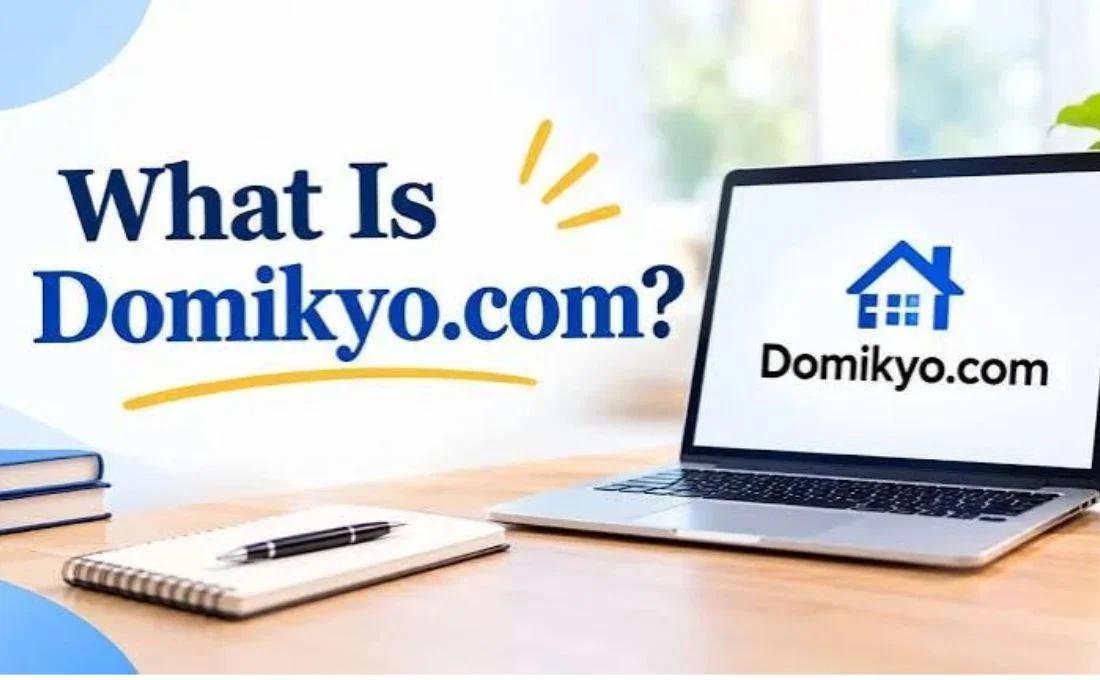
In practice, I read domikyo.com as a publishing platform with an editorial feel rather than a single-purpose tool. The public-facing identity centers on guides, articles, categories, and easy-to-read explanations, which is a very different signal from an app store product or a one-task service. That contrast explains the curiosity around the homepage, the publisher, and the site’s overall purpose.
The search interest also makes sense because search-results and external write-ups create a mixed picture. Some frame domikyo.com as a broad online resource for business, finance, and lifestyle topics, while others emphasize digital connectivity, smart-home systems, and modern networking concerns. When a domain carries that kind of split coverage, people naturally start asking who runs it, what it actually does, and whether the information is reliable.
From my perspective, that tension is exactly why domikyo.com gets looked up. People are not only seeking answers; they are checking ownership, details, and whether the platform presents facts in a way that feels straight, simple, and updated rather than promotional or vague.
So, What Is domikyo.com in Simple Terms?
domikyo.com is best understood, in simple terms, as a website described as a broad information and publishing destination rather than a single-function app or software product.
A direct reading of the available material suggests a multi-topic structure with a company-style profile, multiple subject areas, and a recognizable article-led format. Instead of behaving like a checkout tool, download hub, or account-only portal, the site is presented as a place where people read topic-based pages and use them as starting points for learning. That is why the simplest label is still website.
At the same time, the simpler answer does not erase the mixed signals. Some records and descriptions point toward health, education, travel, and broader trends, while others cluster around technology and connected-home ideas. So the cleanest plain-language explanation is that domikyo.com looks like a site with more than one topic, not a narrowly defined utility.
Is domikyo.com a Real Website and What Kind of Site Is It?
domikyo.com is presented as a real website, and the most fitting description is a content-led site organized around pages, categories, and article-style publishing.
A genuine website usually reveals itself through structure: a browser-based collection of pages, visible sections, topic hubs, and readable entries rather than hidden tools or isolated transactions. domikyo.com fits that pattern because the public references center on article access, category organization, and reading flows instead of software installation or device-linked setup. That makes it easier to classify as a site rather than an app product.
The stronger distinction is what kind of site it is. It does not read like a pure opinion blog, but it also does not behave like a dedicated product dashboard. The evidence points more toward a broad publishing property where people read, compare, and learn, even if outside descriptions disagree on the exact emphasis.
What Does domikyo.com Actually Do for Visitors?
domikyo.com appears to serve visitors by offering article-based guidance, topic exploration, and practical reading rather than a tightly defined transaction or software function.
That matters because many unfamiliar domains are easiest to judge by user action. On domikyo.com, the visible expectation is that a visitor opens pages, follows article trails, and uses the site for research. In a real-world scenario, that might mean someone checking a mesh question, an offline smart bulb issue, a camera setup concern, or a broader topic around business or finance. The primary action is learning, not installing a product.
The more interesting angle is that the site may also shape how people think about connected technology. A person troubleshooting latency, firmware support, weak connection quality, or local device control might land there expecting explanations that are easier to absorb than manufacturer documentation. That is useful, but it also means the site’s value depends on whether its guidance remains specific, sourced, and readable.
Is domikyo.com a Website, an App, or Some Other Online Service?
domikyo.com is best classified as a website, not as an app, and not primarily as an account-driven online service.
A normal website is something you open by address in a browser, while an app is installed software designed for a phone or computer. An online service usually revolves around accounts, management, storage, billing, or task execution. The available evidence around domikyo.com points to readable pages and topic discovery, not to account dashboards, payments, or interactive service layers.
That distinction matters because naming shapes expectation. If someone assumes domikyo.com is a product, they may start looking for sign-up flows, device sync, or special features that are not the point. If they treat it as a reading-focused site, the structure makes more sense.
What Topics Does domikyo.com Cover?
domikyo com is presented as covering multiple topics, with the clearest recurring set being technology, business, finance, lifestyle, real-estate, and related practical reading areas.
The strongest evidence for topic spread comes from the site descriptions themselves and the visible category references. That range suggests a broad reader model rather than a vertical niche. A visitor might move from AI, smartphones, and cybersecurity to budgeting, investing, or property questions without leaving the same publishing environment. That kind of spread can work well when the editorial aim is accessibility rather than deep specialization.
The challenge, from a practitioner’s view, is depth. A site can mention founders, freelancers, managers, buyers, remote teams, and morning habits all in one brand umbrella, but the real test is whether each article stays grounded. Multi-topic sites are useful when their guides remain coherent inside each subject, not merely when the categories look broad on the surface.
Is domikyo.com Mostly About Technology and Smart Homes?
domikyo.com is not confirmed as only a technology site, but many outside descriptions lean heavily toward technology, smart-home systems, and modern connectivity topics.
That distinction matters because “mostly about tech” and “includes tech” are not the same thing. Some descriptions frame the site as broad and multi-topic, while others emphasize technical material such as connected devices, networking, and interoperability. When I see that split, I usually avoid forcing a narrow identity onto the site. The safer reading is that technology may be one of its strongest perceived lenses, especially in how others discuss it.
From a reader standpoint, the practical move is to inspect the recent sections, topic distribution, and how many articles actually support the smart-home framing. If a site is genuinely dominated by technology, that should show up in its visible scope, not only in third-party summaries.
Why Do Different Sources Describe domikyo.com Differently?
Different sources describe domikyo.com differently because they appear to rely on separate observations, different timeframes, and sometimes repeated claims rather than one shared verified profile.
This happens often with unfamiliar sites. One article may focus on broad categories, another may zoom in on smart-home networking, and a third may summarize whatever was easiest to observe in search or indexed snippets. Once those descriptions start circulating, sources can begin echoing one another. That creates confusion even when each source sounds confident on its own.
The more important point is that disagreement does not automatically prove deception. It may only mean the site’s public picture changed over time, or that writers captured different parts of the same platform. In my experience, the real fix is not picking the loudest claim but checking whether the live structure and article quality support any of the descriptions being made.
Why Do Some Sources Call domikyo.com a Multi-Topic Site?
Some sources call domikyo.com a multi-topic site because the available descriptions point to a wider editorial picture rather than one narrow subject area.
That labeling makes sense when a site is described through varied categories such as business, finance, lifestyle material, and general consumer-facing guidance. A broad claim of coverage is easier to make when the visible or indexed text suggests multiple reader interests instead of one deep technical vertical. The label is therefore descriptive, not proof of depth.
The key caution is that “multi-topic” only tells you the range, not the quality. A site can have a wide picture and still be uneven from one category to another. So the term is useful, but limited.
Why Do Other Sources Connect domikyo.com to Smart Homes and IoT?
Other sources connect domikyo.com to smart-home and IoT topics because connected devices, home systems, and digital infrastructure appear repeatedly in third-party descriptions.
That connection becomes more believable when the language around the site includes cameras, sensors, everyday device behavior, home networking, and the wider Internet of Things. Those are not random tech buzzwords; they point to a recurring focus on how household technology behaves in real use.
Still, that does not prove exclusivity. A site can attract attention for connected-home reading while also publishing broader material. The recurring link to these topics is real in the available descriptions, but it should be treated as a strong association, not a final identity.
Can You Trust Third-Party Descriptions of domikyo.com?
Third-party descriptions of domikyo.com can be useful starting points, but they are not enough on their own to prove the site’s official purpose, ownership, or quality.
I treat external write-ups as discovery tools, not final evidence. A third-party article may show how a site is presented in public, but it cannot automatically confirm the identity of the publisher, the accuracy of its publicly visible claims, or whether the people behind the site have been independently verified. That is why I separate helpful overview from confirmed fact.
The more dependable method is layered checking: look at the current site structure, compare it with registration and technical records, and then ask whether the claims in those external summaries still hold up. If they do, trust can increase. If they don’t, the third-party summary stays just that: a summary.
What Do Current Search Results Suggest About domikyo.com?
Current search results suggest that domikyo.com is frequently associated with broad information publishing and with connected-home or networking topics in particular.
That matters because search visibility often shapes first impressions before a person ever opens the site. When indexed summaries emphasize digital connectivity, Matter, Thread, device integration, and home-tech concerns, the reader naturally expects a more technical destination. If other results frame the same site as general-interest publishing, the result is a split public image.
In practical terms, search results are signals, not verdicts. They show what themes are most visible around a domain, but they do not replace direct inspection of the actual pages or content quality.
What Are the Key Facts About domikyo.com at a Glance?
The key facts about domikyo.com show a site described as multi-topic, technically active, and surrounded by mixed external signals about ownership, traffic, and focus.
From a verification perspective, the cleanest way to read the data is to separate what is directly reported from what remains uncertain. The site is repeatedly described as a publishing destination, some records attach technical history to it, and external listings provide commercial context. At the same time, ownership is not clearly confirmed across all sources.
| Attribute | Reported Detail |
| Site type | Multi-topic information / publishing site |
| Topic range | Technology, business, finance, lifestyle, real estate, and related areas |
| Domain history | First registration date reported as December 5, 2020 |
| Technical history | Google Analytics ID UA-123050620 linked from June 2021 to July 2025 |
| Technical stack references | HTTPS, Cloudflare, DNS, CDN, IPv6, SPF |
| Marketplace context | Paid publishing offers listed on external platforms |
| Ownership clarity | Not firmly confirmed by the available records |
That mix is why domikyo.com attracts both ordinary readers and people doing a deeper due-diligence pass.
Is domikyo.com the Same as TheDomikyo.com?
domikyo.com and TheDomikyo.com are not confirmed as the same website, even though the names look similar.
A naming overlap often creates false certainty. Similar branding does not prove shared ownership, shared editorial control, or a common operating group. In cases like this, I look for harder signals such as an official statement, a permanent redirect, matching business records, or clearly shared legal identity. Without that, the safest position is separation.
So the answer is simple: the names may appear connected, but the available evidence does not firmly establish that connection.
Who Owns domikyo.com and Who Publishes the Content?
The owner of domikyo.com is not clearly confirmed in the available material, even though the site is discussed as a publishing platform with visible article content.
That uncertainty matters because site trust is not only about writing quality; it is also about knowing who is responsible when claims, errors, or disputes appear. If a publisher is easy to identify, a reader can better judge accountability. If ownership remains unclear, the burden shifts back to the content itself and the transparency of the surrounding pages.
From a practical standpoint, I would separate two questions: who legally controls the domain, and who creates or approves the editorial work. Those are related, but not always identical.
What Should You Check on domikyo.com’s About and Contact Pages?
The About and Contact pages on domikyo.com should be checked for publisher identity, editorial transparency, and clear ways to reach the people responsible for the content.
When I audit a site like this, I start with whether a named organization or publisher is visible, whether writers are identified, and whether the contact method feels real rather than decorative. Good trust pages also explain editorial standards, how errors are corrected, and what kind of background supports the material being published.
The most important issue is proportional caution. A missing detail does not automatically make a site fraudulent, especially smaller publications, but if the site touches money, health, or personal data, the standard should be higher. Readers do not need perfection; they need enough transparency to judge risk.
What Can Domain Records Actually Confirm About domikyo.com?
Domain records can confirm parts of domikyo.com’s registration and technical setup, but they cannot by themselves prove full ownership, editorial control, or content accuracy.
That distinction gets lost easily. A domain lookup may show registration dates, a registrar, infrastructure clues, or related server details, but those are system-level facts, not complete identity proof. Privacy layers, hosting intermediaries, and limited disclosures can leave important questions unanswered even when the record is technically valid.
So domain records are useful, but they are supporting evidence. They work best when combined with on-site disclosures, business records, and article-level evaluation.
What Does Crunchbase Say About domikyo.com?
Crunchbase shows a profile for Domikyo com, but the database entry should be treated as reported business information rather than final proof of ownership or operational scale.
The reported details are specific enough to note. The profile is described as active and private, with a headcount range of 11 to 50, a contact email of magazinegood6@gmail.com, 648 monthly web visits, and $8.8 million in projected IT spending. Those figures are useful as reported data points, but they are still database-level claims, not audited company disclosures.
My view here is straightforward: Crunchbase can add context, especially when you are building a fact pattern around an unfamiliar site, but it should never be the only basis for saying who owns or operates a domain.
What Does domikyo.com’s Technical History Reveal?
The technical history tied to domikyo.com reveals that the domain has a dated registration trail, identifiable infrastructure references, and a documented analytics history, but not a complete trust verdict.
According to the reported technical record, BuiltWith lists December 5, 2020 as the first registration date, and on October 15, 2026 it identified 21 live technologies on the domain. Those include HTTPS, Cloudflare DNS and CDN, IPv6, SPF protection, and the Wild West Domains registrar reference. A reported 403 error also appeared in the technical narrative, which indicates refused automated access rather than automatic harm.
The historical marker that stands out most is the Google Analytics ID UA-123050620, reported as linked from June 2021 to July 2025. That kind of signal can help place a domain in a technical timeline, but it does not settle ownership by itself. It shows infrastructure and tracking history, not editorial truth.
Is domikyo.com Listed as a Paid Publishing Site?
Yes, domikyo.com is described as being listed on paid publishing marketplaces, but that alone does not define the entire site.
Marketplace visibility matters because it shows the domain has been presented commercially for content placement. Still, that does not prove every page is sponsored, every article is paid, or the site’s editorial process is controlled by advertisers. It only shows that external commercial offers exist around the domain.
That is why the listing is relevant context, not a final judgment.
How Do the Publisher Listings for domikyo.com Compare?
The publisher listings for domikyo.com differ across platforms, especially on pricing and SEO-style metrics, which is why they should be read as dated commercial snapshots rather than stable truth.
The most useful way to compare them is directly:
| Listing Source | Price | DA | DR | Ahrefs Traffic | Semrush Traffic |
| Adoovy detail page | $120 | 60 | 51 | 97,856 | 870 |
| Adoovy catalog | $120 | 60 | 51 | 167,355 | 870 |
| GUESTPOSTLINKS | $73.90 | 58 | 51 | 126.3K | 436 |
Some listings also mention permanent dofollow links and a 24 to 48 hour turnaround. Those are marketplace terms, not a universal statement about every article on the site. In SEO-heavy environments, metric drift is common, which is why I treat these numbers as comparable signals rather than conclusive measurements.
What Do Paid Listing Pages Really Prove About domikyo.com?
Paid listing pages prove that domikyo.com has been commercially offered as a publishing placement, but they do not prove how the entire site operates editorially.
That difference matters more than most people expect. A listing can show a domain is available for article placement, yet still tell you very little about how content is selected, whether disclosures are consistently used, or how the site separates sponsored pieces from regular editorial work. The presence of a marketplace listing is a useful caution flag, not a complete profile.
So the proper takeaway is narrow: external pages show commercial availability, not total editorial definition.
Why Do Traffic Estimates for domikyo.com Differ So Much?
Traffic estimates for domikyo.com differ because third-party SEO tools rely on different data models, update schedules, and assumptions rather than one shared count of real visitors.
This is common with externally estimated traffic. One platform may refresh more often, another may weigh search visibility differently, and a listing page may simply display an older snapshot than a related page on the same marketplace. That is why mismatched numbers are not surprising. They are model outputs, not direct analytics exports.
For anyone evaluating domikyo.com, the practical lesson is simple: estimated traffic can provide context, but it should not be mistaken for verified audience size or content quality.
Which Smart-Home Topics Are Most Closely Linked to domikyo.com?
The smart-home topics most closely linked to domikyo.com are home infrastructure, device connectivity, and the practical systems that make connected devices actually work.
That emphasis is notable because many sites talk about automation as if the glamorous part were the device itself. In practice, the harder questions usually sit underneath: how the network behaves, where device communication breaks, and whether the surrounding setup is stable enough to support daily use. That background layer is exactly where the recurring connected-home association becomes most meaningful.
How Is domikyo.com Linked to Home Networking and Wi-Fi Reliability?
domikyo.com is linked to home networking and Wi‑Fi reliability through repeated references to connected-device performance, local coverage quality, and the physical realities of how home networks behave.
In real homes, stable connectivity depends on a long list of variables: router quality, access-point placement, wall materials, radio interference, backhaul, and the number of active devices. A site associated with connected-home advice naturally gets tied to these issues because they shape whether automation feels smooth or fragile.
One contrarian point worth stating directly: faster internet does not automatically fix weak local performance. A dead bedroom zone, poor upload conditions, or bad router placement can make a smart system feel broken even when the broadband plan looks generous on paper.
How Does domikyo.com Relate to IoT Devices and Network Segmentation?
domikyo.com relates to IoT devices and network segmentation because the public discussion around the site often overlaps with device grouping, access control, and practical home-security design.
That connection is understandable. A home filled with plugs, thermostats, locks, appliances, and hubs raises different questions than a house with only laptops and phones. In security work, I usually think in zones: trusted devices, guest traffic, infrastructure gear, and everything that falls under the consumer IoT umbrella. That separation model is not academic; it changes risk.
The more technical side is also grounded in named guidance. CISA is specifically referenced in relation to segmentation, and that matters because dividing device groups through routers, VLANs, or firewall rules can reduce unnecessary communication and unnecessary exposure between systems.
How Is domikyo.com Connected to Smart-Home Interoperability?
domikyo.com is connected to smart-home interoperability because many descriptions around the site emphasize how different device standards work together inside one home environment.
That focus is practical rather than abstract. A real house may contain Wi-Fi, Zigbee, Z-Wave, Thread, Bluetooth, and vendor-specific systems at the same time. Interoperability becomes the question that determines whether a setup feels unified or patched together. In that context, references to Matter, the Connectivity Standards Alliance, Ethernet, and Bluetooth Low Energy are not filler; they are signals that the conversation is about how ecosystems talk to one another.
The useful nuance is that newer frameworks do not erase older radios overnight. They sit on top of existing hardware realities, often through compatible bridges, and that is why interoperability remains a live issue rather than a solved one.
Where Does domikyo.com Fit in the 2026 Smart-Home Landscape?
In the 2026 smart-home landscape, domikyo.com fits best as an informational reference point associated with connected-home concepts rather than as a hardware manufacturer or dedicated platform.
That placement makes sense because the relevant technology stack in 2026 is broader than a single device conversation. Readers now have to think about Wi-Fi, Ethernet, Thread, Matter, cross-ecosystem behavior, low-power IP mesh systems, local responsiveness, privacy, and whether updates and device management remain reliable across platforms. A site associated with these themes occupies a learning layer in the ecosystem.
The dated standard reference also matters. Matter 1.6 was reported as announced on June 17, 2026, with improvements around setup, multi-ecosystem experiences, device management, and context-aware control. That places the surrounding discussion squarely in the current generation of smart-home thinking.
What Should You Check Before Trusting Advice From domikyo.com?
Before trusting advice from domikyo.com, you should check whether the article is specific, technically coherent, and anchored to identifiable evidence rather than polished generalities.
This is where experience helps. Some pages sound convincing because the language is smooth, not because the reasoning is strong. On technical topics, I look for practical constraints, standards references, concrete examples, and signs that the writer understands what happens when a recommendation meets an actual home network.
The key point is not cynicism. It is disciplined reading.
Does the Advice on domikyo.com Clearly Explain Its Limits?
Advice on domikyo.com should be trusted more when it clearly states limits, because connected-home rules rarely hold across all hardware, layouts, and traffic conditions.
Broad statements such as “one router can handle 20 devices” or “you need mesh above a fixed square footage” are not reliable unless the context is made visible. Device count depends on radio bands, firmware, traffic patterns, interference, and the home’s physical layout. In many houses, concrete, brick, metal, and even mirrors shape performance as much as the ISP plan does.
When an article explains those constraints instead of hiding them, the advice becomes much more credible.
Does domikyo.com Distinguish Wi-Fi Problems From Internet Problems?
A trustworthy domikyo.com article should distinguish Wi‑Fi problems from internet problems, because they are related but not identical failure layers.
I see this confusion constantly. A slow smart switch beside the router may involve the cloud service, the DNS path, or the automation controller, while a device failing only in a distant room is more likely a coverage issue. Without that distinction, troubleshooting becomes guesswork.
So when I evaluate home-tech guidance, I want to see whether the article identifies the failing layer before suggesting a fix. That is a small sign of real technical maturity.
Does domikyo.com Cite Standards and Primary Sources?
The strongest domikyo.com articles should cite standards and primary sources, especially when they make technical claims about compatibility, security, or device behavior.
For connected-home subjects, named organizations matter because they anchor the conversation. References to the Connectivity Standards Alliance, CISA, manufacturers, or vendor documentation are more meaningful than vague appeals to “experts.” That is particularly true when the topic involves protocols, security design, or the relationship between standards and consumer hardware.
An article does not need to become a white paper, but factual claims gain credibility when the reader can trace them back to an actual source.
Does domikyo.com Explain Security Beyond Just Strong Passwords?
Good domikyo.com security advice should go beyond strong passwords and address the wider architecture of connected-home risk.
Passwords matter, but they are only one layer. Real security also involves account isolation, remote access policy, firmware support, cloud dependencies, end-of-support exposure, permission control, and how devices are segmented on the network. That broader framing matches the concerns raised in public guidance around IoT environments.
If a page reduces everything to “pick a stronger password,” it is simplifying a system-level problem too aggressively.
Is domikyo.com Legit and Safe to Use?
domikyo.com appears legitimate enough to examine as a real site, but its safety and trustworthiness should be judged page by page rather than assumed from appearance alone.
A polished design, readable structure, or active infrastructure can create a strong first impression, yet none of those signals is a complete verdict. The reported technical record includes HTTPS, Cloudflare, and an active configuration history, which suggests a functioning domain rather than an obviously abandoned one. At the same time, no single technical marker proves editorial quality, and no external profile fully settles ownership.
My working position is cautious but not alarmist. domikyo.com looks like a real publishing property with enough public footprint to evaluate, but readers should still treat article quality, source use, and data requests as the real trust test.
What Do HTTPS, DNS, and Security Checks Really Tell You About domikyo.com?
HTTPS, DNS, and security checks tell you that domikyo.com has technical signals worth noting, but they do not tell you everything a reader needs to know about trust.
A secure browser connection matters because HTTPS protects data in transit, and infrastructure references like DNS, Cloudflare, and site-verification records show that the domain is actively configured. Those are useful signs, especially when compared with suspicious sites that lack even basic setup. But a technically competent domain can still publish weak content or request data unwisely.
That is why I never stop at infrastructure. Security signals show whether the door looks professionally installed; they do not tell you whether everything inside the building deserves confidence.
What Should You Check Before Sharing Personal or Payment Information on domikyo.com?
Before sharing personal or payment information on domikyo.com, you should confirm why the data is being requested, who is receiving it, and whether the request is proportionate to the action you are taking.
If you are only reading a public article, any request for private or billing information deserves extra scrutiny. A normal reading session should not suddenly require identity documents, payment details, or account creation without a clear reason. This is where a little caution prevents a lot of regret.
- Purpose — Check why the site wants the information and whether the reason matches your plan.
- Policy — Read the privacy policy and look for clear handling of sensitive data.
- Identity — Verify the organization or business receiving the information.
- Necessity — Ask whether the request is necessary for the action you want to complete.
- Downloads — Avoid installing files, extensions, or tools unless they are clearly required.
- Passwords — Never reuse an important password on an unfamiliar site.
That sequence is basic, but in practice it catches many weak or unnecessary requests before they become real exposure.
Can You Trust Articles Published on domikyo.com?
You can trust articles on domikyo.com only to the extent that each individual article earns trust through clarity, sourcing, and practical accuracy.
The site-level label matters less than article-level execution. A useful article should make the subject explicit, provide enough facts for a reader to verify key claims, and stay within the limits of what the writer can genuinely support. On topics involving law, money, health, or device security, that standard becomes even more important.
So the answer is conditional: some articles may be useful, but trust should be granted at the page level, not blindly at the brand level.
How Can You Verify Claims Made in a domikyo.com Article?
You can verify claims in a domikyo.com article by checking the author, the date, the source trail, and whether the advice matches primary documentation.
A fast verification routine works better than passive trust. When I read a connected-home article, I want to know whether the claim is tied to an official product page, a support document, a standards body, or a clearly identifiable public source. If the advice touches hardware settings or compatibility, comparison with manufacturer guidance is essential.
- Author — Check whether the writer is identified and relevant to the topic.
- Date — Make sure the article is recent enough for the subject.
- Sources — Follow cited references back to their original documents.
- Comparison — Compare important technical claims with manufacturer or standards material.
- Fit — Check whether the advice fits your device, country, or exact situation.
An article does not need to be perfect to be useful, but a page with no traceable support should never carry the same weight as one with a visible evidence chain.
How Can You Spot Sponsored or Promotional Content on domikyo.com?
You can spot sponsored or promotional content on domikyo.com by looking for disclosure language, sales pressure, and one-sided praise that is not balanced by limits or evidence.
This is where tone becomes diagnostic. A normal informational page may recommend something, but it usually leaves room for trade-offs. Promotional writing tends to flatten nuance. It pushes the product, minimizes constraints, and often treats every recommendation as obviously superior.
The clearest markers are disclosure labels, affiliate notes, repetitive purchase nudges, or exaggerated result language without support. When those signs stack up, I read the page as marketing first and guidance second.
When Should You Use a More Reliable Source Than domikyo.com?
You should use a more reliable source than domikyo.com whenever the decision involves high stakes, product-specific settings, legal exposure, medical risk, or security-sensitive changes.
General publishing can be helpful for orientation, but some tasks demand a stricter evidence chain. If you are changing router settings, validating Matter support, reviewing financial terms, or acting on medical or legal guidance, primary and authoritative documentation should outrank any general article. In those cases, the better source is usually a manufacturer page, a standards organization, a government body, or a regulated provider.
That is not a criticism of domikyo.com alone. It is simply how responsible verification works when the cost of being wrong is high.
How Does domikyo.com Compare With a General Smart-Home Blog?
domikyo.com compares to a general smart-home blog as a broader informational resource rather than a narrowly focused specialist destination.
That broader positioning can be useful for orientation. A general reader may prefer a site that explains concepts in plain-language before moving into deeper technical material elsewhere. A specialist blog, by contrast, may assume more prior knowledge and jump directly into settings, firmware behavior, or vendor-specific constraints.
So the comparison is not about one model being superior. It is about what the reader needs first: accessible framing or deeper technical specificity.
What Can We Confirm About domikyo.com and What Is Still Unclear?
We can confirm that domikyo.com is discussed as a real publishing site with identifiable technical history and marketplace references, but ownership clarity and full editorial certainty remain unclear.
The confirmed layer includes public descriptions of the site’s topic spread, the reported BuiltWith timeline, the UA-123050620 analytics history, and the existence of external marketplace listings. Those points give the domain a visible footprint. What remains less settled is who ultimately controls the site, how closely outside descriptions match the current live structure, and how consistently article quality holds across all categories.
That mixed picture is normal for lesser-documented domains. The right response is not overconfidence but bounded certainty.
What Would Make domikyo.com More Useful to Readers?
domikyo.com would be more useful to readers if its strongest topic areas were supported with more explicit testing, clearer technical evidence, and richer implementation detail.
For connected-home material, that means less generic advice and more proof. Real network diagrams, measured Wi‑Fi results, router screenshots, protocol notes, and troubleshooting trees would move the site from helpful overview to stronger operational reference. A reader learns more from a camera example with before-and-after placement data than from a generic reminder to “put the router centrally.”
That kind of improvement is not cosmetic. It changes whether a site merely sounds informed or demonstrates repeatable expertise.