
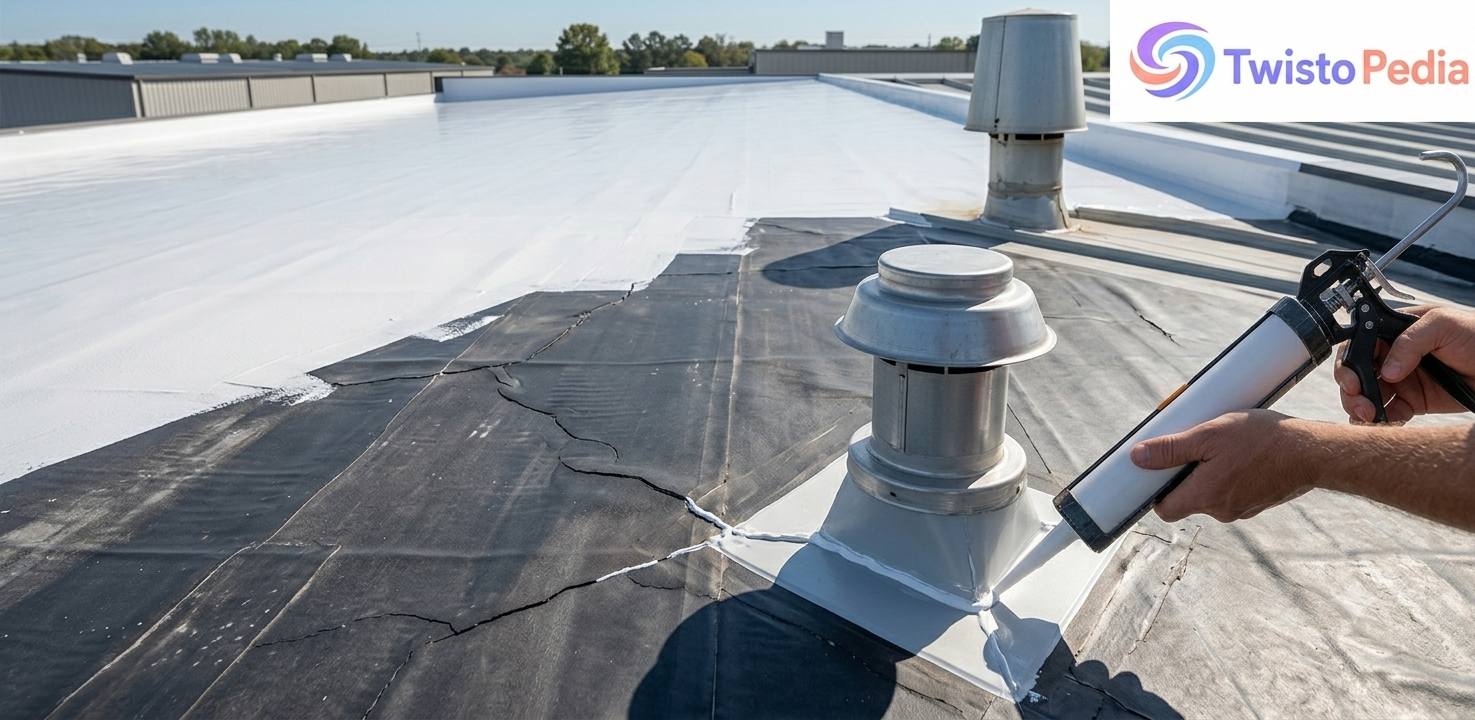
Homeowners weighing protection for their property often face confusion between roof sealants and roof coatings, two popular options wrongly used interchangeably despite distinct characteristics that separate long-lasting roof coating systems from spot-specific problem areas repairs.
Their purposes differ too: roof coating delivers waterproofing across large-scale maintenance projects, extending lifespan and offering a cost-effective choice, while roof sealing focuses on preventative maintenance in targeted areas, ideal for maintaining roof reliability overall.
Ultimately, choosing the right roof sealant versus a full coating system depends on your roof’s condition, climate exposure, and budget, making informed comparison essential before committing to any protective roofing solution for lasting performance today.
Roof Coating Vs Roof Sealant
A roof coating forms a protective membrane spanning the entire roof surface, boosting reflectivity while resisting UV rays, temperature extremes, and weather elements, ultimately strengthening roof performance and extending overall roof life significantly year after year.
Meanwhile, sealants target water infiltration directly, addressing gaps, seams, and small cracks around flashing points and joints, preventing moisture ingress before it triggers corrosion, offering a dependable waterproofing barrier wherever leaks threaten a metal roof.
Beyond leaks, cracks left untreated compromise durability, so a targeted repair restores strength quickly, while a broader coating adds water resistance and energy efficiency, proving both approaches serve complementary roles in complete roof protection strategies.
Composition / Materials
Roof coatings typically rely on acrylic, silicone, polyurethane, or elastomeric formulas that adhere firmly to varied surfaces, staying flexible enough to expand and contract through temperature changes while forming a seamless membrane resisting ponding water well.
Sealants, by contrast, include bitumen-based sealants, caulk, mastic, roof tapes, asphalt, and liquid rubber, often paired with self-adhesive membranes for vents and pipe penetrations, delivering solid waterproofing and abrasion-resistant, UV-resistant protection during emergency repairs daily.
In demanding settings like high-traffic areas, roofers often blend both material families, layering elastomeric coatings over sealed joints to maximize longevity, ensuring every surface stays protected regardless of climate, weather exposure, or structural roofing complexity.
Application Method
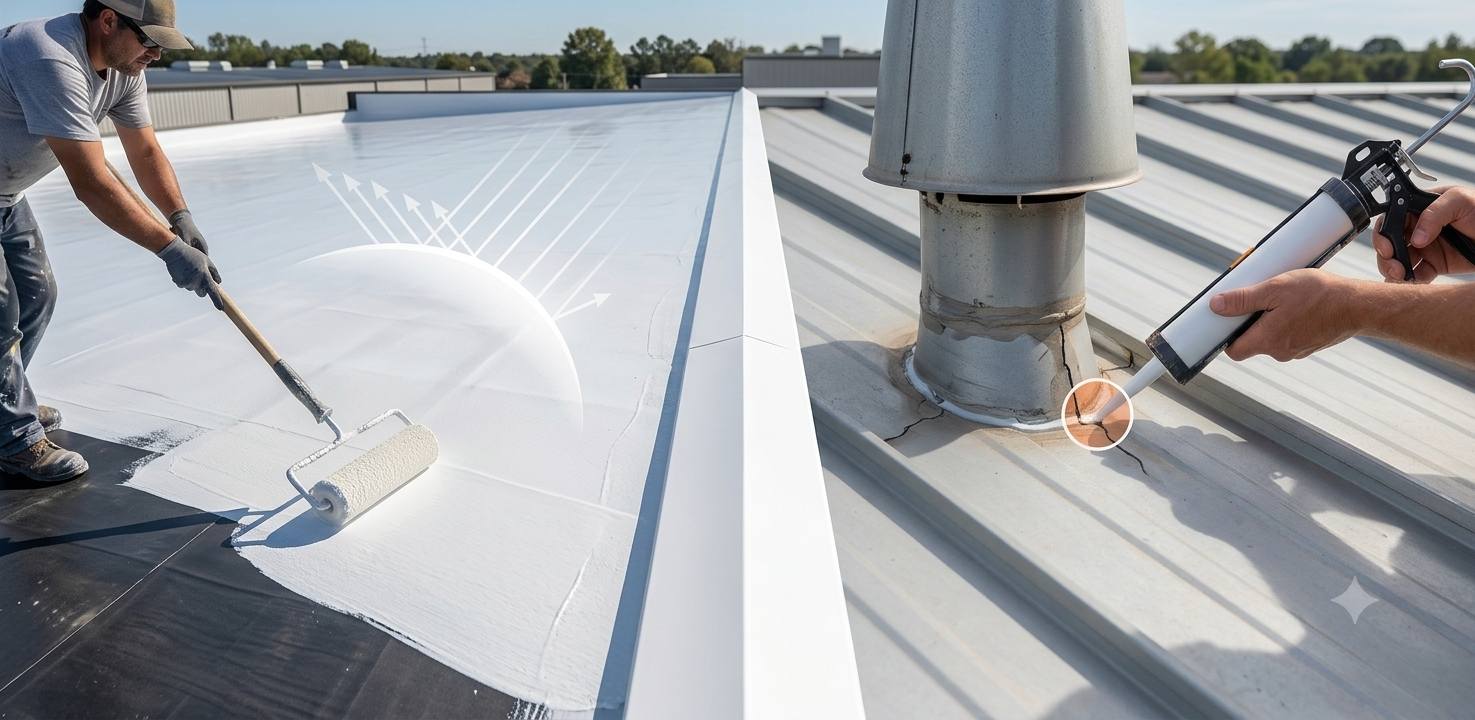
Applying a sealant usually calls for a caulking gun, trowel, or similar hand tool, letting installers focus precisely on specific areas requiring repair or reinforcement without disturbing surrounding roofing material or wasting excess product unnecessarily.
Coatings, however, spread across the entire roof surface using a roller, brush, or airless spray equipment, ensuring comprehensive protection reaches every corner, edge, and seam evenly without leaving thin spots that later invite leaks or damage.
Choosing the right application method genuinely matters; rushing the process, skipping surface preparation, or using the wrong tool undermines results, whether you rely on a caulking gun for detail work or spray equipment for full coverage.
Key Differences
Every comparison starts with purpose and coverage: one product delivers full-roof protection while the other handles targeted repairs, and material type shapes performance, since acrylic, silicone, polyurethane, or elastomeric formulations behave differently under sun, rain.
Longevity separates them too, preventative coatings lasting 10–20 years against sealants lasting closer to 1–5 years, though bitumen, caulk, tape, and liquid rubber excel at leak control in localised areas like joints, cracks, and seams.
Ultimately, the right product depends on surface preparation, material condition, and location; a well-prepped roof accepts either treatment more effectively, proving groundwork often matters as much as the formula chosen for lasting protection performance daily.
Longevity & Maintenance
Sealants generally carry a shorter lifespan, often needing reapplication within just a few years, especially around high-stress areas exposed to constant sun, rain, and foot traffic wearing down the material’s flexible bond over time daily.
Coatings, by comparison, offer longer-lasting protection, frequently rated for 10–20 years depending on product type and application quality, holding up well against shifting environmental conditions without demanding constant attention or costly annual upkeep routines today.
Regular inspections still matter for both systems, since durability depends heavily on installation quality, climate exposure, and roof slope, meaning even long-lasting products benefit from periodic checkups to catch small issues before they escalate today.
Cost Considerations
Sealants remain less expensive upfront, making them a cost-efficient, faster fix, though frequent reapplications can quietly inflate long-term costs, especially when repairs pile up across ageing homes or older commercial buildings needing constant attention yearly.
Coatings demand a higher initial investment yet often save money long-term by extending lifespan and reducing recurring repair calls; minor sealing jobs might run $150 to $600, while larger jobs involving complex repairs cost considerably more.
Budget-conscious owners find coating cheaper than a full reroof, while jobs involving a metal roof sealer or intricate flashing details push sealing costs upward, proving price ultimately hinges on roof size, material, and damage severity.
Energy Efficiency
Reflective roof coatings do far more than block leaks; they actively reduce heat absorption by bouncing sunlight away from the surface, keeping interior spaces noticeably cooler throughout scorching summer afternoons without straining air conditioning systems constantly.
Lower cooling costs naturally follow, making a reflective coating an energy-efficient option for property owners watching utility bills climb yearly, particularly in hot climates where rooftop temperatures directly influence indoor comfort and overall building performance.
Sealants alone don’t significantly contribute to thermal performance since they only patch small trouble spots, meaning owners chasing genuine energy savings should prioritize full coating coverage over piecemeal sealing whenever budget realistically allows today truly.
When to Use Roof Coating
Coating makes sense when a roof remains in good condition despite ageing, letting owners extend lifespan without committing to full replacement; a reflective coating particularly benefits a flat roof or low-slope roof where water pools frequently.
It also fits preventative maintenance plans and cost-effective restoration goals for commercial buildings and older homes, preserving intact roofing structures while lowering cooling costs and improving thermal regulation across large surfaces year-round efficiently.
An older metal roof especially benefits from elastomeric or silicone coatings applied directly over existing panels, avoiding costly tear-offs while restoring waterproof performance and visual appeal for years without replacing the underlying structure entirely.
When to Use Roof Sealing
Sealing works best when you’ve identified specific leaks or water intrusion points, especially around flashing and vent boots that have deteriorated over time, needing a fast fix before minor moisture problems spread into larger structural concerns.
It’s also an affordable fix for small damage on a roof that’s otherwise in good shape, delivering targeted repairs rather than a full long-term solution, ideal when the underlying structure remains sound and reliable overall.
But sealing won’t solve widespread issues; a roof nearing end-of-life or leaking across multiple areas needs more than patchwork, and in those cases full replacement or comprehensive coating becomes the smarter, more reliable long-term choice.
How to Choose the Right Option
Start by evaluating roof age and overall condition; a roof past 15 years old showing general wear likely benefits from coating, while isolated damage on an otherwise sound structure usually calls for a simpler, targeted fix.
Roof material also guides the decision: membrane roofs often pair well with silicone treatments, while tile roofs typically need compatible sealants matched precisely to surface texture, ensuring proper adhesion and long-term protection against weather damage.
Clarify your goals first: general maintenance and performance improvement point toward coating, while isolated trouble spots suggest sealing instead; either way, a professional inspection prevents wasted money on recurring issues and costly repairs later on.
Summary / Conclusion
For overall protection, sealant excels at repairing leaks and filling gaps, delivering precise treatment through patching cracks around problem areas like flashing and joints, ideal wherever isolated moisture threats demand focused, immediate attention rather than broad coverage.
An elastomeric coating, meanwhile, provides whole-roof coverage, helping prevent damage and extend lifespan while contributing to genuine energy efficiency, particularly across flat roofs and metal roofs where reflective performance matters most for extended roof life.
There’s no one-size-fits-all answer; the right choice depends entirely on roof type, current roof condition, and available budget, so consulting a qualified roofing professional remains the smartest step before committing to either treatment long-term today.