
Walk into most commercial kitchens built before sensors and automation became standard, and you’ll usually find one thing in common: energy waste. Extraction systems running flat out regardless of whether anyone’s cooking, trapped pollutants lingering in corners, staff propping doors open just to breathe properly. That’s the gap Ace Ventilation exists to close.
- What is Ace Ventilation?
- Services We Offer
- Products We Offer
- Trust/Credibility Points
- Partners & Clients
- Testimonials
- Contact Details
- Key Takeaways
- Why Does Indoor Air Quality Matter More Than Ever?
- What Is Smart Ventilation?
- What Technologies Power Automated Indoor Air Quality?
- Indoor Air Quality Sensors
- How Does Demand-Controlled Ventilation Work?
- What Are Heat Recovery and Energy Recovery Systems?
- How Does Ventilation Fit Into the Smart Home Ecosystem?
- How Can Automation Rules Improve Your Air Quality?
- How Much Energy Does Smart Ventilation Save?
- How Is Artificial Intelligence Transforming Home Ventilation?
- How to Get Started With Automated Indoor Air Quality
- The Future of Smart Home with Smart Ace Ventilation
- FAQ
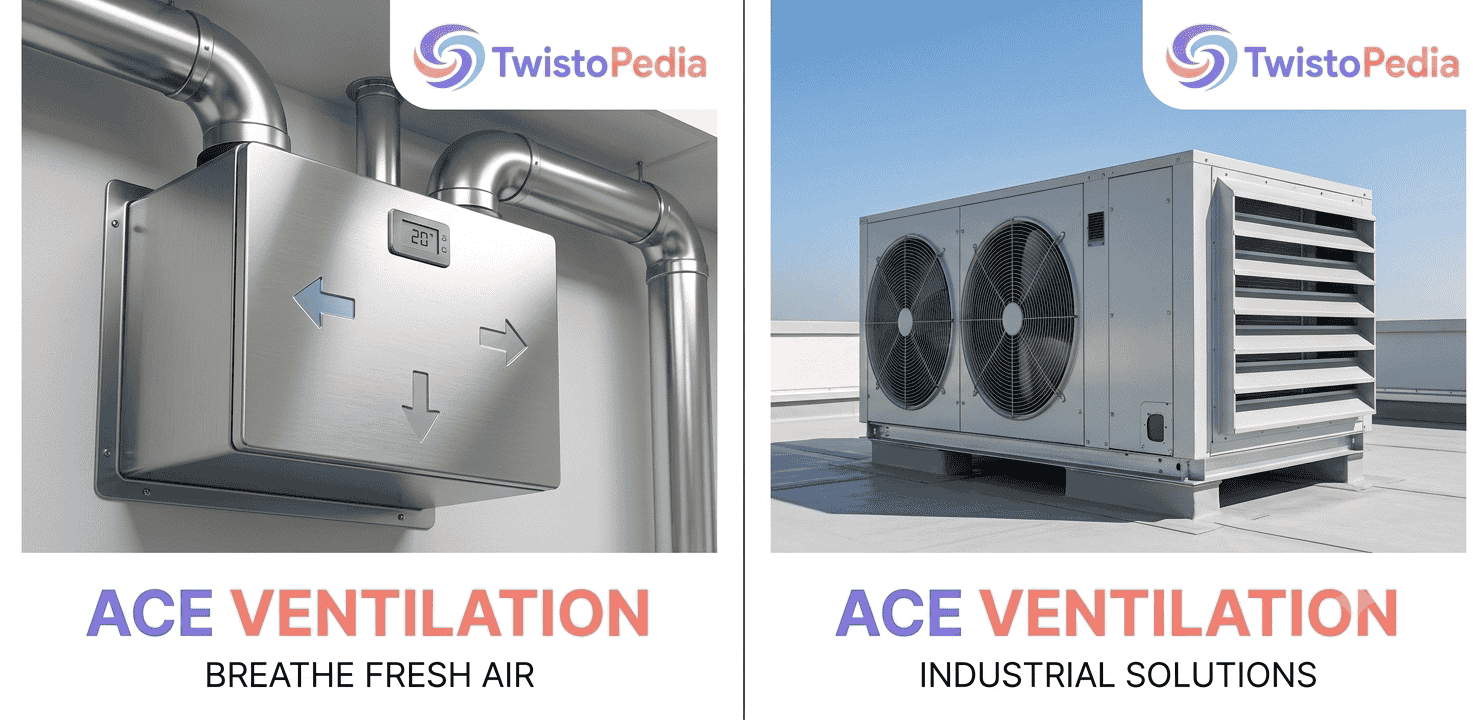
We design and manufacture custom stainless steel ventilation systems — built from shop drawings through to professional installation — for kitchens, cafés, and restaurants that need airtight construction without sacrificing airflow where it actually matters. Every project is built to meet Australian Standards and comes with the compliance certificates councils ask for, so there’s no back-and-forth at sign-off.
What’s changed over the past few years is the technology sitting behind the ductwork. Smart home system-style controls, performance data dashboards, and sensor-driven control now let a kitchen exhaust system respond to real conditions instead of running on a fixed timer. That single shift — from schedule to response — is where most of the indoor air quality and energy efficient gains actually come from.
Whether you’re fitting out a new commercial kitchen from the ground up or replacing an underperforming exhaust system in an older building, the process starts the same way: a free site inspection, a full-service design conversation, and a free quote with no guesswork attached. From there it’s practical steps — not sales talk — through to a system that moves the air per day your space actually needs.
What is Ace Ventilation?
Ace Ventilation is a full-service ventilation provider working across commercial kitchens, homes, and light commercial spaces, offering tailored systems rather than off-the-shelf units. Every job runs through a consulting team first, so the design actually matches how the space is used day to day — not a generic template.
Our approach centres on custom manufacture. Hoods, ducting, and filtration are built in stainless steel to match the kitchen’s layout, then installed by a professional installation crew who work to keep projects on budget and on time. Nothing is subcontracted out to guesswork.
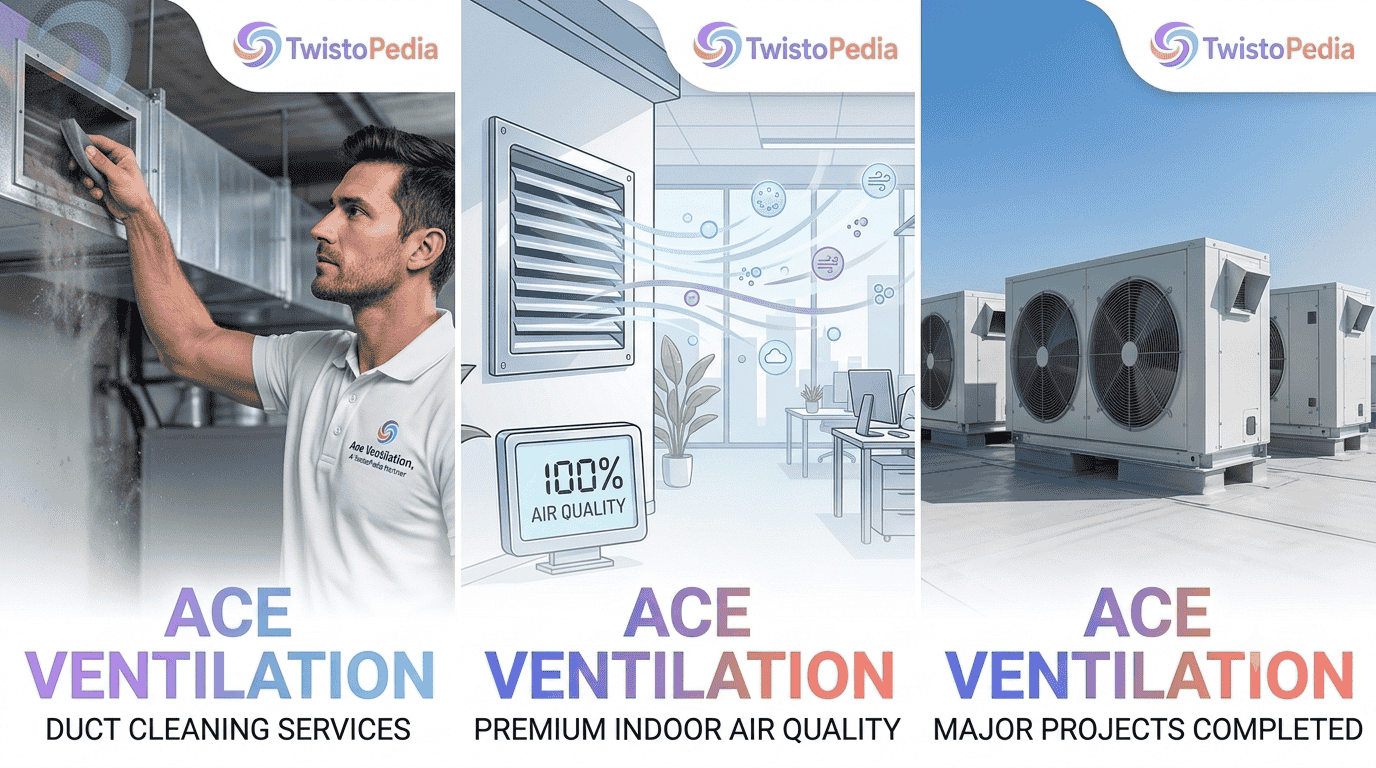
Where a client wants it, we integrate sensor-driven control — CO2, VOCs, particulates, and humidity monitored in real-time conditions so the system can automatically adjust airflow rather than run at one fixed speed all day. This automated approach is optional; plenty of clients are still better served by simple, robust manual control.
At its core, this is a technical design business first. We think about indoor air quality as an engineering problem tied to business needs — extraction load, make-up air, grease capture, noise — and build the commercial kitchen solution around that, not around a catalogue.
Services We Offer
- New Kitchen Fitouts — ground-up design for new commercial kitchens, built to be compliant from day one, with new layouts planned around real workflow rather than retrofitted around existing walls.
- Kitchen Renovations — extraction and moisture management upgrades that work around live sites, aiming for minimal disruption while equipment stays operational wherever possible.
- Fan Replacement — swapping out underperforming systems and replacement exhaust fans on tired ducting, often the fastest way to fix persistent heat and odour complaints.
- Commercial Laundries — extraction systems designed for commercial laundry spaces, where heat and moisture loads behave differently to a standard kitchen line.
- Ventilation Upgrades & Sourcing — general ventilation upgrades, equipment sourcing, and installing replacement parts for systems we didn’t originally manufacture.
Products We Offer
- Commercial Kitchen Exhaust Hoods — custom stainless-steel hoods built to match kitchen layout and capture smoke at the source.
- Commercial Kitchen Exhaust Fans — sized for high-volume air movement, with in-line duct fans and vertical discharge options depending on roof access.
- Heavy-Duty Grease Filters — heavy-duty grease filters designed to catch grease before it reaches ducting, cutting odour and helping reduce fire risk.
- Commercial Kitchen Filters — including Electrostatic Air Filters for finer particulate capture where standard mesh isn’t enough.
- Every product is built locally and specified to meet Australian Standards and site-specific compliance requirements.
Trust/Credibility Points
- Precision-engineered systems, backed by council-ready documentation so approvals move faster.
- Built around Australian Standards compliance at every stage of design and manufacture.
- [50 years] industry experience — (confirm actual figure; source data listed “50 years” — only publish if accurate).
- A free site inspection and free quote before any commitment.
Partners & Clients
We regularly work alongside kitchen designers, shopfitters, and equipment suppliers on new fitouts, and directly with restaurants, clubs, and schools on both new builds and upgrades.
Testimonials
(No fabricated quotes included. If you can share real client feedback, even a short line, I’ll format it here. Clients typically value three things most: timeliness, service quality, and budget adherence — a short quote from a real client on any of these would carry more weight than generic copy.)
Contact Details
- Address: [Street address], [Suburb], NSW
- Service area: Sydney-based, servicing [list suburbs/regions]
- Phone: [phone number]
- Email: [email address]
- Trading hours: [e.g. Mon–Fri, 7am–4pm]
Key Takeaways
- Sensor data and real-time conditions now drive smart home integration for ventilation, not just fixed schedules.
- Well-tuned automation can deliver meaningful energy savings — industry research points to figures in the 60 percent range under the right conditions, though results vary by building.
- Sensors measuring CO2, VOCs, humidity, and particulates are the foundation any automated system is built on.
Why Does Indoor Air Quality Matter More Than Ever?
Airtight construction in modern homes and commercial fitouts holds heating and cooling in efficiently, but it also holds trapped pollutants in — CO2 levels creep up, dust mites and mold find damp corners, and chemical fumes from cleaning products or new furniture don’t have anywhere to go.
The knock-on effects are easy to dismiss individually but add up: poor sleep, restless sleep, fatigue, headaches, and reduced concentration are all associated with poor indoor air quality, particularly in bedrooms and closed offices. Allergy flare-ups are often the first visible sign something’s off.
A space can look and feel clean while still running at low concentration of fresh air relative to occupancy. That’s the part standard ventilation — a fan on a timer — struggles to catch, because it isn’t actually measuring anything.
What Is Smart Ventilation?
Smart ventilation replaces guesswork with a loop: sensors measure air conditions, a controller runs the numbers against set thresholds, automation rules decide what’s needed, and equipment adjusts — that’s the basic four-step cycle running in real time.
Unlike fixed-schedule systems, which run extraction at the same rate whether a kitchen is empty or slammed, smart systems analyze data continuously and change airflow based on what’s actually happening in the room right now.
The difference shows up most clearly in variable-occupancy spaces — a busy kitchen at lunch versus 3am, or a home office empty all day and full by evening. Fixed schedules can’t tell the difference. Sensors can.
What Technologies Power Automated Indoor Air Quality?
Behind every automated system sits a small stack of technologies working together: sensors collecting data, a decision engine turning readings into action, and the indoor air quality sensors themselves feeding it all. Two areas are worth understanding in more depth.
Indoor Air Quality Sensors
A functional system typically layers several sensor types: carbon dioxide sensors, VOC sensors (often metal-oxide VOC sensors), humidity sensors, and particulate matter sensors covering both PM2.5 and PM10. Combined through multi-sensor fusion, they build a fuller picture than any one reading alone.
Accuracy isn’t automatic. Sensor drift is a known issue — one review found VOC measurement error affecting roughly 12 percent of budget sensors after 12 to 24 months without recalibration, contributing to false alarms or missed ventilation shortfall events.
Common pollutant sources feeding these readings include cleaning products, paint, furniture off-gassing, pet dander, pollen, mold, dust, and everyday smoke and condensation. Healthy target ranges generally sit around humidity 30 to 70 percent and CO2 kept within roughly 50 to 100 ppm above outdoor baseline, though exact targets vary by standard.
Context-aware logic matters as much as the raw sensors — a spike in volatile organic compounds right after cleaning shouldn’t trigger the same air-clearing ventilation response as a spike with no obvious cause. A 2025 research review noted well-tuned context logic cut unnecessary fresh-air intake events by around 15 percent to 30 percent compared to threshold-only systems.
How Does Demand-Controlled Ventilation Work?
Demand-controlled ventilation (DCV) ties exhaust ramps up or down to real-time events rather than a fixed schedule — high occupancy or heavy cooking triggers more airflow; an empty house or idle kitchen lets the system throttle back and save energy.
Two main control approaches show up in practice: schedule-based systems as a baseline, versus dynamic control using Model Predictive Control (MPC) or, more recently, Deep Reinforcement Learning (DRL). In comparative studies, DRL-based control has shown energy savings in the range of a mean 35 percent, against roughly 12 percent reduction for simpler rule-based DCV — with some field trials reporting figures as high as 40 percent for CO2 management and 23 percent PM2.5 improvement alongside 14 percent CO2 reduction under MPC. Results vary meaningfully by climate, building type, and occupancy pattern, so treat any single percentage as indicative rather than universal.
What Are Heat Recovery and Energy Recovery Systems?
Heat Recovery Ventilation (HRV) and Energy Recovery Ventilation (ERV) both exhaust stale air while pulling in incoming fresh air, but route the two air streams past each other first so outgoing stale air transfers its heat — and, for ERV, some moisture — into the conditioned air coming in.
The practical difference is humidity. HRV transfers heat only; ERV, through dual-core ERV designs, also manages humidity levels, which matters more in severe cold climates where frost buildup can otherwise cause airflow imbalances.
Field performance data on sensible effectiveness varies by unit and installation quality, with some tested systems reaching figures around 72 percent to 85 percent, and a smaller number of high-end units claiming up to 75 percent to 8 to 14 percentage points above baseline mechanical ventilation systems. Proper installation matters as much as the unit itself — poorly sealed ducting can erase most of the gain.
Typical payback period on a well-specified system sits around 4 to 6 years, driven by reduced heating demand and lower energy use through the colder months.
How Does Ventilation Fit Into the Smart Home Ecosystem?
A connected ventilation system rarely operates alone anymore. It typically sits alongside smart thermostats, dehumidifiers, purifiers, mini-splits, and fans, all reporting into shared home hubs and mobile apps, often with voice assistants offering hands-free control.
The value is in coordinate responses — a coordinated unit approach where the thermostat, ERVs, and purification modules work from the same data rather than each reacting independently. If outdoor smoke events hit, the whole group can switch into recirculation mode via one routine, instead of one device sealing the house while another keeps pulling in outside air.
Most platforms still keep a manual override available for smart home devices, since automated smart home air management works best as a default, not an absolute — occupants can always step in, adjust settings, or simply balance temperature manually when the automated call doesn’t match what they actually want.
How Can Automation Rules Improve Your Air Quality?
Well-configured automation rules turn passive monitoring into action: a cooking ventilation mode that ramps extraction the moment CO2 or particulate thresholds are crossed, an overnight settings profile that prioritises quiet operation, and a morning fresh-air cycle to clear the house before occupants wake.
Filtration and allergy management rules built around pollen and particles counts, alongside temperature and humidity targets, keep conditions inside a comfortable band without someone checking an app constantly. One published feedback study reported user feedback averaging 4.3 out of 5.0 on satisfaction, with sleep optimization and reduced particulate levels cited most often — though a minority of respondents said they felt frustrated by systems that were proactive to the point of being intrusive, underscoring the value of keeping manual override genuinely accessible.
Reported energy savings from automation rules varied by study — commonly cited figures sit around 18 percent to 32 percent, with one one year field trial showing 28 percent in a mixed residential sample and real-time dashboards helping keep savings stable rather than drifting back up over time as occupants adjust habits. Fully automated systems generally outperform manual scheduling, but the gap narrows considerably in occupied, actively-managed homes.
How Much Energy Does Smart Ventilation Save?
Done properly, right-sized airflow avoids the two failure modes that waste the most energy: running over-ventilate on a fixed schedule when nobody’s home, and under-ventilating during peak load. Real-time air quality monitoring paired with intelligent ventilation systems is what closes that gap.
Reported building energy savings figures cluster around 60 percent in favourable cases, largely from heat recovery and energy recovery — reclaims conditioned air that would otherwise be exhausted straight outside — contributing directly to lower utility bills and a smaller carbon footprint. Results depend heavily on climate, building envelope, and existing system efficiency, so treat headline percentages as a range rather than a guarantee.
Because these systems run on IoT and home automation platforms, basic cybersecurity hygiene matters: strong passwords, unique passwords per device, regular firmware updates, encryption on the connection, and a quick read of the vendor’s data policies before connecting anything to your network — small steps, but ones that get skipped often.
How Is Artificial Intelligence Transforming Home Ventilation?
Artificial intelligence (AI) is shifting ventilation from reactive — responding after CO2 or particulates spike — toward predictive, where the system tries to ventilate in advance of a spike it expects based on patterns like scheduled cooking times or historic occupancy.
Forecasting models vary in sophistication. Some published research on an ensembled LSTM model reported forecast accuracy up to 94 percent accuracy for short-horizon CO2 prediction, with associated mean energy savings cited around 40 percent and unmet CO2 hours — periods where air quality exceeded target — cut by roughly 86 percent in simulations against baseline scheduling.
Beyond forecasting, AI-assisted fault detection frameworks are increasingly used to predict maintenance needs — flagging duct blockages or early sensor drift before they cause a noticeable drop in performance — and to coordinate ventilation across every room individually rather than treating a building as one zone, with personalize management improving as the system accumulates more data on that specific space. Model Predictive Control remains the more established, less data-hungry alternative for buildings without the history to train a full predictive model.
How to Get Started With Automated Indoor Air Quality
Getting started doesn’t require replacing an entire HVAC system on day one. A workable path generally runs through five steps:
- Assess indoor air quality — start with a single air quality monitor to get a baseline reading on CO2, humidity, and VOC before spending on anything else.
- Install environmental sensors — add particulate sensors and humidity coverage to key problem spots, rather than trying to cover a whole-house system immediately.
- Choose smart ventilation system — pick equipment that integrates with existing smart home devices and mobile apps you already use, so it isn’t a standalone island.
- Configure automation rules — set realistic thresholds for CO2, VOC, and particulates, covering common allergens and typical stale air buildup points.
- Monitor performance — use dashboards and trends data over the first few weeks to fine-tune thresholds rather than trusting default settings blindly.
Start small, then expand — most of the value shows up well before a full whole-house rollout is needed.
The Future of Smart Home with Smart Ace Ventilation
The direction of travel is toward systems that manage each room independently rather than treating a home or kitchen as one zone, using finer pollutant tracking and multi-sensor fusion to catch problems before pollutants build up to a noticeable level.
Adaptive learning systems are starting to learn routines well enough to anticipate needs rather than just react to them — a predictive AI layer sitting quietly behind personalized controls, adjusting whole-house ventilation systems based on genuine health needs rather than generic defaults.
The goal isn’t a louder, more visible system — it’s a quiet intelligent layer running in the background, with advanced detection doing the work so occupants notice cleaner air, not the technology delivering it.
FAQ
What is Ace Ventilation in a smart home?
It’s connected ventilation equipment — sensors for CO2, VOCs, humidity, and particulates paired with a controller that adjusts airflow automatically. This automated approach means managing indoor air quality happens continuously, with no manual control needed day to day, though override is always available.
How much can smart ventilation lower my energy bills?
Figures vary by building and climate, but 2025 research and industry averages suggest demand-controlled ventilation and intelligent ventilation systems can cut building energy use by up to around 60 percent in favourable conditions, against roughly 35 percent savings for simpler schedule-based systems upgraded with basic sensors.
Which sensors do I need for indoor air quality monitoring?
Most setups cover four core sensors: carbon dioxide, VOC, humidity, and particulate matter (PM2.5 and PM10). Between them, these address the main factors driving both comfort and health outcomes indoors — everything else is generally a refinement on this base.
Is Ace Ventilation safe from cybersecurity risks?
Basic precautions cover most risk: unique passwords and strong passwords on every device, install firmware updates promptly, enable encryption on your home network, and review data policy details from the vendor before connecting devices. None of this is complicated, but it’s easy to skip.
Can I add smart ventilation without replacing my whole HVAC system?
Yes — a standalone air quality monitor or smart exhaust fan can be added to an existing setup without disturbing it, and most platforms integrate cleanly so you can expand toward a full whole-house system later as needs grow, rather than committing to everything upfront.