
Every finishing project eventually comes down to one question: polycrylic or polyurethane? I’ve sanded, brushed, and refinished enough furniture, trim, and flooring over the years to know that the “right” answer depends entirely on the surface, the room, and how much abuse the piece will take. Below is a straight, practitioner’s look at how these two sealants actually compare, heading by heading.
- Polycrylic vs. Polyurethane: Major Differences
- Appearance
- Best for Appearance
- Water and Heat Resistance
- Best for Water and Heat Resistance
- Care and Cleaning
- Best for Care and Cleaning
- Durability and Maintenance
- Best for Durability and Maintenance
- Application
- Best for Installation
- Cost
- Best for Cost
- Lifespan
- Best for Lifespan
- Environmental Impact
- Best for Environmental Impact
- Polycrylic Top Brands
- Polyurethane Top Brands
- Polycrylic vs. Polyurethane: Which Should You Use?
- Does Polycrylic Make the Surface Waterproof?
- Does Polycrylic Make Wood Shiny?
- Will Polycrylic Turn Yellow?
Polycrylic vs. Polyurethane: Major Differences
A wood finish protects furniture, cabinets, and floors, yet polycrylic and polyurethane behave differently. One stays water-based, staying clear, while the other leans oil-based, drying into an amber tone across indoor and outdoor woodworking projects.
Choosing a sealant means weighing durability, drying speed, and application style first. Polycrylic dries fast with a runny consistency, while polyurethane thickens, resists scratches, dents, and wear-and-tear, and holds firm on high-traffic areas like trim.
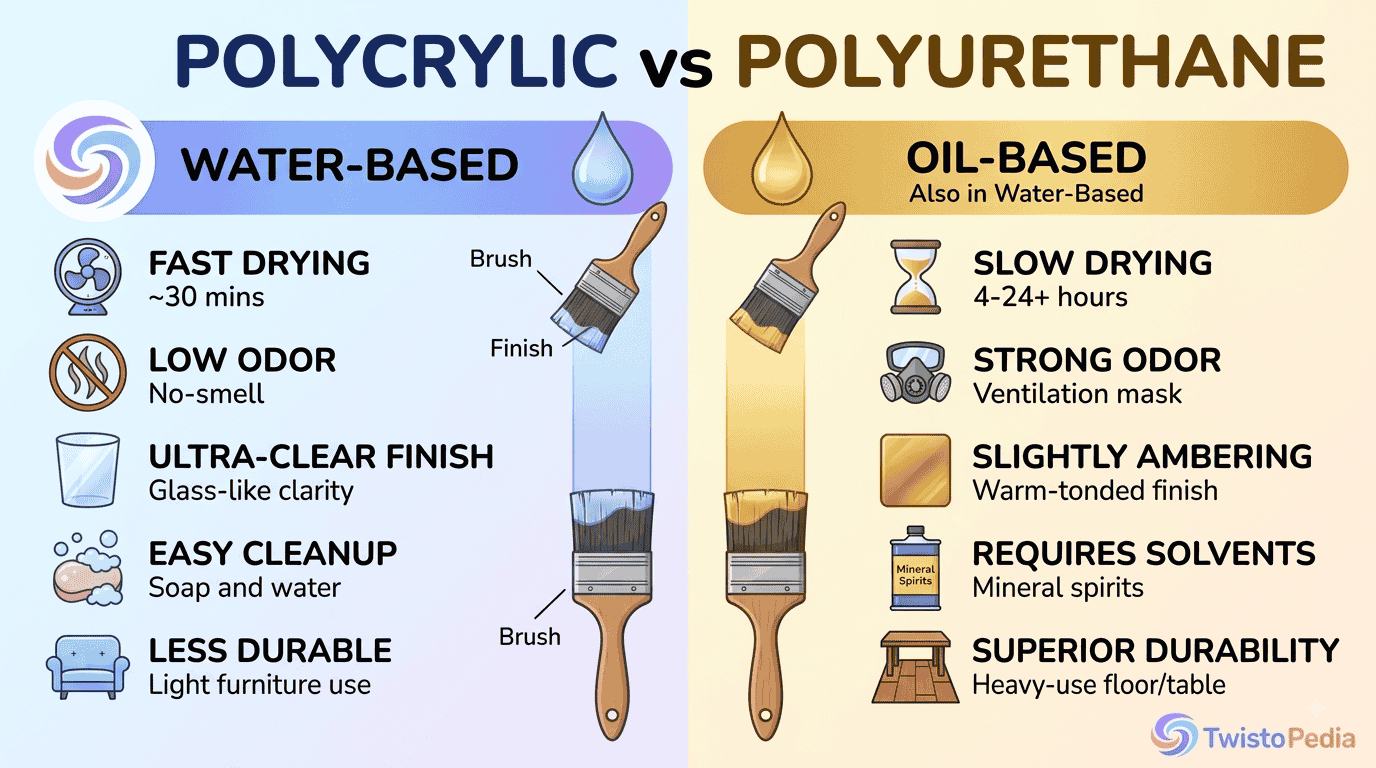
Cost, lifespan, and environmental impact separate these protective finishes further. VOCs run lower in polycrylic, while oil-based polyurethane carries a stronger chemical odor. Both need refinishing, but water resistance and heat resistance diverge across furniture.
Appearance
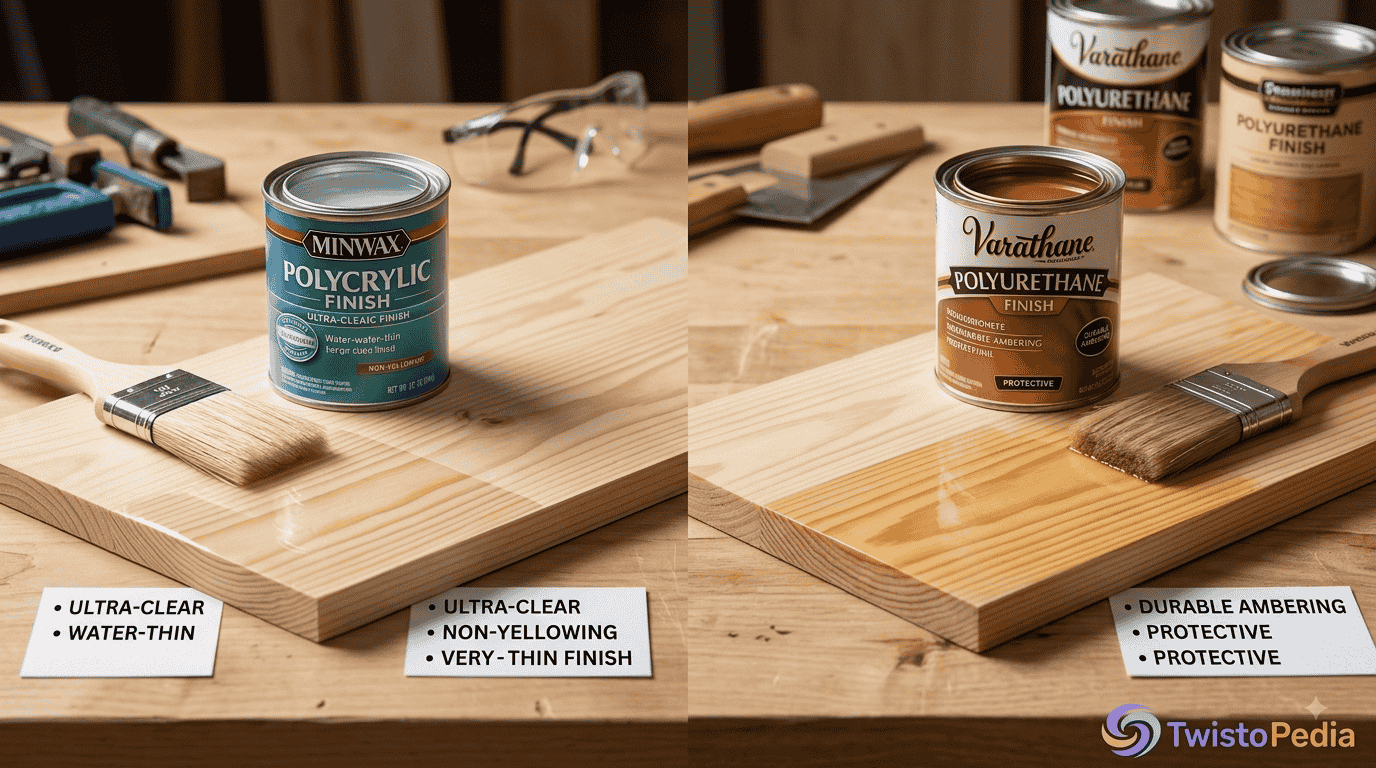
Straight from the can, Polycrylic vs Polyurethane dries clear with a faint milky white hue while wet, settling into an honest finish on light-colored wood like maple or birch without ever dulling or distorting the grain underneath.
Oil-based polyurethane shifts toward a yellow hue, sometimes called an amber cast, which deepens stained wood and red mahogany stain nicely but can noticeably dull crisp white paint or painted surfaces across interior trim areas.
Water-based polyurethane stays closer to non-yellowing, splitting the difference between these two extremes nicely. Pick satin, gloss, or matte sheen depending on whether your woodworking project needs a cloudy softness or a crisp surface look.
Best for Appearance
For light-colored surfaces, painted surfaces, and bright white paint, polycrylic wins outright, hands down. Its clear finish stays non-yellowing, so lighter woods keep their natural, honest tone instead of turning opaque or cloudy with age.
Darker woods, dark-colored surfaces, and rich stained pieces favor oil-based polyurethane for its warm residual color underneath. The amber tone flatters walnut and mahogany, though it visibly fights against any milky white hue finishes nearby.
If sheen matters more than tone, both offer satin, gloss, high gloss, and semigloss options worth trying. I lean polycrylic for trim and polyurethane for furniture, where a deeper non-yellowing finish options range helps most.
Water and Heat Resistance
Oil-based polyurethane delivers the strongest water resistance and heat resistance of any sealant I’ve personally tested over the years, shrugging off rain, spills, and mild burns on wooden furniture left carelessly near a hot mug.
Water-based polyurethane offers moderate resistance instead, holding steady against moisture indoors but struggling outdoors against direct sunlight and UV radiation. Polycrylic trails further behind, better suited to interior work than any exterior application at all.
Outdoor furniture, wood floors, and high-traffic areas all demand higher durability against relentless weather exposure yearly. Choose oil-based formulas for snow, sleet, and hail exposure; save polycrylic for calmer, sheltered protection where conditions stay mild.
Best for Water and Heat Resistance
Oil-based polyurethane is my clear pick for water resistance, heat resistance, and UV resistance working together in tandem. Nothing else in this category shields outdoor furniture and exterior projects from moisture as year after year.
Wood flooring and high-traffic floors both genuinely benefit from that same durability, since daily foot traffic brings both heat and spilled drinks constantly. Woodworking projects built for furniture near windows need this kind of protection.
Sealant choice really comes down to real-world exposure levels. Any protective finish facing genuine UV radiation or standing water should skip lighter options entirely and lean instead on the proven resistance delivered by oil-based polyurethane.
Care and Cleaning
Routine care for polycrylic only ever needs soap and warm water, since the water-based polyurethane surface naturally resists dust and grime without ever demanding harsh cleaning solution. A simple damp cloth handles most everyday spills.
Oil-based polyurethane, once fully cured, tolerates mineral spirits or paint thinner for stubborn drips and dirt left behind. Avoid scrubbing too early, before the protective layer sets, or you’ll mar that hard-earned dry finish beneath.
Cleanup habits matter for wooden furniture longevity over the years. I wipe wood surfaces weekly, letting the cured sealant do its job, and reserve deeper washing for woodworking project pieces that see heavy daily use.
Best for Care and Cleaning
Polycrylic takes the clear win for easy cleaning, since plain soap and warm water effortlessly lift dirt, dust, and grime without ever really needing mineral spirits or paint thinner anywhere near your carefully cured finish.
Water-based polyurethane follows closely behind, sharing that same gentle cleanup routine day to day. A damp cloth wipes away spills fast, keeping the protective finish looking fresh with only minimal scrubbing or washing effort required.
Oil-based polyurethane demands more patience, since drips need mineral spirits and the surface must be cured before any real washing begins. Worth it for durability, sure, but not for lazy weekend cleaning days at all.
Durability and Maintenance
Polyurethane, especially oil-based polyurethane, offers genuine high durability against physical damage like scratches, dents, chips, and genuinely nicks noticeably everywhere. Chairs and floors under heavy use hold up impressively across many years of relentless wear-and-tear.
Polycrylic provides only moderate protection, fine enough for commonly used furniture that sees light, gentle handling but not built for frequent use or aggressive abrasion. The underlying wood stays safe underneath, just less heavily armored
Maintenance looks fairly similar for both finishes: occasional retouching and refinishing extend overall lifespan. Wood flooring in high-traffic areas needs attention sooner, while wooden furniture tucked quietly away keeps its durability for far, far longer.
Best for Durability and Maintenance
Oil-based polyurethane stands as the toughest realistic choice against physical abrasion, scratches, dents, chips, and nicks of every kind. High-traffic areas and wood flooring subjected to heavy use genuinely need this kind of high durability.
Water-based polyurethane balances decent maintenance needs with noticeably easier refinishing later on, making it a fair genuinely middle noticeably ground for furniture and floors that see moderate, not constant, wear-and-tear throughout an average, ordinary week.
When underlying wood needs genuine long-term shielding, skip lighter coatings without hesitation. Protective finish layers from oil-based polyurethane simply outlast anything thinner, cutting down noticeably how often retouching interrupts your regular maintenance schedule each year.
Application
Grab a synthetic bristle brush, sprayer, roller, or aerosol can depending on the woodworking projects size and scope. Polycrylic‘s runny consistency spreads thin easily, while polyurethane‘s thick consistency needs slower, more deliberate coats applied carefully.
Apply three coats total, sanding lightly between each one with steel wool or a nylon scrubby to smooth out any brush marks, lap marks, drips, sags, and stray bubbles well before the next layer cures.
Work inside a well-ventilated space with a respirator close on hand, since VOCs build up surprisingly fast. Vertical surfaces, contoured surfaces, and large projects all need patience through the full drying time and cure time.
Best for Installation
For large projects and vertical surfaces, polyurethane‘s thick consistency resists sagging far better than polycrylic‘s runny consistency, genuinely giving you more real control during application on ambitious woodworking projects planned around the house this season.
Small woodworking projects and simple indoor use favor polycrylic instead, thanks to quick drying, low VOCs, and being fully non-flammable throughout. Cleanup stays refreshingly simple, and a basic brush or sprayer handles the whole job.
Whichever finish you pick, keep ventilation running steadily throughout the entire installation. Ease of application improves dramatically once airflow clears the fumes, letting each layer set properly before you judge the final protective finish honestly.
Cost
A standard quart of polycrylic typically runs cheaper than oil-based polyurethane, landing closer to around $20, while heavier oil-based finish options climb toward $30 or beyond, depending heavily on brand reputation and overall price range.
Water-based finish products sit in a similar bracket, sometimes touching $50 for premium sealant lines. Product cost scales with finish quality, coverage area, and how many quart containers your woodworking project actually ends up needing.
Budgeting for a full room means comparing price per coat, not per quart alone. Cheaper polycrylic can still cost noticeably more overall if the application requires extra coats just to match oil-based polyurethane‘s single-layer coverage.
Best for Cost
Polycrylic generally wins on upfront price, making it the clear lower cost option for budget-conscious woodworking projects everywhere. A single quart stretches comfortably across several small pieces without straining your overall finish budget too much.
Oil-based polyurethane carries a higher cost per quart, but its strong durability can offset that gap over genuinely time by reducing how often you must buy fresh sealant for the same furniture or flooring project.
Water-based polyurethane sits comfortably between the two extremes, offering a fair product price for anyone wanting genuinely polyurethane‘s noticeably toughness without the steepest cost tied to traditional oil-based formulations still sitting on the hardware shelf.
Lifespan
A well-applied protective finish from polyurethane typically lasts around three years before refinishing genuinely becomes necessary, genuinely though noticeably wood floors under heavy use may need earlier retouching sooner than a quieter piece of furniture.
Polycrylic‘s lifespan runs shorter, since its sealant layer is thinner and more prone to everyday wear. Expect reapplication on woodworking projects handled often, while decorative wood pieces stretch that cured finish considerably longer than expected.
Maintenance habits genuinely stretch either finish‘s working life over time. Cleaning spills promptly and avoiding harsh abrasion genuinely keeps durability intact, delaying reapplication and preserving continued protection across both furniture and flooring types for years.
Best for Lifespan
Oil-based polyurethane genuinely lasts longest, often exceeding three years on wood floors before refinishing becomes truly urgent. genuinely Its thicker protective finish simply endures far more wear-and-tear than lighter alternatives found around the average home.
Polycrylic needs earlier retouching, especially on woodworking projects exposed to frequent daily handling. Its lifespan shortens noticeably genuinely faster near high-traffic spots, though reapplication stays quick and refreshingly low-effort compared to a full refinishing job.
For furniture you rarely even touch, either sealant performs perfectly fine long-term. But for wood floors carrying real, constant foot traffic, polyurethane‘s extended lifespan and slower maintenance cycle make it the clearly smarter durability bet.
Environmental Impact
Water-based polyurethane and polycrylic both keep VOCs and volatile organic compounds noticeably lower than their oil-based counterparts, making them considerably gentler on indoor air and easier to use safely without heavy chemical exposure lingering afterward.
Oil-based polyurethane is combustible and carries a stronger chemical odor, sometimes producing noxious fumes that linger for hours. A well-ventilated space, plus a proper mask or respirator, becomes absolutely essential during any real solvent-based application.
Environmental impact also touches on safety during storage and eventual disposal. Non-flammable water-based options simplify that whole concern while high VOCs finish choices demand far more caution around ventilation and open flame near sealant cans.
Best for Environmental Impact
Polycrylic is the clear winner for overall environmental impact, staying fully non-flammable with low VOCs and minimal genuinely volatile organic compounds compared to anything oil-based sitting quietly on that same hardware shelf at the store.
Water-based polyurethane follows closely behind, cutting down chemical odor and chemical fumes while remaining genuinely environmentally genuinely friendly noticeably for indoor air quality during longer application sessions inside a typical enclosed workshop space at home.
Oil-based polyurethane trails distinctly last here, being combustible with heavier chemical exposure risks attached. If ventilation is limited, or you’re actively avoiding solvent-based products entirely, skip it and grab a respirator anyway just in case.
Polycrylic Top Brands
Minwax leads most polycrylic shelves nationwide, prized for its reliable water-based finish and honest acrylic base formula genuinely that suits interior surfaces like cabinets, trim, and everyday furniture without much fuss or hassle at all.
General Finishes offers a noticeably sturdier sealant line, still fully water-based, favored by serious hobbyists tackling detailed genuinely woodworking pieces where a clean protective finish genuinely matters more than raw application speed on the shelf.
Varathane rounds out the field nicely with budget-friendly wood finish options built on that same acrylic base genuinely chemistry, competing directly with polyurethane for casual furniture and trim projects planned around the house this year.
Polyurethane Top Brands
Minwax again dominates polyurethane shelves nationwide, offering both water-based polyurethane and oil-based polyurethane lines trusted genuinely for noticeably furniture, truly floors, really and general wood finish durability across many decades of continuous, reliable everyday use.
Varathane brings genuinely strong exterior formulas, built specifically for outdoor furniture and lasting UV resistance, while their genuinely interior blends handle wood trim with dependable water resistance and heat resistance ratings you can actually trust.
Rust-Oleum rounds things out nicely with accessible protective finish options, balancing solid durability and price for genuinely anyone noticeably tackling floors or furniture without needing an expensive specialty sealant pulled from some boutique brand’s shelf.
Polycrylic vs. Polyurethane: Which Should You Use?
For indoor, light-colored furniture like interior trim or painted surfaces, I reach for polycrylic every single time, since its non-yellowing finish avoids that amber cast and keeps white surfaces looking genuinely, honestly white for years.
Outdoor projects, wood floors, and anything sitting in high-traffic areas call for oil-based polyurethane instead, thanks to genuinely its superior durability, water resistance, heat resistance, and real, proven defense against UV radiation and everyday wear-and-tear.
Seldom-used furniture and cabinets can honestly lean either way, but commonly used furniture under heavy use truly deserves that tougher, long-lasting protection. Factor in chemical odor, VOCs, and ongoing maintenance before making your final decision.
Does Polycrylic Make the Surface Waterproof?
Polycrylic isn’t truly waterproof in the strictest sense, though it is genuinely water-resistant, forming a protective coating that beads off light moisture while still allowing some stains to slowly seep in with prolonged, repeated exposure.
Compared directly to polyurethane, polycrylic offers noticeably lower water resistance overall, so standing moisture left sitting on genuinely furniture or a finished surface can eventually damage the sealant underneath if left completely unattended too long.
For genuinely stain-resistant performance near kitchen sinks or wood surfaces facing regular splashes daily, oil-based polyurethane genuinely provides noticeably higher water resistance and a noticeably sturdier protective finish than polycrylic could ever manage entirely alone.
Does Polycrylic Make Wood Shiny?
Yes, polycrylic can absolutely make wood genuinely shiny, depending entirely on which specific sheen you happen to buy. High gloss options produce a glossy, deeply reflective finish that beautifully highlights the grain across any surface.
If you prefer a subtler, quieter look instead, matte or satin polycrylic delivers a soft, understated flat genuinely appearance instead, keeping the protective finish low-key while still properly sealing the underlying wood beneath it well.
Gloss levels genuinely aren’t about durability at all, they’re purely aesthetic choices. Choose your sheen based simply on the room’s overall mood, since every single option still provides that same core sealant protection underneath regardless.
Will Polycrylic Turn Yellow?
No, genuine polycrylic stays reliably non-yellowing over many years, unlike oil-based polyurethane, which slowly develops a warm cast as it steadily ages, especially noticeable on lighter woods and pale light wood trim throughout the house.
That clear, honest finish is exactly why polycrylic suits crisp white paint and painted surfaces so well, avoiding the milky or cloudy yellowing issues that some older oil-based finish products tend to show over time.
On darker woods or over a rich red mahogany stain, a slight amber warmth might feel welcome and intentional, which is one more reason to choose oil-based polyurethane there instead of reaching for plain polycrylic.