

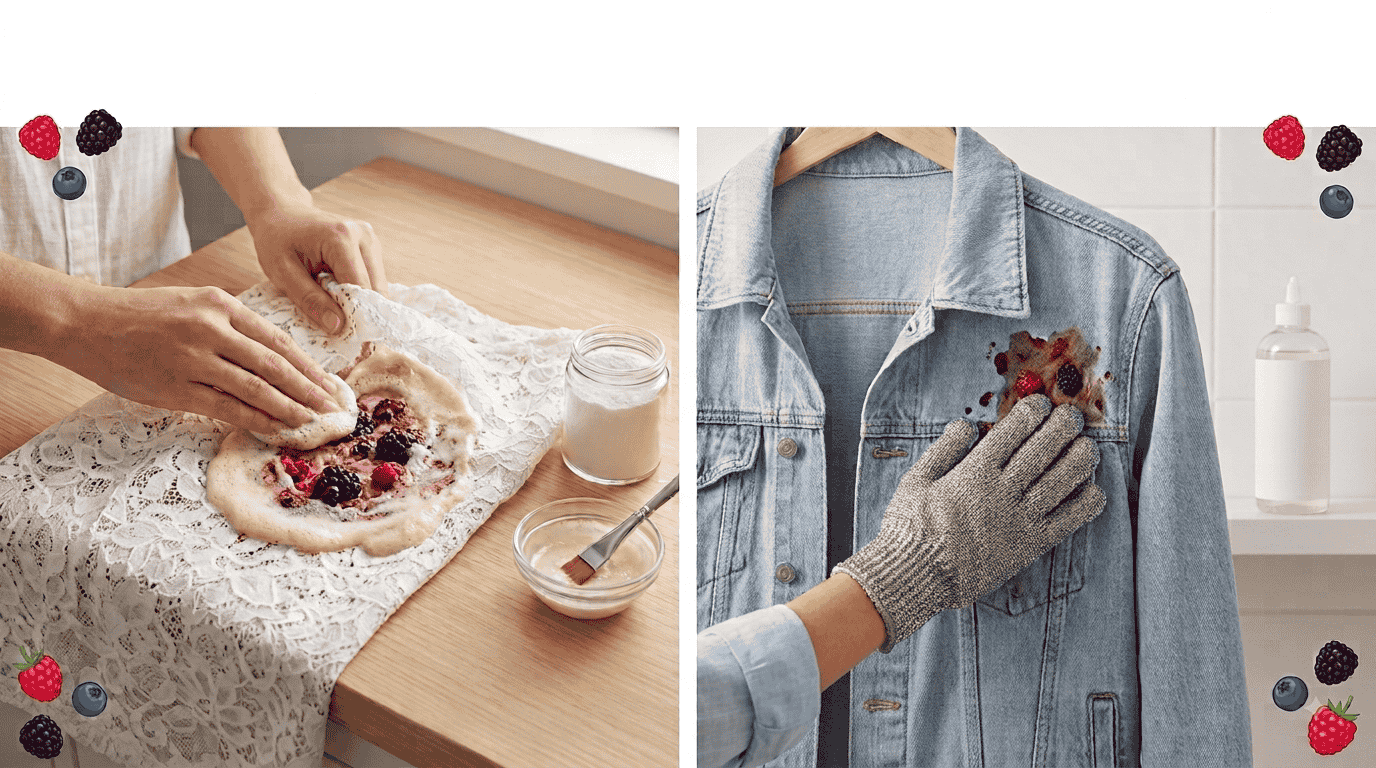
Berry stains often surprise people because a small spill from berries can create tough stains across different materials. My experience with fabric care shows that quick stain treatment decisions matter, especially with fresh stains containing strong pigments.
- How To Remove Berry Stains: Why They’re So Hard To Remove
- Immediate Action: Remove Fresh Berry Stains Quickly
- How To Remove Berry Stains From Clothes (General Method)
- Methods For Removing Berry Stains
- Vinegar And Dish Soap Method
- Lemon Juice Method
- Oxygen Bleach Soak
- Boiling Water Pour Method
- Hydrogen Peroxide Method
- Boiled Milk Method
- Fabric-Specific Guidance
- What Not To Do When Removing Berry Stains
- Berry Stain Prevention Tips
- Quick Scenarios
Understanding berry stain removal requires attention to anthocyanins, water-soluble pigments, and their interaction with fabric fibers. These natural compounds create vivid stains through bonding, making immediate stain removal more effective.
Whether dealing with blueberries, blackberries, raspberries, or strawberries, the right technique changes outcomes. A practical approach combines cold water, suitable products, and careful methods instead of aggressive cleaning.
How To Remove Berry Stains: Why They’re So Hard To Remove
Berry stains become challenging because anthocyanins are powerful water-soluble plant pigments that create intense colours. These natural dyes attach to textile fibres, forming connections through hydrogen bonds and electrostatic interactions during staining.
From professional observations, berry juice behaves differently on each fabric. Cotton and wool can hold stubborn stains because pigments create a deeper bond with fibres when ignored for longer periods.
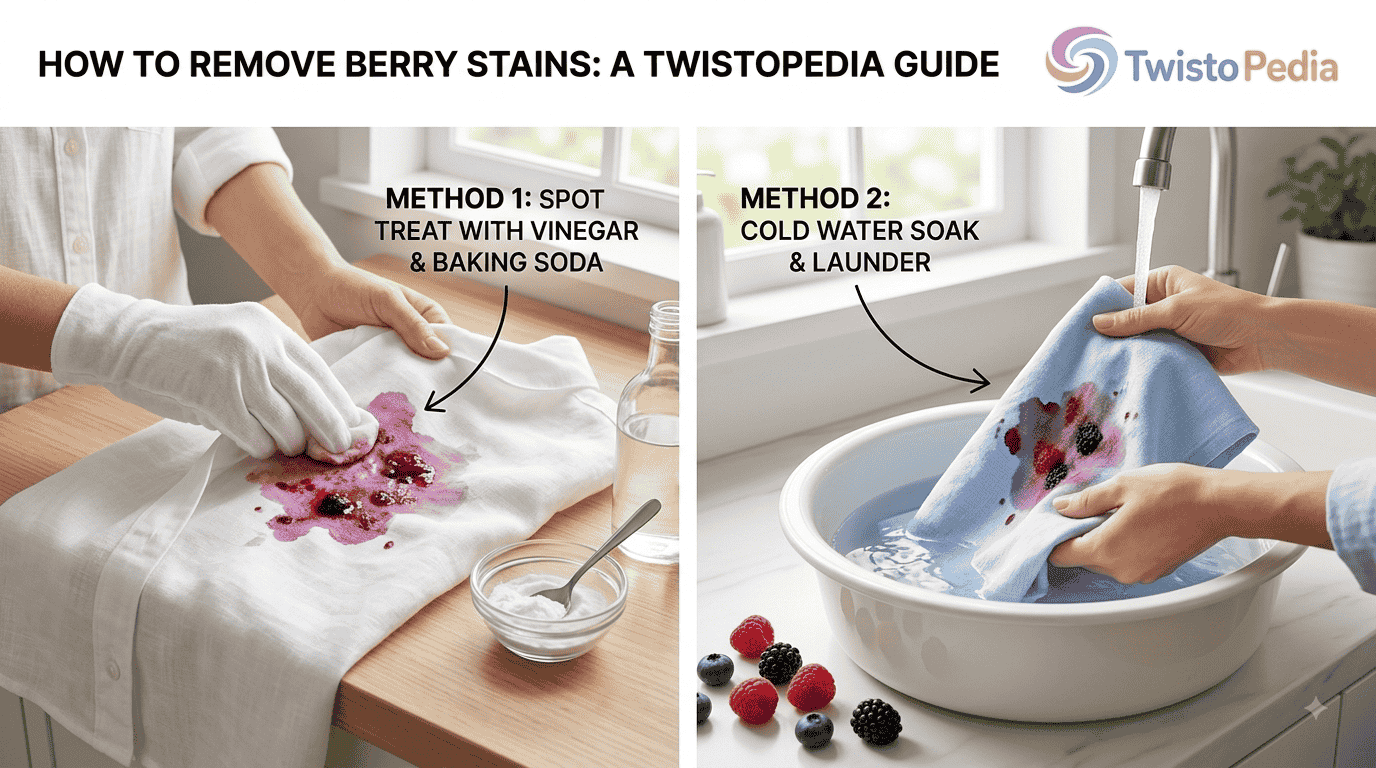
Many people accidentally worsen set stains by using heat, dryer settings, or hot water too early. This increases stain permanence because heat strengthens pigment attachment before proper cold treatment and removal.
Immediate Action: Remove Fresh Berry Stains Quickly
The first response determines success when handling fresh berry stains. Begin with immediate action by removing pieces of berry from the garment carefully. Avoid pressing because it pushes juice deeper into fabric fibres.
Use a damp cloth to absorb stain residue from the affected area. A gentle approach prevents rubbing and limits spreading pigment while preserving the original condition of the fabric.
Experienced cleaners recommend treating the reverse side using cold water to flush stain particles outward. When water runs clear, continue gentle cleaning instead of applying harsh methods that damage fibres.
How To Remove Berry Stains From Clothes (General Method)
A reliable clothing approach begins with choosing the correct stain remover and understanding the fabric response. I usually recommend users apply directly on the mark, then massage gently using clean fingers before deeper treatment.
After application, allow the garment to soak with suitable water conditions. Using warm water carefully can support removal, while checking the garment label prevents mistakes during the entire cleaning process.
The final stage involves proper machine washing and controlled drying. Follow washing instructions, select a regular cycle, use low temperature water, then air dry while allowing natural sunlight to support stain fading.
Methods For Removing Berry Stains
Different stain removal methods work depending on the age and intensity of the mark. Fresh spills require immediate attention, while set-in stains often need stronger solutions designed for specific washable fabrics.
Natural approaches such as vinegar, dish soap, and lemon juice remain popular because they support gentle cleaning. Professional routines often combine these options with careful rinsing and controlled washing.
For difficult marks, oxygen bleach can assist with pigment removal without unnecessary damage. Understanding anthocyanins, fabric reactions, and proper cleaning methods creates better results for berry-related problems.
Vinegar And Dish Soap Method
For fresh marks, the combination of white vinegar and dish soap provides a practical solution. Begin with blotting and cold rinsing before applying ingredients directly to the affected fabric area.
Allow the mixture to remain briefly after direct application. A five-minute wait followed by gentle work with fingers helps the solution interact with residue while avoiding unnecessary fibre stress.
Continue with a careful rinse after the treatment. The process may require repetition using regular detergent, a coldest setting, and another wash cycle to remove remaining berry residue.
Lemon Juice Method
A simple approach for lighter materials uses lemon juice because its acidic nature can assist with pigment breakdown. Apply it carefully on white fabrics and suitable natural materials.
For enhanced treatment, combine lemon juice with table salt and allow the mixture to work. After thirty minutes, remove salt particles and rinse using cold water.
Always perform a hidden area test first, especially on coloured items. The mild bleaching properties of lemon require caution because some fabrics may react differently.
Oxygen Bleach Soak
For older marks, an oxygen bleach soak provides a controlled approach for removing set-in berry stains. This method works well when stains have survived wash cycle challenges but have not been permanently affected by dryer heat.
Begin by preparing the solution according to package directions. Dissolve oxygen bleach in cool water, place the stained garment inside, and allow enough time for effective stain treatment without damaging the fabric.
After soaking for one to four hours, continue the washing process carefully. Use normal cleaning steps, check stain progress, and repeat the treatment when required before beginning the final drying process.
Boiling Water Pour Method
A less common but effective technique involves the boiling water approach for specific materials. This dramatic method works best with fresh berry stains on durable fabrics that tolerate high temperatures.
Prepare a kettle and stretch the stained fabric over a suitable container. Pour water through the mark while maintaining distance, allowing water force to assist pigment removal from the surface.
This method requires awareness of fabric limitations. Cotton and linen may handle heat, but silk, wool, and polyester require caution. Always review the care label for proper fabric safety.
Hydrogen Peroxide Method
For stubborn marks on suitable materials, hydrogen peroxide can support targeted cleaning. It is commonly considered for white cotton, linen, and polyester when dealing with a difficult set-in berry stain.
Use three percent hydrogen peroxide carefully and apply directly to the stain. Allow approximately thirty minutes to one hour before rinsing with cold water and checking progress.
This method requires caution because its bleaching effect can impact dyed fibers. Avoid using it on sensitive colours, as improper application may create unwanted fabric discoloration during stain removal.
Boiled Milk Method
Traditional cleaning practices sometimes use boiled milk because casein can interact with pigments. This method focuses on removing anthocyanins from a textile fibre through a gentle soaking process.
Prepare whole milk and allow the temperature to reach around forty to fifty degrees Celsius. Place the stained area inside the warm solution and maintain the treatment carefully.
After one to two hours, continue with gentle agitation, rinse using cold water, and wash normally. This approach suits delicate fabrics like silk, fine linen, and antique tablecloths.
Fabric-Specific Guidance
Different fabric types respond uniquely to berry treatments. Understanding cotton, linen, polyester, silk, wool, and denim helps create safer decisions during stain removal procedures.
Experts consider factors like heat tolerance, fibre structure, and chemical sensitivity. Natural materials may react differently to acids, while synthetic fibers often require specific cleaning approaches.
A balanced routine combines dish soap, vinegar, cold water, and suitable cleaning products. Selecting color-safe methods protects fabrics while managing both fresh and set-in stains.
Cotton
Cotton fabric generally responds well to different berry treatments because it is a durable material. For berry stains, many users can safely consider boiling water when handling fresh stains.
For older marks, oxygen bleach can support deeper cleaning by targeting set-in stains. Since cotton is a heat-resistant fabric, it often allows stronger stain removal approaches than delicate materials.
Always confirm the garment condition before treatment. A washable material like cotton usually tolerates practical methods, making effective stain removal easier when handled correctly.
Linen
Linen fabric shares similarities with cotton because it is a durable natural fiber. When treating berry marks, the cotton method may also provide useful guidance for similar cleaning situations.
This material generally handles moderate heat and certain acids, but careful application remains important. Excessive treatment can affect the appearance and texture of linen fibres.
For best results, focus on gentle methods that support berry stain treatment while maintaining the original structure. Proper care improves long-term fabric performance and successful stain removal.
Polyester
Polyester fabric behaves differently because it contains synthetic fibers that interact with berry pigments in another way. Compared with natural materials, it may show less intense staining.
The berry stains often create less aggressive bonding on polyester surfaces. This allows simple approaches such as dish soap and vinegar to work effectively.
A suitable cleaning method should still consider fabric condition. Avoid unnecessary harsh treatments and select options that protect synthetic materials while removing visible marks.
Silk
Silk fabric requires extra attention because it is a delicate material. Using cold water helps prevent damage while maintaining the quality of this sensitive textile.
A gentle vinegar method may assist with stains, while lemon juice should be approached carefully. Strong acidic solutions can affect delicate fibres when used incorrectly.
The goal is controlled stain treatment through gentle cleaning rather than aggressive action. Careful handling preserves silk appearance while addressing unwanted berry marks.
Wool
Wool fabric requires a cautious approach because its fibres react differently from common washable materials. Using cold water helps maintain fibre structure during berry stain treatment.
Small amounts of vinegar and dish soap may support cleaning when applied carefully. Avoid rough handling because wool requires a gentle treatment process.
Protecting delicate fibers remains essential during stain removal. A controlled approach prevents unnecessary texture changes while improving the chances of removing berry-related marks.
Denim
Denim fabric is usually durable, but berry marks still require proper attention. Begin with pre-treatment using suitable products before moving toward regular washing.
Applying dish soap and allowing enough waiting time can help loosen pigment residue. Avoid rushing because the treatment needs time to interact with the stain.
After preparation, complete a cold wash cycle to support safe stain removal. This approach helps maintain denim colour while reducing visible berry marks.
What Not To Do When Removing Berry Stains
Many mistakes happen when people treat berry marks incorrectly. Avoid hot water on an untreated berry stain because heat can strengthen anthocyanins and create a more difficult stain.
Using regular soap or alkaline soap too early may contribute to pigment fixing. Similarly, vigorous rubbing can push deeper pigments into fabric structures.
Avoid premature drying with a tumble dryer because remaining stains may become permanent marks. Do not mix vinegar and percarbonate; use chemical treatments in separate stages.
Berry Stain Prevention Tips
Preventing marks before they happen can simplify future cleaning. Basic berry stain prevention includes wearing an apron while preparing jams or berry pies.
When picking berries, wearing dark clothing can reduce the visibility of accidental spills. Keeping lemon available provides a quick emergency treatment option.
Families should also consider protective clothing for children during berry activities. These simple stain prevention methods reduce risks and make fabric care easier.
Quick Scenarios
A fresh raspberry stain on a white t-shirt can be handled with a cold water rinse followed by a short lemon treatment. After fifteen minutes, wash at forty degrees Celsius.
A dried cherry stain on a coloured cotton tablecloth may require glycerine, white vinegar, rinsing, washing, and a percarbonate soak for additional support.
For a blueberry stain on a silk blouse, use pure glycerine with gentle dabbing and cold water. Avoid vinegar and avoid percarbonate on sensitive silk.