

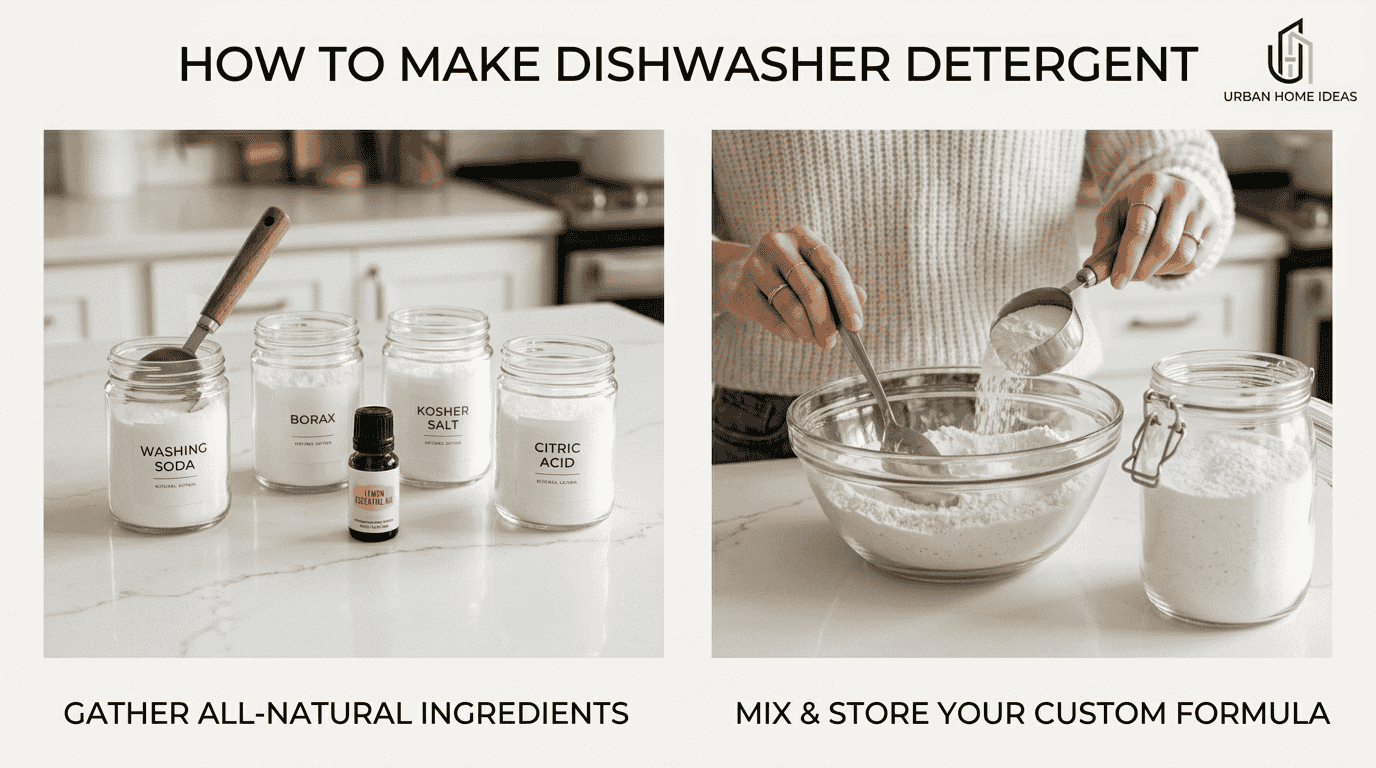
How To Make Dishwasher Detergent can be done by mixing simple ingredients like washing soda, baking soda, and citric acid to create a homemade cleaning solution. This DIY method helps prepare a balanced detergent mixture for an automatic dishwasher that supports dish cleaning, removes food residue, and improves everyday cleaning routine.
- How To Make Dishwasher Detergent Using Simple Homemade Ingredients?
- Why Make Your Own Dishwasher Detergent?
- Ingredients Needed To Make Dishwasher Detergent
- Basic Homemade Dishwasher Detergent Powder Recipe
- 1: Traditional Powder Detergent
- Ingredients
- Preparation Method
- 2: Borax-Free Dishwasher Detergent
- Ingredients
- Preparation Method
- 3: Simple Four-Ingredient Dishwasher Powder
- Ingredients
- Preparation Method
- How To Make Homemade Dishwasher Detergent Step By Step
- How To Make Dishwasher Detergent Tablets?
- How Much Homemade Dishwasher Detergent Should You Use?
- How To Store Homemade Dishwasher Detergent?
- Use An Airtight Container
- Keep The Detergent In A Cool Dry Place
- Prevent Moisture And Clumping
- Maintain Powder Quality
- Tips For Better Homemade Dishwasher Cleaning Results
- Use White Vinegar As A Rinse Aid
- Adjust Recipe For Hard Water
- Avoid Adding Liquid Dish Soap
- Keep Ingredients Dry
- Common Mistakes When Making Dishwasher Detergent
- Homemade Dishwasher Detergent Safety Notes
- Related Post
Homemade dishwasher detergent gives households more control over their cleaning ingredients while reducing dependence on commercial products. By combining the right components, users can create an effective formula that supports grease removal, reduces unnecessary additives, and fits their preferred cleaning approach.
How To Make Dishwasher Detergent Using Simple Homemade Ingredients?
How To Make Dishwasher Detergent involves creating a homemade dishwasher detergent cleaning formula with simple ingredients like washing soda, baking soda, citric acid, and coarse salt. This DIY detergent uses mineral-based ingredients to create an effective natural cleaning solution for dishwashing needs while supporting grease removal and offering an eco-friendly option for households.
Why Make Your Own Dishwasher Detergent?
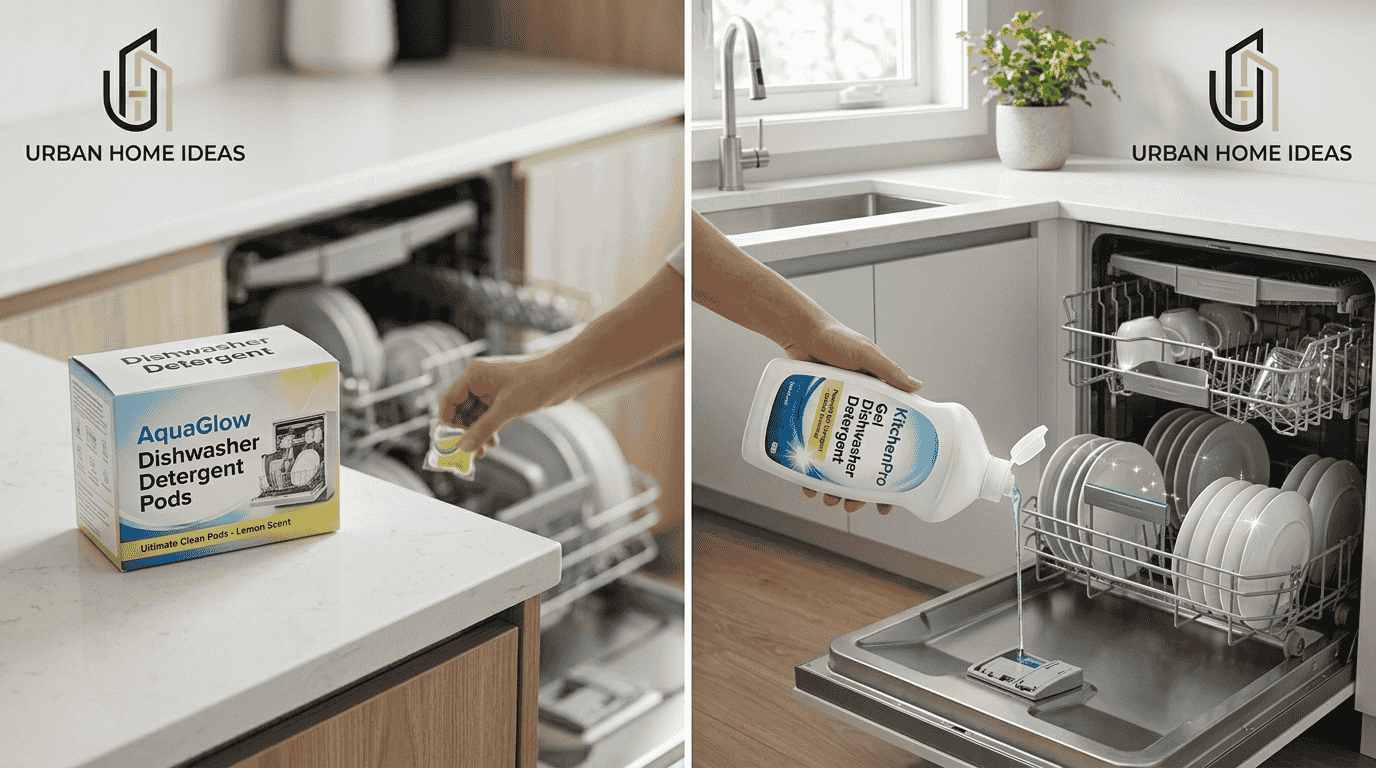
Making your own dishwasher detergent gives households a simple way to manage cleaning needs while controlling ingredients. A homemade detergent formula can save money, reduce plastic waste, and provide a natural alternative to some commercial products. It also helps avoid harsh chemicals, microplastics, and unnecessary synthetic additives during regular dishwasher use.
Cost Savings
One important benefit of homemade dishwasher detergent is reduced cost. Purchasing basic ingredients in larger quantities allows users to prepare multiple batches instead of repeatedly buying expensive commercial dishwasher tablets or dishwasher pods.
Using bulk ingredients can lower household cleaning expenses and provide an inexpensive option for regular dishwasher use. A properly stored mixture can last through many cleaning cycles.
Control Over Ingredients
Making detergent at home provides complete control over the ingredients included in the formula. Users can avoid artificial fragrances, dyes, and unwanted additives that may appear in some commercial cleaning products.
A homemade formula can focus on simple ingredients, natural cleaning methods, and a customized approach based on specific household requirements.
Reducing Packaging Waste
Homemade detergent also supports reduced packaging waste. Instead of purchasing new packaged products frequently, users can store their mixture in reusable containers or storage jars.
This approach reduces plastic packaging and encourages more sustainable cleaning habits while creating an eco-friendly option for household use.
Ingredients Needed To Make Dishwasher Detergent
The effectiveness of homemade dishwasher detergent depends on choosing the right combination of ingredients that support different cleaning functions. Each component plays a role in improving dishwasher cleaning, managing food residue, reducing grease, and supporting better results during a regular dishwasher cycle.
A balanced recipe usually includes washing soda, baking soda, citric acid, and salt. Some formulas also use borax and white vinegar to improve cleaning ability, support water softening, and reduce problems caused by mineral buildup.
The correct ingredient combination helps create a useful homemade recipe that can handle everyday dishwashing needs while allowing users to adjust the formula according to water conditions and cleaning preferences.
Washing Soda
Washing soda is one of the main cleaning ingredients used in homemade dishwasher detergent. It works as an alkaline cleaner that helps with grease breakdown and supports food residue removal from dishes.
As a strong detergent base, washing soda improves overall cleaning power and helps other ingredients perform effectively during the dishwasher cycle. It is commonly included because it supports a deeper clean without requiring complicated formulas.
Baking Soda
Baking soda is a popular ingredient in homemade dishwasher detergent because it provides additional cleaning support. Also known as sodium bicarbonate, it helps with water softening and residue removal.
It works as a cleaning base in many formulas, especially a borax-free recipe. When combined with other powdered ingredients, baking soda helps create a balanced dishwasher detergent mixture that supports regular cleaning tasks.
Citric Acid
Citric acid is an important ingredient for managing mineral buildup and hard water deposits. It helps reduce cloudy marks on dishes and improves the appearance of glassware after washing.
This acidic ingredient supports better cleaning performance by helping control mineral-related issues. It is commonly added to dishwasher powder because it can reduce water spots and improve the final cleaning result.
Salt
Salt is another useful ingredient in homemade dishwasher detergent formulas. Coarse salt and kosher salt are commonly used because they help with water softening and mineral control.
The addition of salt provides extra cleaning support and helps improve the performance of the powdered mixture, especially in areas where hard water affects dishwasher results.
Borax
Borax is included in some traditional homemade dishwasher detergent recipes as a cleaning booster. It helps increase cleaning power and supports food residue breakdown during washing cycles.
Although some formulas include borax, others use alternative ingredients to create a borax-free option. The choice depends on personal preferences and the desired homemade formula.
White Vinegar
White vinegar is commonly used as a separate rinse aid rather than being mixed directly into dishwasher detergent powder.
It can be added to the dishwasher compartment designed for rinse aid to help reduce water spots, improve glassware appearance, and provide additional cleaning support.
Basic Homemade Dishwasher Detergent Powder Recipe
A basic homemade dishwasher detergent powder can be prepared by combining different powdered ingredients that work together to improve dishwasher performance. The right combination of ingredients helps create a balanced formula that supports grease removal, food residue cleaning, and better results during each dishwasher load.

The recipe can be adjusted depending on cleaning needs, water conditions, and ingredient availability. Once the mixture is prepared, it should be kept in an airtight container to protect the detergent powder from moisture and maintain its quality.
1: Traditional Powder Detergent
This traditional powder detergent recipe combines several powerful cleaning ingredients to create a simple homemade formula.
Ingredients
- Washing soda
- Borax
- Powdered citric acid
- Kosher salt
Preparation Method
The dry ingredients are measured carefully and combined in a clean bowl. The mixture should be stirred thoroughly until all ingredients are evenly blended.
After mixing, the finished detergent should be transferred into an airtight container for storage. A small amount can be used during each dishwasher cycle depending on the cleaning requirements.
This traditional recipe focuses on creating strong cleaning power by combining ingredients that support grease removal, residue control, and overall dishwasher cleaning.
2: Borax-Free Dishwasher Detergent
A borax-free dishwasher detergent recipe is a popular alternative for users who prefer a simpler formula without borax.
Ingredients
- Washing soda
- Citric acid
- Baking soda
- Kosher salt
Preparation Method
The ingredients are combined to create a smooth cleaning mixture. The powdered components should be mixed properly and stored in a sealed container to prevent moisture exposure.
This alternative formula uses natural cleaning products and relies on the combined performance of washing soda, citric acid, baking soda, and salt to support everyday dishwasher needs.
3: Simple Four-Ingredient Dishwasher Powder
A simple dishwasher powder can be created with four basic ingredients that are commonly used in homemade cleaning formulas.
Ingredients
- Washing soda
- Baking soda
- Coarse salt
- Citric acid
Preparation Method
The dry ingredients are placed into a large bowl and mixed until they are evenly combined. Any visible clumps should be broken apart before storing the powder in an airtight jar.
This recipe creates a practical dishwasher powder that can be measured easily and used during a normal dishwasher cycle. A tablespoon of the mixture is generally enough for many regular cleaning situations.
How To Make Homemade Dishwasher Detergent Step By Step
Preparing homemade dishwasher detergent requires careful measurement and proper mixing to create a consistent powder mixture. Each step helps maintain the correct balance between cleaning ingredients, moisture control, and overall cleaning performance.
The process focuses on creating a finished detergent that can be stored properly and used during regular dishwasher cycles. By following each step carefully, users can prevent common problems such as uneven mixing, clumps, or reduced detergent quality.
1: Measure Ingredients
The first step is to measure ingredients according to the selected recipe. Accurate measurements help maintain the correct balance between each component and improve the final cleaning formula.
Using the right quantity of washing soda, baking soda, citric acid, salt, or other ingredients ensures that the homemade detergent performs effectively. Proper ingredient balance supports better cleaning performance and prevents an ineffective mixture.
2: Mix Dry Ingredients
After measuring, all dry ingredients should be added to a large bowl. The powdered ingredients need to be combined evenly using a spoon or whisk.
The mixing process ensures that every portion of the detergent mixture contains the correct amount of each ingredient. A well-mixed formula provides consistent cleaning results during every dishwasher cycle.
3: Break Up Clumps
During preparation, some powdered ingredients may form small clumps. These clumps should be broken apart using a spoon or whisk before storage.
A smooth texture helps maintain the quality of the detergent and allows easier measuring during use. Removing clumps also improves the consistency of the homemade mixture.
4: Store Properly
Proper storage plays an important role in maintaining homemade dishwasher detergent quality. The finished detergent should be placed inside an airtight container to protect it from moisture.
Humidity can affect the powder texture and cause unwanted clumping. Keeping the detergent in a sealed container, cool place, and dry area helps preserve its effectiveness for longer periods.
How To Make Dishwasher Detergent Tablets?
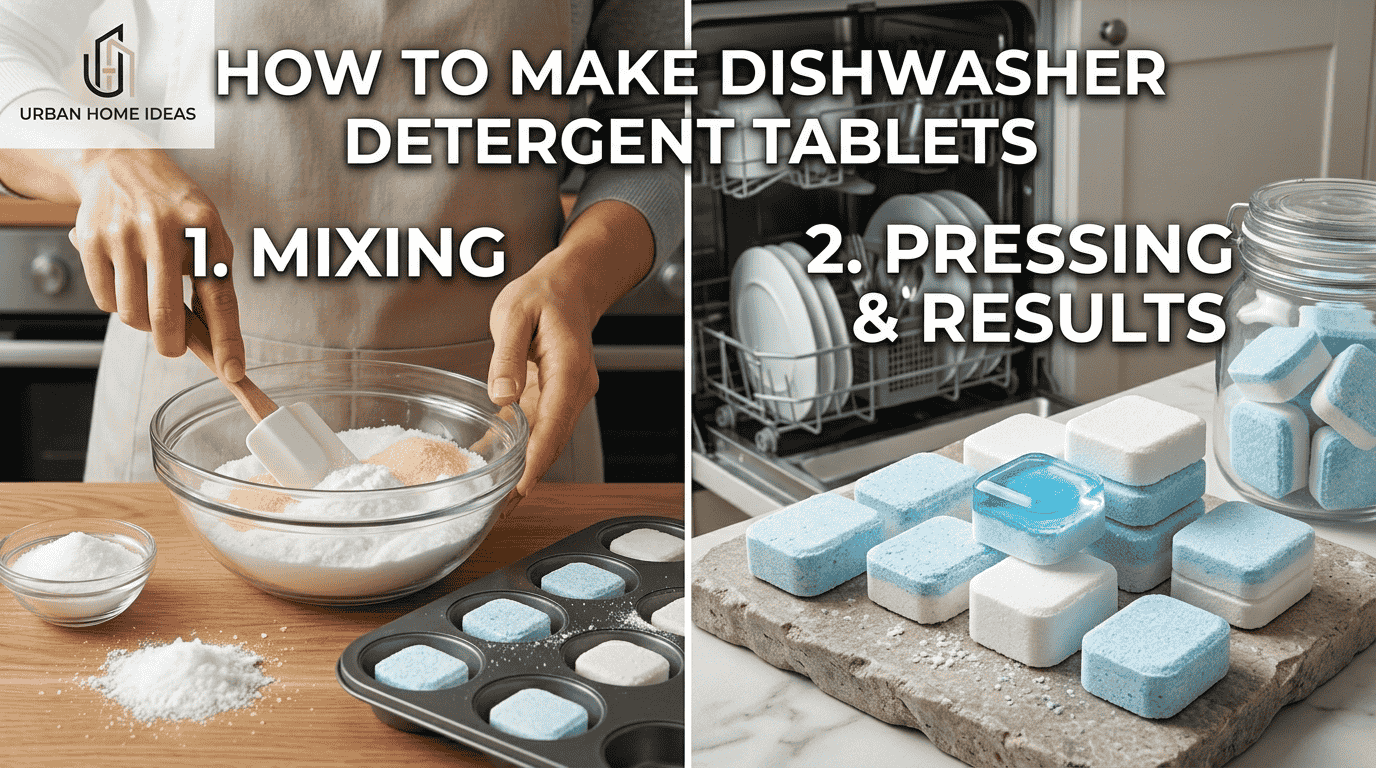
Making dishwasher tablets requires combining dry ingredients like washing soda, baking soda, citric acid, and coarse salt into a balanced mixture. A small amount of lemon juice or vinegar works as a binder to create homemade tablets with a practical cleaning formula for everyday dishwasher use.
Preparing The Powder Mixture
The first step is creating a consistent powder mixture using ingredients such as washing soda, baking soda, citric acid, and salt. The powdered ingredients should be blended evenly to maintain the same cleaning performance in every tablet.
The mixture should have a slightly damp texture before forming. Adding too much liquid can affect the structure, while too little liquid may prevent the tablet from holding its shape.
Adding Liquid Ingredients
A small amount of liquid such as lemon juice, water, or vinegar can be added to the powder mixture. These liquids help create a damp sand texture that allows the ingredients to stick together.
The liquid should be added slowly while mixing to prevent the formula from becoming too wet. The goal is to create a moldable mixture that keeps its shape when pressed.
Shaping And Drying Tablets
Once the mixture reaches the correct texture, it can be pressed into silicone molds or ice cube trays. The mixture should be packed firmly to create solid tablets.
After shaping, the tablets need enough time to dry completely. Once hardened, they can be removed from the molds and stored in a dry container.
Properly dried tablets are easier to handle and can be used as a convenient option for regular dishwasher loads. Each tablet can be placed into the dishwasher during a cleaning cycle to support dish cleaning and residue removal.
How Much Homemade Dishwasher Detergent Should You Use?
The amount of homemade dishwasher detergent needed depends on the recipe strength and dishwasher load size. Usually, 1 to 2 tablespoons are suitable for a normal wash, while 1 to 2 teaspoons may work for concentrated recipes. Proper detergent amount and proper dosage help maintain effective cleaning performance.
Adjusting The Amount For Different Loads
Heavily dirty dishes may require a slightly larger amount of homemade dishwasher detergent because they often contain more grease, food residue, and stubborn stains.
For lightly used dishes, a smaller quantity may provide sufficient cleaning performance. Finding the right balance helps avoid wasting detergent while maintaining good results during each dishwasher cycle.
Considering Hard Water Areas
Water conditions can affect how well homemade detergent performs. In hard water areas, mineral deposits may build up more quickly and influence dishwasher cleaning results.
Adjusting the detergent amount or modifying the recipe with ingredients like citric acid can help manage these challenges. Monitoring the results allows users to create a formula that works better for their specific dishwasher conditions.
Avoiding Excess Detergent
Using too much detergent does not always improve cleaning. Excessive amounts can leave residue, create cloudy marks, or affect the appearance of glassware.
A balanced approach helps maintain cleaner dishes while protecting the dishwasher and reducing unnecessary detergent use. The ideal amount depends on the recipe, dishwasher performance, and household cleaning needs.
How To Store Homemade Dishwasher Detergent?
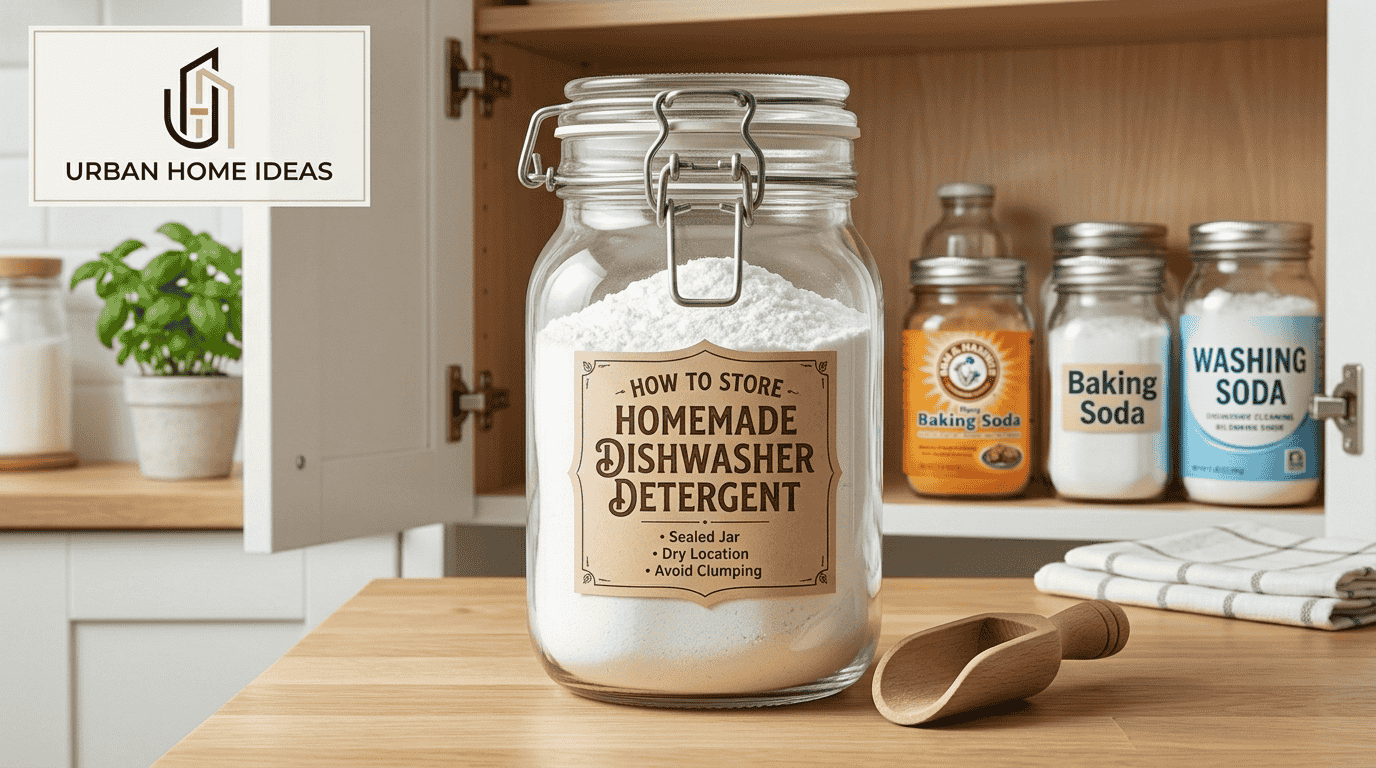
Proper storage keeps homemade dishwasher detergent effective for longer periods. It should be placed in a clean airtight glass jar or plastic container and kept in a cool dry place. This method provides moisture protection, helps prevent clumping, and maintains ingredient stability while supporting better detergent quality during long-term use.
Use An Airtight Container
An airtight container is one of the best storage options for homemade dishwasher detergent. A sealed container prevents moisture from entering and protects the detergent mixture from becoming hard or uneven.
Glass jars, storage containers, or other sealed options can help maintain the quality of the detergent while keeping the ingredients fresh for longer use.
Keep The Detergent In A Cool Dry Place
The storage area should be cool and dry because heat and humidity can affect homemade cleaning formulas. A dry environment helps prevent unwanted reactions between ingredients and keeps the powder easy to use.
Avoid placing the detergent near areas with frequent water exposure, such as sinks or damp cabinets.
Prevent Moisture And Clumping
Moisture is one of the biggest challenges when storing homemade dishwasher detergent. Ingredients like citric acid can react with humidity and cause the mixture to form clumps.
Using a completely dry spoon when measuring detergent helps maintain the powder texture. Proper storage also protects the detergent quality and prevents unnecessary waste.
Maintain Powder Quality
Keeping the detergent stored correctly helps preserve its effectiveness over time. A properly sealed container prevents changes in texture and allows the homemade formula to perform consistently during dishwasher cleaning.
Good storage habits ensure that the detergent remains ready for regular use while maintaining its cleaning ability.
Tips For Better Homemade Dishwasher Cleaning Results
Achieving better results with homemade dishwasher detergent depends on more than just the recipe. Factors such as water conditions, ingredient balance, dishwasher settings, and proper usage methods can influence overall cleaning results.
A few adjustments can help improve dishwasher performance, reduce residue, and maintain cleaner dishes. Understanding how each method works allows users to get better results from their homemade cleaning formula.
Use White Vinegar As A Rinse Aid
White vinegar can be used as a natural rinse aid to support better dishwasher results. Adding vinegar to the rinse aid compartment can help reduce water spots and improve the appearance of glassware after washing.
It helps remove leftover residue and supports a cleaner finish by improving the final rinse process. However, vinegar should be used separately and not mixed directly into the detergent powder.
Adjust Recipe For Hard Water
Hard water can affect dishwasher performance because minerals may create buildup on dishes and inside the appliance. Areas with hard water often require adjustments to the detergent formula.
Adding the right amount of citric acid can help manage mineral buildup and reduce problems caused by mineral deposits. Adjusting the recipe based on water conditions helps improve cleaning performance.
Avoid Adding Liquid Dish Soap
Regular liquid dish soap should not be added to homemade dishwasher detergent. Dish soap creates excessive foam and can lead to dishwasher problems.
Dishwashers require specially designed low-foam cleaning formulas. Adding the wrong ingredient can affect the cleaning mixture and may create unnecessary issues during operation.
Keep Ingredients Dry
Keeping ingredients dry is important for maintaining detergent quality. Moisture can affect the texture of the powder and cause unwanted clumping before use.
Dry ingredients should be stored properly to protect their effectiveness. A sealed container and proper storage method help maintain powder quality and ensure consistent cleaning performance during each dishwasher cycle.
Common Mistakes When Making Dishwasher Detergent
Making homemade dishwasher detergent can be simple, but small mistakes during preparation or usage can affect the final cleaning performance. Understanding common issues helps users create a more effective formula and avoid problems such as residue, poor results, or detergent waste.
A balanced recipe requires the correct ingredients, proper storage, and suitable measurements. Paying attention to these details helps maintain the quality of the detergent mixture and improves dishwasher cleaning results.
Using The Wrong Ingredients
One common mistake is confusing similar ingredients, such as using baking soda when a recipe requires washing soda. Although both ingredients support cleaning, they have different properties and may affect the final formula.
Understanding the difference between each ingredient helps maintain the correct balance and ensures that the homemade dishwasher detergent works as intended.
Adding Liquid Dish Soap
Adding liquid dish soap to a dishwasher detergent recipe is another common mistake. Regular dish soap creates excessive foam and is not designed for automatic dishwasher systems.
Too much foam can cause dishwasher problems and affect the cleaning process. A proper detergent mixture should only include ingredients designed for dishwasher use.
Incorrect Storage Methods
Leaving homemade detergent in an open container can expose it to moisture and humidity. This can cause clumping, change the powder texture, and reduce detergent quality.
A sealed container should always be used to protect the mixture and maintain its effectiveness during storage.
Using Too Much Detergent
Using excessive detergent does not always produce better cleaning results. Too much detergent can leave residue on dishes and create cloudy marks on glassware.
The correct amount depends on the recipe, dishwasher conditions, and cleaning requirements. Measuring carefully helps maintain better results while avoiding unnecessary product use.
Homemade Dishwasher Detergent Safety Notes
Homemade dishwasher detergent contains concentrated cleaning ingredients that should be handled carefully during preparation and storage. Proper safety practices help prevent accidental exposure and maintain a safe household cleaning environment.
When mixing powdered ingredients, users should avoid creating unnecessary dust and should handle all cleaning materials responsibly.
Handle Powdered Ingredients Carefully
Powdered ingredients can create dust during mixing, especially when dry materials are poured or stirred quickly. Careful handling helps reduce direct contact and prevents inhaling airborne particles.
Mixing slowly and working in a well-ventilated area can make the preparation process safer.
Keep Away From Children And Pets
Homemade detergent should always be stored safely away from children and pets. A sealed container helps prevent accidental access and protects household members.
Proper storage is an important part of cleaning safety, especially when using concentrated cleaning chemicals.
Follow Safe Storage Practices
Good storage safety includes using labeled containers, keeping the detergent in a dry location, and avoiding contact with moisture.
Careful handling ensures that the homemade detergent remains effective while supporting a safer cleaning routine.
Related Post
Related Post
Leather Sling Chair Explained: History, Types, Design & Comfort
Home Hacks Wutawhacks: Smart Idea For Easy Living