

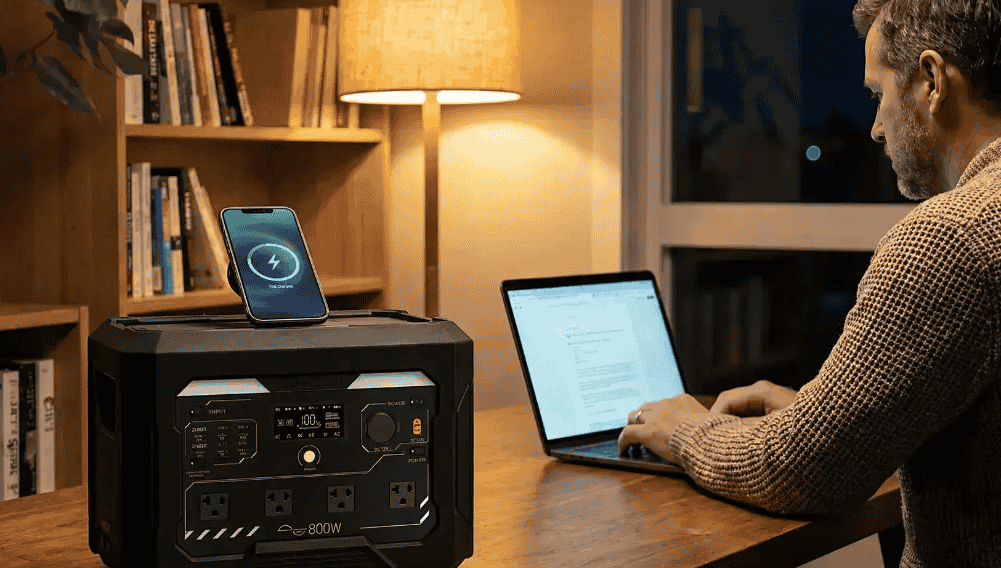
During an outage, household essentials matter more than running everything at once. A solar generator can keep a WiFi router, refrigerator, and devices in your home operating, depending on available capacity and demand overnight.
- Best Solar Generators for Home Backup Power
- Best Solar Generators: Picks Overview
- Best For Powering Multiple Devices: Anker SOLIX C2000 Power Station + 200-Watt Solar Panel
- Anker SOLIX C2000 Gen 2 + 200W Portable Solar Panel
- Anker SOLIX C2000 Gen 2 + 400W Portable Solar Panel
- Best Overall: Bluetti Apex 300 Solar Generator + 350-Watt Solar Panel
- Best for Home Integration: EcoFlow Delta Pro 3600 Power Station + 400-Watt Panel
- Best Value: Jackery Explorer 1000 V2 + 200-Watt Solar Panel
- Easiest to Transport: Anker Solix F2000 Solar Generator + 400-Watt Panel
- Most Durable for Outdoor Use: Goal Zero Yeti 1500 Power Station + Nomad 200-Watt Solar Panel
- Best For Harsh Weather: Jackery Explorer 1500 Ultra Power Station + 200-Watt Solar Panel
- Pros (Jackery Explorer 1500 Ultra)
- Cons (Jackery Explorer 1500 Ultra)
- Key Specs (Jackery Explorer 1500 Ultra)
- Best for RVs: Bluetti Solar Generator Elite 300 + 350-Watt Solar Panel
- What to Consider When Choosing a Solar Generator
- How to Choose a Solar Generator
- Why Solar Generators Are Essential for Modern Homes
- Reliable Backup Power
- Environmental Responsibility
- Cost Efficiency
- Advanced PowerCore Technology
- Smart App Control Capabilities
- Expandable Power Capacity
- Weather-Resistant Designs
- Cleaning Schedule
- Damage Prevention
- Optimal Storage Conditions
- Conclusion: Secure Your Energy Independence with Anker SOLIX
- Frequently Asked Question
Planning starts with essential devices, not headline wattage: estimate daily usage hours, compare watts with watt-hours, and allow for real-world conditions, because compressor starts and imperfect sunlight can reduce the energy actually available for backup.
Portability and recharge options shape the experience too: choose portable solar panels suited to your space, check solar recharging input, and consider power outages lasting hours or days before deciding which appliances deserve priority first.
Best Solar Generators for Home Backup Power
The Anker SOLIX C2000 Gen 2 leads my home backup list, offering 2,400W rated power, 2,048Wh capacity, and 4,000W surge for refrigerators. It’s expandable to 4kWh, so serious home backup needs stay comfortably covered indoors.
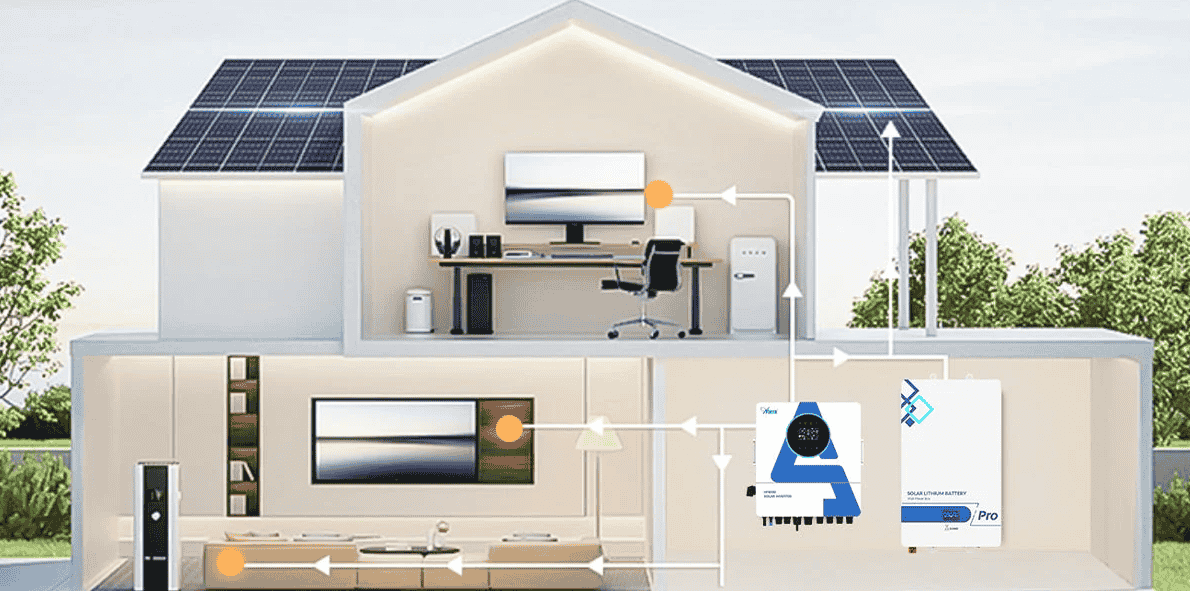
For Best Overall, I’d pick the Bluetti Apex 300, with 3,840 watts and 7,680 watts of surge power handling 240-volt appliances. The EcoFlow Delta Pro 3600 wins Best for Home Integration through a transfer switch.
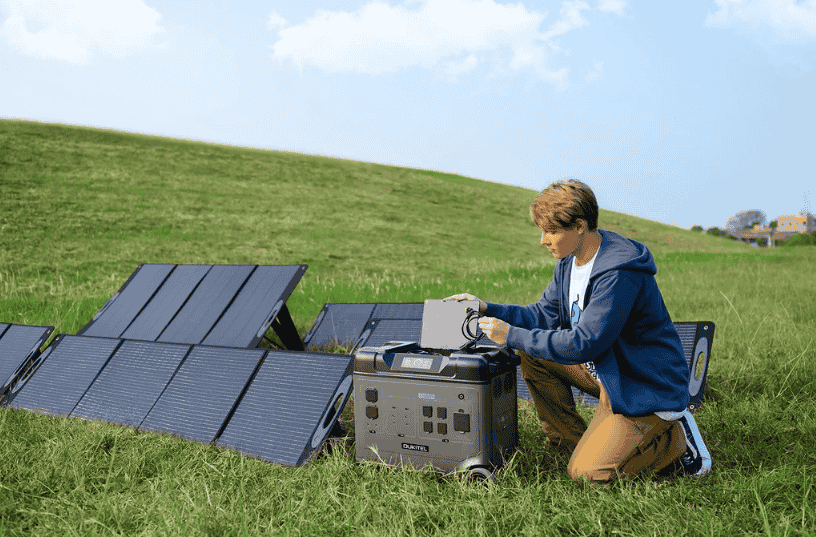
Budget buyers should consider the Jackery Explorer 1000 V2, Best Value at 1,070 watt-hours, while the Anker Solix F2000 has heavy-duty wheels. Outdoors, the Goal Zero Yeti 1500 stays reliably weatherproof with an IPX4 rating.
Best Solar Generators: Picks Overview
After weeks of tested units, the best solar generators split by job: Bluetti Apex 300 leads overall, EcoFlow Delta Pro 3600 feeds select circuits in your home, and Jackery Explorer 1000 V2 wins on price.
Portability favors Anker Solix F2000, with its telescoping handle; Goal Zero Yeti 1500 shrugs off dust and wind. In harsh weather, Jackery Explorer 1500 Ultra stays rugged, while Bluetti Solar Generator Elite 300 suits RVs.
Match capacity to your power needs using a formula, then verify with a wattmeter. Pair solar panels with an expandable unit, because real world draw rarely matches factory specs, especially when a blackout drags on.
Best For Powering Multiple Devices: Anker SOLIX C2000 Power Station + 200-Watt Solar Panel
The C2000 Gen 2 suits households needing power more devices simultaneously, pairing 2,048Wh capacity with 2,400W output and 4,000W peak capability for brief startup demands from compatible appliances during an outage at home backup.
Its AC + solar input offers two charging routes, while lightning-fast recharge helps restore reserve power between interruptions; the BP2000 (Gen 2) can double capacity to 4kWh, extending essential-device coverage when household demand lasts longer than expected overnight.
A 200W solar panel is portable, but its output size depends on perfect conditions; plan for 50 to 75 percent of rated potential, then prioritize a refrigerator, WiFi routers, and LED lights before connecting extras during an outage.
Pros
Useful strengths include highly expandable storage, many useful advanced settings, ultra-low 9W idle power, and power more devices flexibility; together, these features help preserve stored energy while supporting a wider mix of household essentials reliably.
Cons
The 200W solar panel may replenish slowly in poor sunlight, and a power station cannot guarantee whole-home coverage; check each appliance’s power draw fluctuates and startup needs before assuming every circuit can remain active overnight.
Key Specs
Core figures are 2,048Wh capacity, 2,400W continuous AC output, 4,000W peak, 800W maximum solar input, and 58 minutes to recharge to 100% under the stated fast-charging conditions; verify regional specifications before buying for your market.
The C2000 Gen 2’s battery capacity, AC output, peak rating, and expansion compatibility are supported by Anker’s product documentation. Actual solar charging speed depends on sunlight, panel conditions, and the station’s permitted input.
Anker SOLIX C2000 Gen 2 + 200W Portable Solar Panel
The Anker SOLIX C2000 Gen 2 suits households prioritizing simultaneous device use over simply maximizing battery size. Its 2,048 Wh capacity and 2,400 W output support multiple essentials during outages without immediately sacrificing everyday convenience.
During testing, the 200-watt Anker portable panel delivered approximately 125 to 145 watts of input under favorable conditions. Actual solar input depends on sunlight, positioning, and weather, so planning around realistic charging performance matters more than advertised potential.
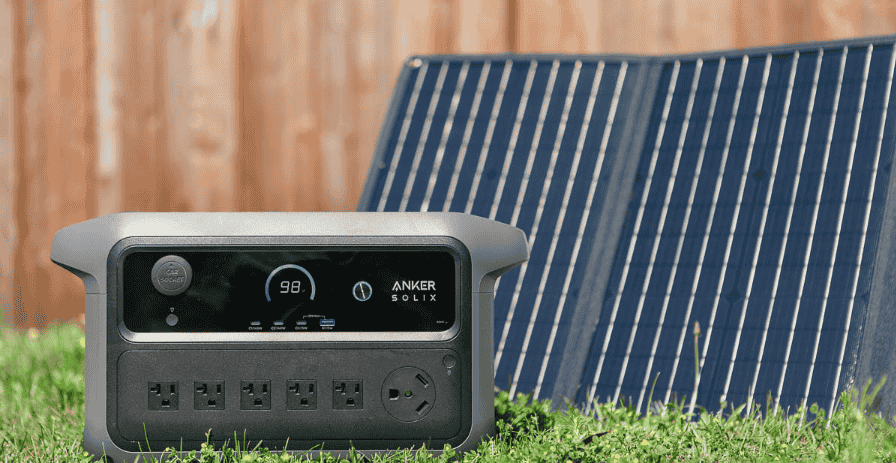
For practical backup, the five 20-amp standard outlets, two 140-watt USB-C ports, and one 30-amp RV 120v outlet provide versatile connections. However, its 800 W maximum solar input and limited weather resistance deserve consideration before outdoor placement.
Anker SOLIX C2000 Gen 2 + 400W Portable Solar Panel
Pairing the Anker SOLIX C2000 Gen 2 with a 400W Portable Solar Panel offers a stronger potential charging setup than using a smaller panel. The larger array can improve replenishment when sunlight remains favorable throughout the day.
A 400-watt solar-panel array never produces its rated output continuously; shading, panel angle, and weather influence actual generation. Check the station’s acceptable input range before connecting panels, because excessive input can cause an overload or potentially damage the station.
For household backup, the station’s 2,048 Wh battery and 2,400 W output can support several compatible appliances simultaneously. Nevertheless, verify the panel’s electrical specifications and the station’s input limits first; greater panel capacity alone cannot guarantee faster charging.
Best Overall: Bluetti Apex 300 Solar Generator + 350-Watt Solar Panel
The Apex 300’s size and price point suit a stand-alone power source: two inverters, two banks, two outlets in each bank, and a 1,920-watt output. It’s customizable, with 120-volt circuits plus a 240-volt turbo option.
High-powered appliances such as a space heater or toaster ran with absolutely no issues from the 2,764.8 watt-hours onboard. 30- and 50-amp outputs and two ports handle solar recharging directly from a 350-watt solar panel.
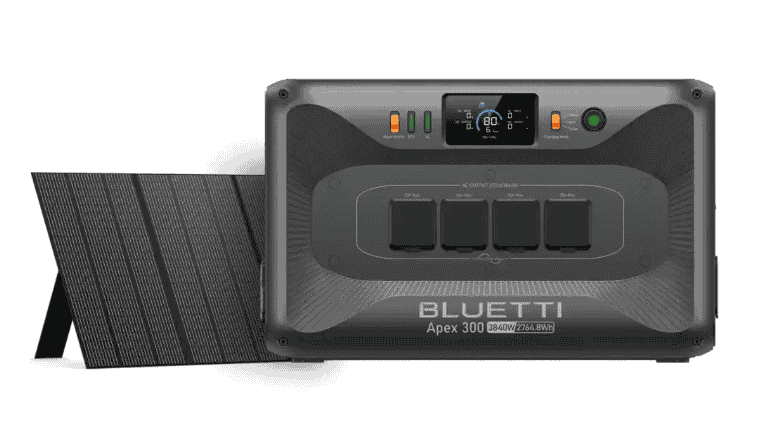
At 84 pounds, it’s heavy to lug around, but six additional batteries push storage to 19,353.6 watt-hours. Link two other Apex 300 units in parallel for backup power during an emergency, with easy, clean integration.
Pros (Bluetti Apex 300)
Controlling everything from a phone through the excellent app makes monitoring loads really simple, and the unit supplies up to 240-volt power through a 50-amp output, which suits serious home backup needs without extra gear.
Cons (Bluetti Apex 300)
The DC output is limited: USB and 12-volt ports are modest without the optional hub. It’s also heavy, so you probably won’t take it on the road often. Plan around that carefully before you buy.
Key Specs (Bluetti Apex 300)
Weight comes in at 84 lb, while outputs reach 3,840 W and the 7,680 W surge rating covers startup spikes; capacity is 2,764.8 Wh, and max solar input still needs checking carefully against your own panels.
Best for Home Integration: EcoFlow Delta Pro 3600 Power Station + 400-Watt Panel
This large portable power station rivals some gas portable generators, with a large battery capacity and an output of 3,600 watts. A full-size 25-cubic-foot refrigerator could easily run for nearly two days alongside multiple appliances.
Choose the bundle with solar panels for two 220-watt portable panels, or step up to the 400-watt panel. Built-in X-Boost technology helps charge faster, accepting 1,600 watts of solar input when you add more panels.
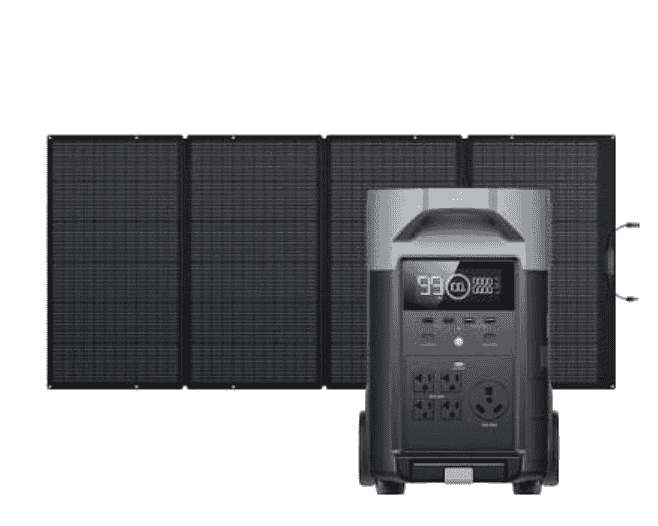
Run time reaches 51 hours and 24 minutes on light loads; a standard outlet refills in two hours and 36 minutes. The 30-amp connection, included adapter, and DC car adapter add genuine, everyday flexibility here.
Pros (EcoFlow Delta Pro)
With more battery capacity than most rivals and enough power output to run almost any appliance, this unit covers whole-room needs, from kitchen gear to workshop tools, without constant load juggling or any overload worries.
Cons (EcoFlow Delta Pro)
It’s heavy, so plan to move around the garage or house in short, careful stages, preferably with a second person available to help you through any stairs or tight corners, and never lift it alone.
Key Specs (EcoFlow Delta Pro)
Weight is 99 lb, with 3,600 Wh of capacity and outputs of 3,600 W. Max solar input reaches 1,600 W, while the 7,200 surge rating handles heavy startups from compressors and power tools without tripping.
Best Value: Jackery Explorer 1000 V2 + 200-Watt Solar Panel
The original Jackery 1000 gave way to a newer battery technology: a lithium iron phosphate (LiFePO4) battery with longer lifespan, rated 4,000 cycles versus 500 cycles, eight times more, and also slightly higher capacity overall.
Seven ports include three AC outlets, two USB-C ports, an 18-watt USB-A outlet, and a 12-volt car port. A typical laptop, camera batteries, a small refrigerator or powered cooler run happily for over 15 hours.
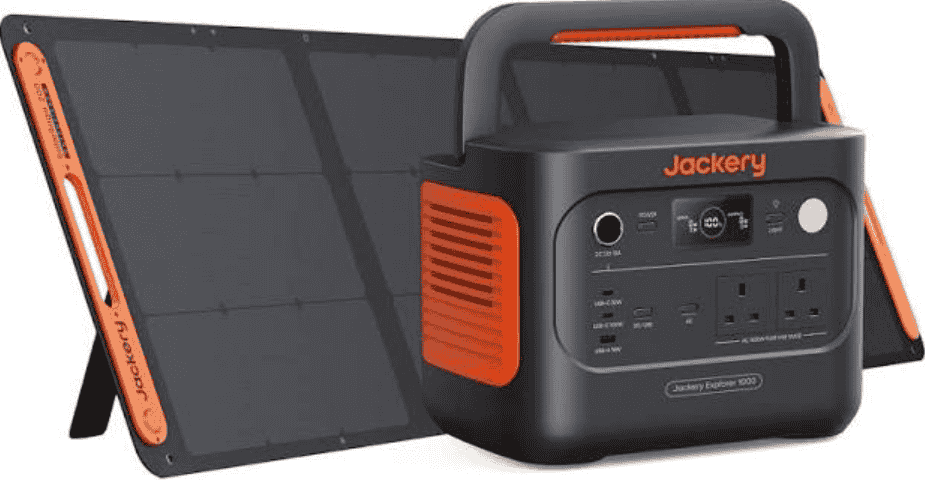
Maggie Slepian logged charging times on a media trip: 11.5 hours in a car outlet, 6.5 hours for solar panels, and 5.5 hours from a wall outlet. It’s an ideal power station for off-grid camping.
Pros (Jackery Explorer 1000 V2)
With plenty of charging ports and a relatively lightweight build, this unit moves easily between the kitchen, the garage, and the trunk, letting you power phones, laptops, and small appliances wherever you set it up.
Cons (Jackery Explorer 1000 V2)
It has few lights on the unit, so finding where to plug cords in the dark is tricky. Keep a small flashlight nearby during outages, and label ports with tape before the lights go out.
Key Specs (Jackery Explorer 1000 V2)
At 23.8 lb, the weight stays modest for 1,070 Wh of storage. A 3,000 W surge rating covers startup spikes, while its 400 W and 1,500 W figures map to outputs and max solar input.
Easiest to Transport: Anker Solix F2000 Solar Generator + 400-Watt Panel
Anker’s app lets you turn the power on and off remotely and check charging status, power being generated, and how much energy is being utilized. That convenience helps people moving their power station around easily.
This powerhouse has 12 ports: four AC ports, three USB-C charging ports, two USB-A, two car ports, and an RV-specific outlet. During a power outage, run your refrigerator in sunny conditions with a 400-watt panel.
Pros (Anker Solix F2000)
Heavy-duty wheels make moving it around easily across gravel, tile, and thresholds. Add the easy-to-use app and remote connectivity, and you can monitor or switch loads from another room without walking back to the unit.
Cons (Anker Solix F2000)
The unit loses charge when not in use, so top it up every few weeks, because a depleted battery during an outage defeats the whole purpose of keeping a backup ready when it’s needed most.
Key Specs (Anker Solix F2000)
The weight is 67 lb, holding 2,048 Wh of storage. Max solar input is 1,000 W, with 12 ports available, while the outputs and 800 W surge figures deserve a check against your biggest appliance.
Most Durable for Outdoor Use: Goal Zero Yeti 1500 Power Station + Nomad 200-Watt Solar Panel
This well-designed power station offers four 120-volt AC outlets, four USB-A ports, USB-C ports, and four 12-volt connections. Outlet shields protect ports and inputs, so a phone, laptop, or tower fan can be used simultaneously.
The Nomad 200-watt solar panel pairs with high-voltage DC input for up to 600 watts, or low-voltage input for up to 300 watts. Two arrays reach up to 900 watts; shade-causing obstructions cut input readings.

We simulated an emergency blackout: the cable modem, WiFi router, lamp, and TV ran at least 10.5 hours, over two days of use, leaving 5 percent capacity. A portable panel hit about 70 percent efficiency.
Pros (Goal Zero Yeti 1500)
A good variety of outputs covers most gear, and port shields protect outlets from dust and splashes. Accepting up to 900-watts of solar input, it recharges quickly when sunlight cooperates and you have enough panels.
Cons (Goal Zero Yeti 1500)
Inconsistent Bluetooth connectivity can frustrate you when the app drops its link, and it’s heavy enough that hauling it to a distant campsite or back from a storage shelf takes real effort and careful planning.
Key Specs (Goal Zero Yeti 1500)
At 53 lb, the weight is manageable for 1,505 Wh of storage. Max solar input reaches 900 W, while 2,000 W outputs and a 3,600 surge rating handle most household startups easily without any complaint.
Best For Harsh Weather: Jackery Explorer 1500 Ultra Power Station + 200-Watt Solar Panel
The IP65 weatherproof rating and shockproof enclosure let it withstand the elements on off-road adventures. Molded rubber port covers and a bottom drainage system keep water out, with a sturdy enclosure guarding against anything damaging.
A titanium alloy cooling structure and side vents define the cooling system design, with a denser construction than most solar generators. It runs lighting and low-powered small appliances for a weekend camping trip without strain.
Its 1,536 watt-hours and 1,800 watts of output cover an emergency, while the Jackery 200-watt panel supplies extra power. The weight stays reasonable, and the enclosure shrugs off knocks, so a portable panel travels well.
Pros (Jackery Explorer 1500 Ultra)
Sealed rubber covers keep dust and water away from outputs and inputs. The taller than wide design and highly durable construction make it easy to carry, thanks to a sturdy molded handle on its top.
Cons (Jackery Explorer 1500 Ultra)
Some advanced features live in the app, which feels thin, and the rubber rail along the back can be awkward to grip. Expect a modest learning curve before you trust every setting during an outage.
Key Specs (Jackery Explorer 1500 Ultra)
The weight is 38.6 lb for 1,536 Wh of storage. Outputs include a 1,800 W rating and a 3,600 W surge, and its Max Solar Input should be confirmed on the label before pairing panels.
Best for RVs: Bluetti Solar Generator Elite 300 + 350-Watt Solar Panel
This midsize power station has a 120-volt 30-amp port that suits a small RV or pop-up camper. With 3,000 watt-hours of storage, it runs water pumps, small appliances, and heating on every compact outdoor adventure.
On a fully sunny day, solar recharging from the 350-watt solar panel reaches typical efficiency, while a 250-watt portable panel or larger panels add run time; an expansion battery extends it further toward 100 percent.
Output holds near 1,200 watts, while 400 watts and 260 watts also appear on the spec list; a cooling system helps. Price shows 18% off, from $1,999 down to $1,649, which feels quite fair overall.
Pros (Bluetti Elite 300)
A 120-volt connection with a 30-amp hook-up suits a small RV. In a smaller package than similar stations, you get 3,000 watt-hours, advanced features, and an excellent app for easily monitoring everything from your phone.
Cons (Bluetti Elite 300)
Only two USB-C ports feels limiting for a family of phones and tablets. Want to expand? Extra batteries cost real money, so budget for them early instead of discovering the gap mid-trip, far from home.
Key Specs (Bluetti Elite 300)
Weight is 59 lb, with 3,014 Wh of capacity and a 4,800 W surge rating. Outputs list 1,200 W, while Max Solar Input appears beside 400 W, so verify those numbers carefully against your panels.
What to Consider When Choosing a Solar Generator
Size and Capacity
Start with a simple equation: total watt-hours ÷ watts = hours. Check the label and manufacturer specs, because power stations rarely deliver their rating. This gives an approximate idea of how a generator will behave.
At 2,048-watt-hour capacity, a 750-watt space heater on its highest setting runs around 2.5 hours with nothing else plugged in. Higher-powered devices drain the battery while lower-powered ones stretch how long devices can be powered.
Solar Panel Capacity
Solar panels rated at 200 watts are never perfect: they convert the sun’s rays into electrical current below total potential, so the watts they produce hover near 100 watts, maybe 110 watts of solar input.
Portability
Weight decides everything: compact models weigh at least 10 pounds, while greater capacities climb quickly. If it’s a home backup option, you’ll move it around within your home; on the road, effort matters far more.
Panels need outdoor space when fully unfolded, so limited space favors small kits. For camping or overlanding setups, each model has higher appeal if it fits a vehicle or camper, ready to store converted power.
How to Choose a Solar Generator
Step 1: List Essential Devices
List every essential device first, then total their draw carefully before you shop. A CPAP machine might sit in the 50-100W wattage range for 8 hours nightly, while small chargers use 10-15W for 5 hours.
Step 2: Use Formula
Once your totals land in the 2.5-4.5kWh band, match them to Anker SOLIX capacities: the C2000 Gen 2 Series is expandable to 4kWh. Below <2.5kWh, smaller units usually suffice; above 4.5kWh+, consider multiple expansion batteries.
How We Selected and Tested
Our primary concerns were portability, charging capacity, and ease of use. Maggie Slepian, a test editor, reviewed power stations across different use cases, judging weight, convenience, and whether screen readouts were all easy to read.
Brad Ford, an editor, wanted a display showing how much power is available at a glance. David Dritsas, a freelance writer, tested compact and affordable units over the past few years, favoring better charging capabilities.
Why Solar Generators Are Essential for Modern Homes
Modern homes face unprecedented energy challenges: rising energy costs and stricter emission regulations. Solar generators answer three critical needs, and since 2015, future-proofing homes with traditional options has now lagged the best solar-powered generator systems.
Reliable Backup Power
Unlike gas generators with a 5-10 min manual startup, solar units offer automatic activation during outages. Keep refrigerators and medical equipment running, with continuous operation through multi-day blackouts, thanks to steady reliable daily solar recharge.
Environmental Responsibility
Gas generators can release 15+ lbs CO2/hour; solar units deliver zero emissions through 100% renewable energy harvesting. Silent operation also protects neighborhood tranquility during long outages, when noise carries farther at night and tempers fray quickly too.
Cost Efficiency
A solar generator has a lifespan of 10+ years, $0 fuel cost, and minimal maintenance, while a gas generator averages 3-5 years and $200/yr in upkeep. Over time, $4,500+ is the figure to beat overall.
Advanced PowerCore Technology
The proprietary PowerCore system pairs LiFePO4 batteries with a built-in MPPT solar controller, reaching 0-80% charge in 1 Hr for emergency scenarios. Rapid recharge at 95% efficiency beats conventional solar generators, and older lead-acid designs.
Smart App Control Capabilities
The app on iOS and Android offers real-time power monitoring, battery health diagnostics, and maintenance alerts. Custom power schedules support energy management around peak/off-peak rates, while Alexa and Google Home enable control through voice assistants.
Expandable Power Capacity
The C2000 Gen 2 Series and S2000 Series share a base capacity of 2,048Wh, and each model is max expandable well beyond that once you attach extra batteries, which suits growing households and bigger loads.
Weather-Resistant Designs
Hurricane-grade aluminum alloy casing and MIL-STD-810G certified construction suit extreme conditions, from coastal humidity to desert heat. IP67 waterproof solar panels and dust-proof connectors support all-climate performance across an operating range of -20°C to 60°C.
Cleaning Schedule
Do weekly dust removal with a microfiber cloth, and wash monthly using water and a soft brush. Avoid abrasive cleaners and high-pressure sprays, especially on panels set at a 0°-30° tilt, where residue lingers stubbornly.
Damage Prevention
Keep 4″ clearance from flammable surfaces, and keep panel temperature variance within <5°C, since uneven heating drives hotspot formation and microcracks. A smartphone flashlight test can reveal shading or hidden cell damage before it spreads.
Optimal Storage Conditions
For long storage duration, hold battery charge at 50-80% SOC in an ideal range of 15°C-25°C (59°F-77°F) and 40-60% RH. Recheck every 60 days when >6 months inactive, and avoid 100% SOC or <20% SOC.
Conclusion: Secure Your Energy Independence with Anker SOLIX
For energy independence, the portable C1000 and ultra-compact S2000 fit an apartment or small-home backup, with military-grade durability, instant 15ms activation, and 24/7 app monitoring during power outages nationwide, whether storms or grid failures strike.
For larger households, the high-output C2000 Gen 2 and expandable F3800 deliver whole-home protection, reaching 26.9kWh with smart energy management and UL-certified systems. Consider it the best solar generator for home backup, handling RV adventures.
Frequently Asked Question
What are your priorities when choosing a solar-powered generator?
Your priorities drive choosing a solar-powered generator: list essential devices, estimate watt-hours, and weigh weight against capacity. Ignore flashy specs, then match panel input to your daily consumption, so backup power arrives reliably when needed.
What can a solar-powered generator charge and power?
A solar-powered generator can charge phones, laptops, cameras, and CPAP gear, then power refrigerators, lights, routers, fans, and small heaters, depending on watt-hours and output. Larger units handle well pumps, microwaves, and window air conditioners.
What is the best way to charge a power station?
The best way to charge a power station is combining sources: solar panels in direct sunlight for daily top-ups, a wall outlet for fast refills, and a car port as backup. Never leave it drained.