

- How Tech Giants Envision a Future Beyond Smartphones
- Augmented Reality And Smart Glasses
- Virtual Reality And Spatial Computing
- Smart Wearables
- Artificial Intelligence And Ambient AI
- Brain-Computer Interfaces
- Major Technology Companies And Their Strategies
- Consumer Implications / What The Future Means For Consumers
- Business Implications
- Challenges And Barriers
- Post-Smartphone Market Outlook
- The Post-Smartphone Future Is Really A Task Migration
- How The Major Players Compare In 2026
- The Real Breakthrough Is Ambient AI
- What To Watch Next
- The Next Computing Era May Already Be Starting
- FAQs
The smartphone era is changing as technology companies explore artificial intelligence, augmented reality, wearables, and new computing experiences that could reshape communication, entertainment, business, and everyday digital activity.
Consumers have spent a decade adapting to smartphone innovation, yet mature markets increasingly encourage alternative devices, platforms, and interaction models that reduce dependence on conventional handheld screens.
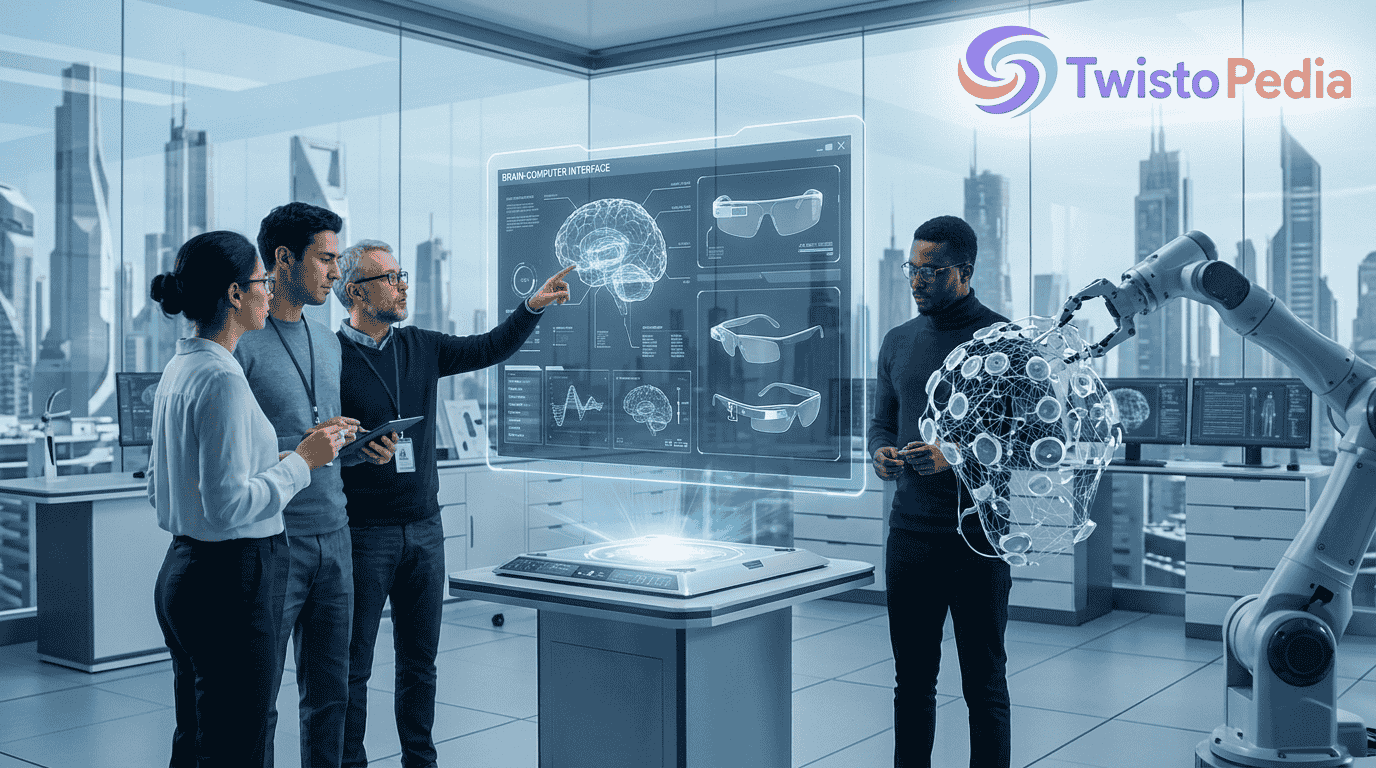
Smart glasses, spatial computing, virtual reality, and brain-computer interfaces are moving computing toward environments where information can appear around users rather than remaining inside one traditional device.
From my perspective, the most important shift is not simply replacing a phone. It is creating connected devices, hands-free computing, ambient computing, and AI-powered technology that distribute everyday digital responsibilities.
That broader movement defines the emerging post-smartphone era, where the traditional smartphone may remain useful but no longer controls every aspect of communication, information, productivity, entertainment, and interaction.
How Tech Giants Envision a Future Beyond Smartphones
Smartphone markets are approaching market saturation, while smartphone saturation means many consumers already own sufficiently capable devices, making frequent upgrades less compelling across several generations.
Instead of relying exclusively on incremental improvements, technology companies increasingly seek transformative improvements that create new categories, fresh experiences, and stronger reasons for consumers to adopt different devices.
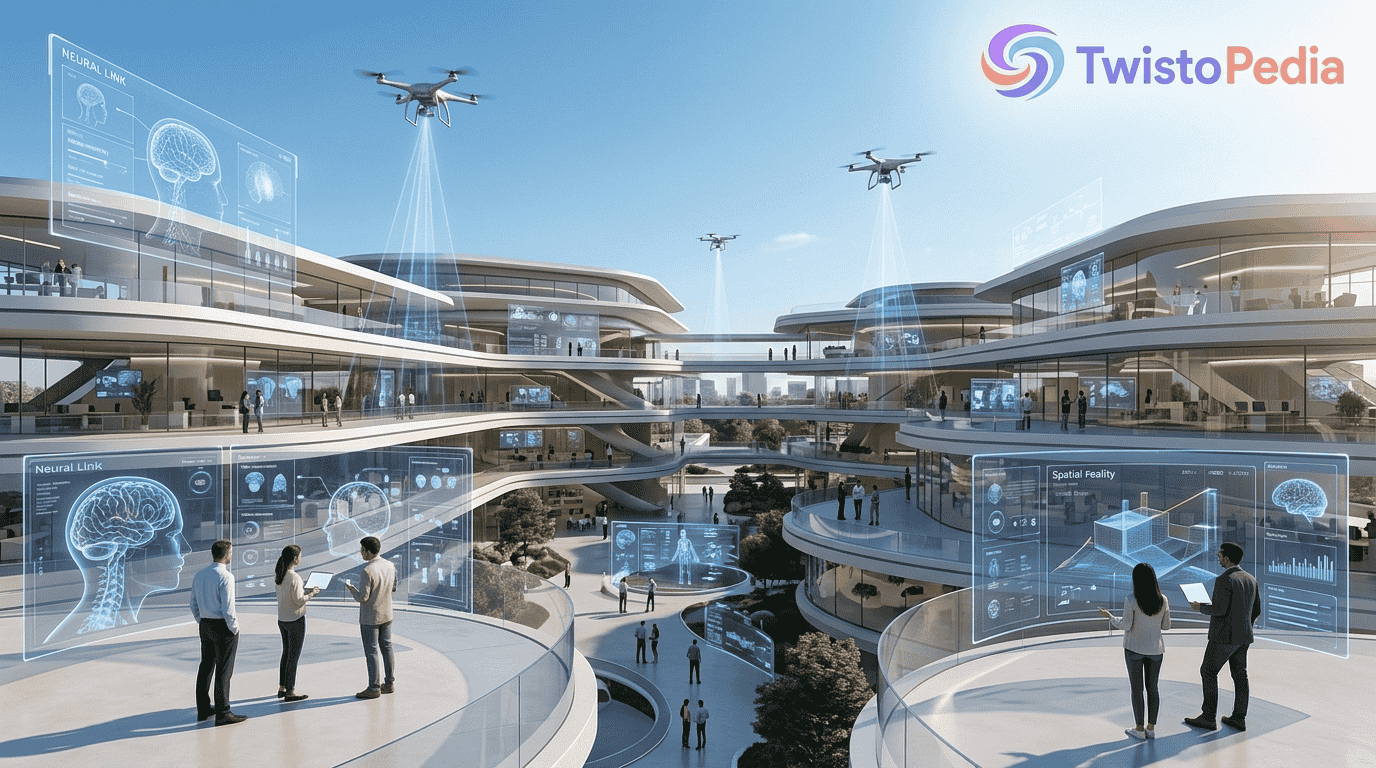
New platforms and interaction models can combine artificial intelligence, AI, traditional apps, and applications without requiring constant dependence on screens, tapping, or typing.
With distributed computing, glasses, earbuds, watches, and sensors can handle selected smartphone functions, allowing computing responsibilities to move across specialized devices rather than one central product.
This direction combines computing, post-smartphone technology, smartphone dependence, digital interaction, hardware innovation, software innovation, and user experience into a broader transition beyond conventional smartphones.
Augmented Reality And Smart Glasses
Augmented reality, or AR, places digital information within the physical environment, allowing smart glasses to present useful information without forcing users to repeatedly check a smartphone.
Reducing smartphone dependence becomes practical when a traditional smartphone can be replaced for selected activities such as communication, navigation, translation, and messaging.
Integrated photography, notifications, and AI assistance can provide hands-free information, while AR glasses use AI-driven visual interfaces to organize information around the wearer.
Modern systems combine cameras, audio, and eyewear with visual information, creating wearable computing that can understand surroundings through spatial awareness and contextual information.
The strongest augmented experiences may combine digital overlays, the real-world environment, glasses, artificial intelligence, AI, and hands-free technology without requiring users to constantly operate a phone.
Virtual Reality And Spatial Computing
Virtual reality, or VR, creates digital environments designed for entertainment, work, social interaction, and events, moving interaction beyond the limitations of conventional smartphone interfaces.
Spatial computing places digital applications and information within surrounding space rather than restricting everything to a conventional phone display or handheld screen.
Products such as Apple Vision Pro demonstrate how immersive experiences can combine physical surroundings with virtual environments, creating practical applications for professional and consumer scenarios.
This form of immersive technology changes computing by expanding the handheld screen into digital space, where users can interact with the physical environment through extended reality.
The wider XR ecosystem includes immersive computing, virtual worlds, spatial interfaces, and three-dimensional environments, giving future computing a much broader interaction surface than smartphones.
Smart Wearables
Smartwatches, health sensors, earbuds, AI-powered glasses, and smart rings are expanding wearables, allowing selected smartphone functions to move into smaller, specialized products.
These devices provide hands-free access to information, authentication, health tracking, payments, communication, and AI assistance, reducing the need to reach for a smartphone repeatedly.
As smartphone tasks spread across multiple devices, distributed computing becomes increasingly practical, creating a network of connected devices that cooperate around users.
Modern wearable technology can collect biometric data, deliver notifications, operate sensors, support health monitoring, and enable digital payments without requiring a conventional phone interface.
With voice interaction, artificial intelligence, and AI, the device ecosystem becomes more distributed, allowing wearables to perform increasingly important functions throughout everyday digital routines.
Artificial Intelligence And Ambient AI
Artificial intelligence and AI can become the intelligence layer of post-smartphone computing, coordinating services and devices instead of requiring users to navigate every application manually.
Traditional voice assistants, predictive systems, contextual AI, and automation can reduce dependence on app-based interactions, making applications less central to simple digital tasks.
When AI understands user intentions, ambient AI can interpret surroundings and context, providing proactive assistance instead of waiting for every command.
This model combines information, machine intelligence, natural interaction, voice commands, and personalized assistance while improving contextual awareness across environments and devices.
Advanced automation, digital assistants, multimodal AI, hands-free interaction, intelligent devices, and connected devices can create a more responsive layer of everyday computing.
Brain-Computer Interfaces
Brain-computer interfaces, or BCI, connect brain signals with computers and machines, potentially allowing thought-based commands to replace certain physical interaction methods.
Companies such as Neuralink are associated with this direction, while medical technology remains important because neural systems may require years of research before becoming long-term technology.
The necessary hardware can involve specialized equipment beyond ordinary physical input devices, while medical concerns, regulatory concerns, safety, and ethical issues require serious evaluation.
Questions involving privacy, public acceptance, neural technology, brain activity, and neural signals become more significant when computers interact directly with human neurological information.
Future human-computer interaction could involve direct control, cognitive interaction, invasive technology, or non-invasive technology, potentially changing future computing and the post-smartphone era.
Major Technology Companies And Their Strategies
Technology companies and tech giants envision future beyond smartphones are exploring smart glasses, augmented reality, AR, and immersive experiences while positioning artificial intelligence as a major component.
Different strategies include AI, Android XR, XR, and spatial computing, while competing approaches emphasize Vision Pro, AI-centered hardware, and ambient AI.
The hardware layer includes XR hardware, the smart-glasses ecosystem, XR chips, and on-device AI, showing how future products require both specialized components and efficient intelligence.
Other research areas include brain-computer interfaces, BCI, mixed reality, and enterprise applications, extending future computing beyond mainstream consumer products.
The broader post-smartphone technology environment depends on hardware ecosystems, software ecosystems, computing platforms, wearable technology, immersive technology, and neural interfaces working together.
Consumer Implications / What The Future Means For Consumers
For consumers, hands-free interaction could make everyday tasks easier while enabling immersive entertainment and personalized AI assistance across multiple connected products.
Health tracking, navigation, and translation can increasingly operate through smartphone, screens, wearable devices, smart glasses, smartwatches, and earbuds.
Additional products such as rings can support authentication, payments, and health functions while artificial intelligence and AI coordinate information between devices.
The objective is seamless interaction across connected devices, reducing dependence on smartphone apps while improving digital experiences and personalization.
As health monitoring, wearable computing, hands-free technology, immersive experiences, and AI-powered assistance improve, consumers may interact with technology without constantly focusing on smartphone screens.
Business Implications
Businesses can use augmented reality, or AR, for product demonstrations, while virtual reality, or VR, enables immersive customer experiences for training and marketing.
Artificial intelligence, AI, and personalization can transform websites and platforms, allowing businesses to create experiences designed specifically for emerging interfaces.
The growth of wearable-friendly experiences means companies may need to redesign existing digital services around wearable technology and different interaction patterns.
Through stronger digital engagement, mobile applications, and smartphone apps, companies pursuing early adoption can develop meaningful competitive advantages.
Successful customer engagement, digital transformation, business technology, immersive marketing, and personalized experiences can support business strategies built around post-smartphone technology.
Challenges And Barriers
Privacy, data security, data-security risks, and ethical concerns become increasingly important when wearable products continuously process personal information and environmental data.
High development costs and hardware costs can restrict accessibility and affordability, while battery limitations, device weight, and comfort influence practical adoption.
Social acceptance, infrastructure, and cybersecurity also matter because smartphones currently benefit from mature systems, established applications, and reliable cloud connectivity.
Changing established use cases and user habits requires more than technological novelty; successful technology adoption depends on practical benefits and trustworthy products.
Persistent privacy risks, security risks, ethical issues, hardware limitations, battery life, device design, accessibility barriers, cost barriers, technological infrastructure, connectivity, and consumer acceptance remain significant challenges.
Will Smartphones Disappear ?
Complete smartphone disappearance is unlikely to happen suddenly because many smartphone functions still depend on capable glasses, watches, earbuds, rings, and XR devices working together.
AI assistants can reduce smartphone use for simple tasks, while conventional computing, connectivity, and processing remain important reasons to retain a capable device.
The smartphone may become a fallback device as smartphone dependence declines during the post-smartphone era, while handheld devices continue supporting complex tasks.
Wearable devices, artificial intelligence, and AI can contribute to distributed computing, creating a broader device ecosystem instead of one dominant interface.
A smartphone replacement is therefore more likely through gradual transition, consumer behavior, technology adoption, distributed digital functions, and increasingly capable connected devices.
Post-Smartphone Market Outlook
The post-smartphone market is developing around new categories, while market projection estimates for 2030 suggest potentially enormous opportunities across future computing.
Some forecasts place the opportunity around $3 trillion, although such figures represent projections rather than guaranteed outcomes and should be treated carefully when evaluating market expectations.
Augmented reality, AR glasses, AI assistants, and brain-computer interfaces represent different stages of development within future consumer technology.
BCI, early adoption, and broader adoption may follow different timelines as the technology market evolves and consumer technology becomes more capable.
Growing wearable computing, artificial intelligence, neural interfaces, spatial computing, and immersive technology could support significant market growth, strengthening technology adoption and future computing.
The Post-Smartphone Future Is Really A Task Migration
The post-smartphone future may be better understood as task migration, where individual smartphone functions gradually move to devices optimized for specific activities.
Navigation, AI queries, photography, messaging, authentication, and payments can migrate independently instead of requiring one product to manage every task.
Entertainment, productivity, and typing may remain screen-heavy, while smart glasses, wearables, artificial intelligence, and AI handle contextual interactions.
This process creates device migration, spreading smartphone tasks across connected products and expanding hands-free computing for selected digital tasks.
The deeper transformation concerns user behavior, computing functions, connected devices, wearable technology, and post-smartphone computing, rather than simply eliminating smartphones.
How The Major Players Compare In 2026
In 2026, major technology companies and tech giants including Meta, Google, Samsung, Apple, OpenAI, Qualcomm, Neuralink, and Microsoft are pursuing different strategies.
Their work spans post-smartphone technology, smart glasses, augmented reality, AR, artificial intelligence, AI, XR, and spatial computing.
Some emphasize brain-computer interfaces, BCI, and neural technology, while others prioritize mixed reality, wearable technology, AI hardware, and XR hardware.
The supporting technology includes AI chips, on-device AI, specialized hardware, and software systems capable of delivering useful intelligence without constant cloud dependence.
Ultimately, technology strategy, ecosystem, market position, and technology readiness reveal different approaches toward the next generation of computing.
The Real Breakthrough Is Ambient AI
Ambient AI may prove more important than individual devices because artificial intelligence can provide contextual understanding across environments rather than remaining inside one application.
When context connects connected devices, information can move across multiple devices, including smart glasses, wearables, watches, earbuds, and sensors.
Reducing smartphone dependence becomes easier when smart glasses, wearables, and voice assistants understand surroundings and respond to changing circumstances.
This enables proactive assistance and personalized assistance, while intelligent computing, contextual computing, and distributed intelligence create more responsive experiences.
The resulting device ecosystem supports hands-free interaction, natural interaction, AI-driven experiences, ambient computing, and broader post-smartphone technology without demanding constant manual control.
What Must Improve Before Smartphones Can Fade Into The Background?
Battery life must improve before wearable devices can replace significant smartphone functions because users need dependable operation throughout normal daily routines.
Comfort and social acceptance matter equally because people are unlikely to wear uncomfortable products or devices that create persistent concerns about visibility and privacy.
Better privacy, stronger smartphone independence, useful applications, and practical use cases are essential for smart glasses and other wearable devices.
Improved hardware, reduced battery limitations, better device design, and stronger user experience can influence consumer acceptance more than specifications alone.
Ultimately, data privacy, smartphone dependence, compelling applications, practical use cases, affordability, accessibility, technology adoption, device usability, everyday use, and consumer behavior determine real-world success.
What To Watch Next
Consumer behavior remains one of the strongest indicators of technology adoption, especially as smart glasses and wearable devices become available to broader audiences.
Track navigation, messaging, photography, translation, and notifications because these frequent tasks reveal whether users genuinely change device habits.
The role of AI and artificial intelligence is equally important because successful hands-free computing should reduce unnecessary smartphone interaction.
Changes in device usage, user habits, smartphone functions, and digital interaction can reveal whether wearable technology is becoming a regular computing interface.
Long-term AI assistance, post-smartphone technology, consumer trends, and technology trends will matter more than launch excitement because sustained usage demonstrates real behavioral change.
The Next Computing Era May Already Be Starting
The next computing era may emerge through gradual computing changes rather than one dramatic product, with smartphones remaining useful while alternative interfaces gain importance.
Small changes in consumer behavior, user behavior, and technology adoption can encourage wider use of smart glasses, wearables, artificial intelligence, and AI.
A growing device ecosystem can support smartphone replacement without requiring immediate abandonment, allowing smartphone dependence to decline naturally.
Future computing platforms, hands-free technology, ambient computing, spatial computing, and immersive technology can coexist as consumers determine which interfaces provide practical value.
The post-smartphone era may therefore emerge through gradual transition, technology evolution, digital interaction, and connected devices, creating a more distributed computing environment.
FAQs
What Does “Beyond Smartphones” Mean?
Beyond smartphones describes a post-smartphone era where smartphone dependence declines as computing moves across wearable devices, smart glasses, and artificial intelligence.
AI, augmented reality, AR, virtual reality, and VR provide alternative interfaces for accessing information, communicating, working, navigating, and consuming entertainment.
Spatial computing and brain-computer interfaces, or BCI, represent advanced possibilities, while connected devices can coordinate information across distributed systems.
The concept emphasizes distributed computing, hands-free interaction, and digital experiences rather than one handheld device controlling every activity.
Ultimately, future technology may rely on several alternative interfaces, giving consumers different options according to context, task, environment, and personal preference.
Will Smartphones Disappear?
Smartphones may not disappear quickly because they remain versatile devices supporting applications, communication, navigation, payments, entertainment, and productivity.
However, smartphone disappearance could eventually follow smartphone replacement as smartphone functions migrate toward wearable devices, smart glasses, smartwatches, and earbuds.
Artificial intelligence and AI assistants can reduce smartphone interaction, while XR devices and connected devices provide specialized computing experiences.
The migration of communication, navigation, payments, entertainment, and productivity may accelerate when alternative interfaces become more capable, comfortable, affordable, and reliable.
The outcome depends on smartphone dependence, gradual transition, technology adoption, hardware quality, software ecosystems, affordability, comfort, privacy, and consumer behavior.
Which Companies Are Leading?
Technology companies and tech giants are competing across smart glasses, artificial intelligence, AI, augmented reality, AR, virtual reality, and VR.
Other important areas include spatial computing, XR, wearable technology, brain-computer interfaces, BCI, mixed reality, and AI hardware.
Companies developing XR hardware, neural technology, and immersive computing are also building broader post-smartphone technology ecosystems.
The competition involves hardware, software, chips, applications, cloud services, AI models, developer platforms, and connected devices rather than individual products alone.
Ultimately, successful technology ecosystems depend on consumer adoption, practical applications, affordability, usability, developer support, privacy, and long-term technological reliability.
Which Technologies Could Replace Smartphone Functions?
Smart glasses, augmented reality, AR, smartwatches, earbuds, smart rings, and wearables can replace selected smartphone functions.
Artificial intelligence and AI assistants can manage queries, reminders, communication, and information, while ambient AI provides contextual support without conventional application interfaces.
Virtual reality, VR, spatial computing, and XR support immersive entertainment, professional visualization, collaboration, training, and specialized digital environments.
Brain-computer interfaces and BCI could eventually enable more direct interaction, although these technologies remain less mature than current wearable systems.
Functions including navigation, messaging, photography, translation, notifications, payments, authentication, health tracking, and productivity can become distributed across devices.
What Will Be The Impact On Consumers And Businesses?
Consumers and businesses may experience significant changes as artificial intelligence, AI, smart glasses, and wearables become increasingly integrated into digital experiences.
Augmented reality, AR, virtual reality, and VR can create immersive experiences for customers while improving personalization, navigation, product discovery, training, and entertainment.
Businesses can use digital engagement, customer experiences, product demonstrations, websites, platforms, and mobile applications to reach customers through emerging interfaces.
Consumers may benefit from health tracking, navigation, translation, communication, and hands-free access, while businesses explore new customer interaction and digital transformation opportunities.
The overall impact depends on smartphone dependence, consumer behavior, responsible technology adoption, privacy protections, accessibility, affordability, and genuinely useful experiences.
When Could Smartphones Become Obsolete?
Smartphones could become less important before complete smartphone obsolescence occurs. The post-smartphone era may begin when wearable devices, smart glasses, and AI systems handle routine tasks.
Artificial intelligence, AI, ambient AI, augmented reality, AR, spatial computing, and XR could gradually reduce reliance on conventional smartphone interfaces.
Brain-computer interfaces and BCI represent longer-term possibilities, while technology adoption and consumer behavior determine how quickly alternative interfaces become mainstream.
Strong device ecosystems, reliable smartphone functions, and a gradual transition may allow consumers to move between platforms without abandoning existing hardware immediately.
The timing depends on hardware innovation, software innovation, affordability, battery life, applications, privacy, comfort, and the maturity of future computing.
Will The New Technologies Become Affordable?
New technologies can become more affordable as manufacturing scales, competition increases, components improve, and companies develop efficient production processes.
Smart glasses, wearables, artificial intelligence, AI, augmented reality, AR, virtual reality, and VR may gradually reach broader consumer markets.
Spatial computing and brain-computer interfaces may initially remain expensive because advanced displays, sensors, processors, specialized hardware, medical requirements, and BCI research increase development costs.
Greater accessibility, consumer adoption, and mass adoption can encourage competition and eventually reduce technology costs and device costs.
Long-term market growth depends on practical value, affordability, reliability, privacy, usability, and broad consumer technology acceptance rather than simply lowering prices.