Windchill software is PTC’s enterprise PLM software for product lifecycle management, uniting product data, people, and processes with embedded AI and a digital thread across engineering, manufacturing, and supply chain. Practitioners point to real-time collaboration, workflow automation, and version control as the engine behind faster time to market and lower costs.
- Windchill Software: The Complete PLM Picture
- Key Features That Matter Most
- Change Management Done Right
- ERP Integration For Connected Operations
- PDM And PLM: Knowing The Difference
- Collaboration And Supplier Connectivity
- Multi-CAD, CAD Integration, And Visualization
- Compliance, Regulated Industries, And Traceability
- Manufacturing, Process Planning, And BOM Transformation
- Quality And Reliability Engineering
- Benefits And Business Outcomes
- Deployment Options: SaaS And Cloud
- Industries Served And Best Fit
- Application Suite And Product Modules
- What’s New And Recent Updates
- Technology And Technical Specifications
- User Reviews And Sentiment
- History Of Windchill
- Market Position And Competitors
- Pricing Overview
- Alternatives To Consider
- Support Options
- Supported Languages
Here’s what seasoned users notice first: the platform isn’t just a filing cabinet for product information. It’s a consolidated view that ties concept to manufacturing, keeps data accuracy high, and supports product and process quality across more variations. With roughly 1.1 million users and a hosted version dating back to 2004, it’s earned its spot as enterprise PDM. This guide walks through the angles that matter most, from product structures and collaboration tools to product analytics and service information. Expect practical takeaways, honest observations, and the occasional contrarian note from the trenches.
Quick takeaways:
- It consolidates product data management into one application suite.
- Embedded AI and the digital thread drive improved product quality.
- Data integrations keep teams aligned from design through service.
Windchill Software: The Complete PLM Picture
Windchill software is a full-featured enterprise PLM platform that manages the entire product lifecycle on a single PLM software platform. Practitioners describe it as the backbone connecting complex product development across global organizations.
What makes the difference day-to-day? The core answer sits in how it standardizes work. Teams get out-of-the-box functionality for core PDM, then layer on advanced PLM applications as they scale.
How It Positions Against the Competition
Core product positioning centers on a comprehensive portfolio that lets teams collaborate, innovate, and lock in quality. Deployment flexibility matters here too: run it on-premises or on PTC Cloud, backed by scalable technology.
- Collaboration at scale across engineering, manufacturing, quality, and supply chain teams
- Multi-CAD environments and regulatory compliance handled natively
- Global collaboration for complex product ecosystems
- Cloud and SaaS deployment with end-to-end digital thread connectivity for sharper decision-making
Observers note the standardized functionality is what keeps rollouts predictable. You don’t rebuild processes from scratch; you adopt proven ones.
AI-Driven PLM And Intelligent Capabilities
Windchill’s AI capabilities deliver a next-generation PLM experience, using AI-driven intelligence across product lifecycle workflows to turn connected product data into actionable insights. Practitioners see this as the shift from passive storage to active guidance.
The standout is AI-driven part intelligence. It flags duplicate parts and similar parts, which pushes component reuse, cost reduction, and simplified supply chains. That feeds product standardization and smarter BOM management.
Where The Intelligence Shows Up
- Parts classification and supply chain collaboration for reduced operational costs
- AI assistants with natural language query and documentation summary
- Engineering change management plus document and data management and quality workflows for increased efficiency
- Agentic digital thread powering AI-powered workflows and automated change management
The agentic layer enables cross-domain traceability and intelligent orchestration across mechanical, electrical, and software development. Through IPE (integrated product engineering), teams get product traceability, change and configuration management, and manufacturing process alignment. The payoff? End-to-end traceability, enforced compliance, and cross-functional collaboration. Add automated BOM transformation and process planning inside a modern user experience, and enterprise-wide adoption follows naturally across the extended enterprise.
Key Features That Matter Most
The feature set spans BOM management, product data management, and workflow automation under one roof. Practitioners single out AI-enhanced BOM and AI Part Intelligence as the features that quietly save the most hours.
Start with structure. AI Part Intelligence surfaces duplicate parts, while variant management handles eBOM, mBOM, and software BOMs for real cost efficiency.
Core Feature Groups
| Area | What It Covers |
| Change & Config | Engineering change management, configuration management across mechanical, electrical, software domains with AI-assisted workflows and cross-system traceability |
| Collaboration | Collaborative product development, supplier development, secure collaboration, product data sharing via the digital thread |
| Manufacturing | Manufacturing process management, automated mBOM generation, process planning, reusable work instructions, digital continuity from design to shop floor |
| Data & Access | Parts classification, intelligent automation, searchability, CAD integration, visualization, multi-CAD environments, browser-based 3D visualization, role-based access |
Beyond that, you’ll find quality management with closed-loop processes, audits, and CAPAs, plus supply chain collaboration. Rounding it out: data management, bill of materials, document management, project management, supplier management, requirements management, digital mockup, and collaboration and social networking. Lifecycle analytics, compliance management, process management, and service information management keep everything measurable.
Sustainability And Variability
Part reuse and product variability management support sustainability initiatives. Rules-based modeling and a connected product data model drive dynamic product variants and customization. With ERP integration, design management, configurable workflow, data synchronization, lifecycle management, status tracking, and workflow management, the bills of material stay clean and the compliance stays intact. Breaking down data silos is the quiet win here.
Change Management Done Right
Enterprise-grade change management unifies engineering, manufacturing, and quality processes in one system, letting teams create changes, review, approve, and track them across the full product lifecycle. Practitioners value the complete traceability most.
Here’s the contrarian take: more process isn’t the enemy of speed. With embedded AI and workflow automation, you actually accelerate change processes while cutting manual effort and keeping consistency.
The system handles mechanical changes, electrical changes, and software changes in complex product environments. A digital thread approach links requirements, parts, documents, and processes, keeping every change auditable and visible.
ERP Integration For Connected Operations
Windchill connects to ERP systems so product development and business operations share one system of record for product data, designs, and configurations. Practitioners describe this as the handoff that makes or breaks production.
When change processes flow cleanly into planning, procurement, and execution, you ship validated data downstream.
- Released product data moves with accuracy into downstream processes
- Planning accuracy improves, reducing rework and production errors
- Accelerate product introductions by linking PLM and ERP
This runs through Enterprise Application Integration (EAI) to the right distribution targets within Enterprise Resource Planning. Simple idea, big impact.
PDM And PLM: Knowing The Difference
Product Data Management (PDM) controls engineering data, CAD files, versions, and design collaboration, while Product Lifecycle Management (PLM) governs the entire product lifecycle from concept and design through manufacturing, service, and end-of-life. Windchill delivers both on a single platform.
PDM nails file management; PLM extends to end-to-end product processes like manufacturing planning, quality management, and supply chain collaboration with lifecycle traceability.
The real benefit? You eliminate silos and get a single source of truth. Windchill PDMLink acts as the master product data repository for change management, configuration management, and detailed design, while Windchill ProjectLink powers web-based project collaboration.
Collaboration And Supplier Connectivity
Secure, real-time collaboration connects internal teams, suppliers, and partners through the digital thread for product data sharing, reviews, and tracked changes. Practitioners note this connected environment is where the extended enterprise truly works as one.
Engineering, manufacturing, quality, and supply chain teams operate from a shared view in a centralized system for changes and approvals.
- 2D product data and 3D product data handled with specialized tools
- Secure collaboration platforms with AI-enhanced workflows
- Enterprise teams connected with data accuracy, version control, and a consolidated view of product information
For the toolset: Windchill ProjectLink, Windchill SocialLink for social computing, and Windchill Mobile on iPad and iPhone keep people in sync anywhere.
Multi-CAD, CAD Integration, And Visualization
Windchill supports multi-CAD environments through centralized product data management, browser-based 3D visualization, and role-based access for seamless collaboration. It’s how teams kill data silos across engineering disciplines.
On a modernized platform with refreshed UX, a single PLM system ties leading CAD platforms together via connectors.
- Creo and Onshape connect for consistent data management
- Improved collaboration and reduced silos across design tools
- File management for 3D models built in 3D modeling software
Practitioners call this the feature that finally makes mixed-tool shops feel unified.
Compliance, Regulated Industries, And Traceability
Windchill enforces compliance and product quality through closed-loop processes linking design, manufacturing, and feedback, with audits, CAPAs, and traceability across the full product lifecycle. For regulated industries, end-to-end traceability is non-negotiable.
Think aerospace, defense, and medical technology. Here, every product data change needs document control, audit trails, and closed-loop quality processes.
How Traceability Holds Up Under Scrutiny
Secure collaboration meets regulatory requirements while boosting operational efficiency. Teams track relationships across software, hardware, and systems using digital thread capabilities. That means lifecycle visibility, impact analysis, and clear links between requirements and product configurations.
Compliance management runs through Windchill Compliance, Windchill Materials & Substances tied to the BOM, and Windchill LCA (Lifecycle Assessment) for environmental impact.
Manufacturing, Process Planning, And BOM Transformation
Windchill turns engineering data into manufacturing-ready deliverables through automated mBOM generation, process planning, and reusable work instructions. Practitioners credit this for efficiency and consistency in global production environments.
Digital continuity from design to shop floor is the headline. BOM transformation lets teams mass generate mBOMs and process plans, apply mass changes, and reuse structures to accelerate execution.
This automated BOM transformation and the advanced manufacturing capabilities live in Windchill MPMLink (Manufacturing Process Management). Less re-keying, fewer errors.
Quality And Reliability Engineering
Windchill strengthens product quality with end-to-end traceability and integrated lifecycle processes, using closed-loop feedback across design, manufacturing, and service. Reliability and safety sit at the core.
Reliability engineering taps the digital thread to predict failures. Tools like FMEA and fault tree analysis drive corrective actions that lower lifecycle costs and sharpen engineering decisions during product development.
The Quality Module Lineup
- Windchill Risk & Reliability, Windchill FRACAS, Windchill FTA, Windchill Prediction
- Windchill CAPA, Windchill Nonconformance, Windchill Customer Experience Management
Together they manage quality management, failure modes, quality issues, nonconforming products, and customer complaints in one flow.
Benefits And Business Outcomes
The measurable wins are improved time to market, reduced operational costs, and enhanced product quality, powered by AI-driven insights and automated workflows. Practitioners frame these as outcomes you can put on a dashboard.
Digital continuity across engineering and manufacturing cuts manual effort and streamlines collaboration.
- Eliminate duplicate parts and boost part reuse to optimize product structures
- AI-powered analysis via AI Part Intelligence sharpens BOM management and parts classification
- Cross-functional collaboration at scale from a unified source of truth across quality and supply chain teams
- Real-time collaboration with secure product data sharing for increased efficiency
AI assistants deliver modern user experiences. Integrated lifecycle processes with closed-loop feedback support enforced product compliance to regulatory standards, traceable processes, and lifecycle data governance. Add documentation management, the digital thread, end-to-end product traceability, lifecycle visibility, and impact analysis. For growing teams, scalability, task management, requirement management, central data handling for multiple users, and solid data management round out the value.
Deployment Options: SaaS And Cloud
Windchill runs on a single PLM software platform, available on-premises, on PTC Cloud, or as modern SaaS deployment via Windchill+. Practitioners pick based on how much control versus convenience they want.
Windchill+ leans into speed, scale, and security with robust PLM capabilities.
- Faster onboarding, continuous updates, and built-in security
- Global teams keep product data control while gaining faster innovation
- Improved quality and efficient product development on cloud-native PLM
The SaaS route offers predictable upgrades, scalable infrastructure, built-in automation, and faster time-to-value. It’s FedRAMP authorized too. Fun fact practitioners mention: the hosted version launched in 2004 for small- and medium-sized customers.
Industries Served And Best Fit
Windchill fits manufacturers facing product complexity who need to manage product data, processes, and teams through the digital thread and embedded AI. The best fit? Organizations wanting end-to-end lifecycle visibility to accelerate innovation, improve quality, and scale operations.
Industry-By-Industry Fit
- Aerospace & Defense: highly regulated products needing full lifecycle traceability, configuration control, secure collaboration, global programs, and mission-critical delivery
- Automotive: software-defined vehicles blending mechanical, electrical, and software data, with variants at scale across global supply chains
- MedTech: regulatory compliance, document control, closed-loop processes, and faster approvals
- Industrials: product development efficiency, digital continuity, and configurable products
- Electronics & High-Tech (E&HT): rapid product cycles, complex supply chains, multi-domain data integration, and AI-driven insights
It also serves Industrial Products, Medical Devices, Retail, Footwear & Apparel, StartUps, SMBs, Mid-Market, and Enterprises. Practitioners find it strongest for mid-sized to large enterprises building complex products across multiple design disciplines and highly engineered products needing regulatory compliance and traceability. A modular approach plus SaaS deployment keeps it flexible.
Application Suite And Product Modules
The Windchill application suite is organized into Expert packages for core PDM and PLM functionality, spanning base, advanced, and premium packages with role and industry add-ons. Practitioners map module choices to team roles rather than buying everything at once.
Expert packages deliver standards-based PLM applications with associative product data and automation. Non-expert packages bring role and task-based apps, including Windchill Navigate for visualization, validation, and review across 2D, 3D, and augmented reality.
The Broader Module Family
- Integration: enterprise system integrations, Enterprise Application Integration (EAI), ERP systems, and extensions
- Collaboration & Projects: Windchill ProjectLink, Windchill PartsLink
- Manufacturing: Windchill MPMLink (Manufacturing Process Management)
- Retail: FlexPLM for retail, footwear & apparel, and consumer products
- Data Core: Windchill PDMLink as master product data repository for change/configuration management and detailed design
- Content: Arbortext Content Manager for content creation and publishing
- Programs: Windchill PPMLink (Program Portfolio Management, PPM) for discrete manufacturers
- Requirements: Requirements Management and the Integrity product for software and hardware requirements
- Compliance & Cost: Windchill Compliance, Windchill Materials & Substances, Windchill Cost for product cost estimates, Windchill LCA (Lifecycle Assessment)
- Quality: Windchill FRACAS, Windchill FMEA, Windchill FTA, Windchill Prediction, Windchill CAPA, Windchill Nonconformance, Windchill Customer Experience Management
- Service: Windchill Service Information Manager, Windchill Service Parts
- Utilities: Windchill SocialLink, Windchill Mobile, Windchill Archive, Windchill Print Service, Windchill Reporting, Windchill Interference Management Services
What’s New And Recent Updates
The latest is Windchill 13.1.2, introducing a Next Gen UI with a redesigned homepage, dynamic dashboards, and intuitive table controls. Practitioners highlight the Manufacturing Transformation updates as the biggest time-savers.
Those updates let teams mass generate mBOMs, create process plans, apply mass changes, and reuse structures.
Highlights Worth Noting
- PTC Product View Web and Navigate 10.0 with browser-based 3D visualization and role-based apps like View Work Instructions and View & Acknowledge
- BOM Collaboration with redlining and supplier traceability
- Sustainability Insights via BOM roll-up reports and material lifecycle management
- Next Gen UI/UX plus AI for PLM: AI Assistant and AI Parts Rationalization
- SaaS advances through Windchill+, Enterprise Collaboration, and PTC Jetstream
- Manufacturing & Service Engineering, the Windchill/Onshape Connection, Integrated Product Engineering, and ALM links
An Updated Release Model now follows an annual release cadence with long-term support, alongside Architecture and Platform Modernization.
Release Timeline
| Release | Date |
| Release 1998 | Original launch |
| Windchill 4.0 / 10.0 / 11.0 | Earlier generations |
| Windchill 12.0 | June 2020 |
| Windchill 13.0 | June 2023 |
| Stable release 13.1.4.0 | July 31, 2026 |
Technology And Technical Specifications
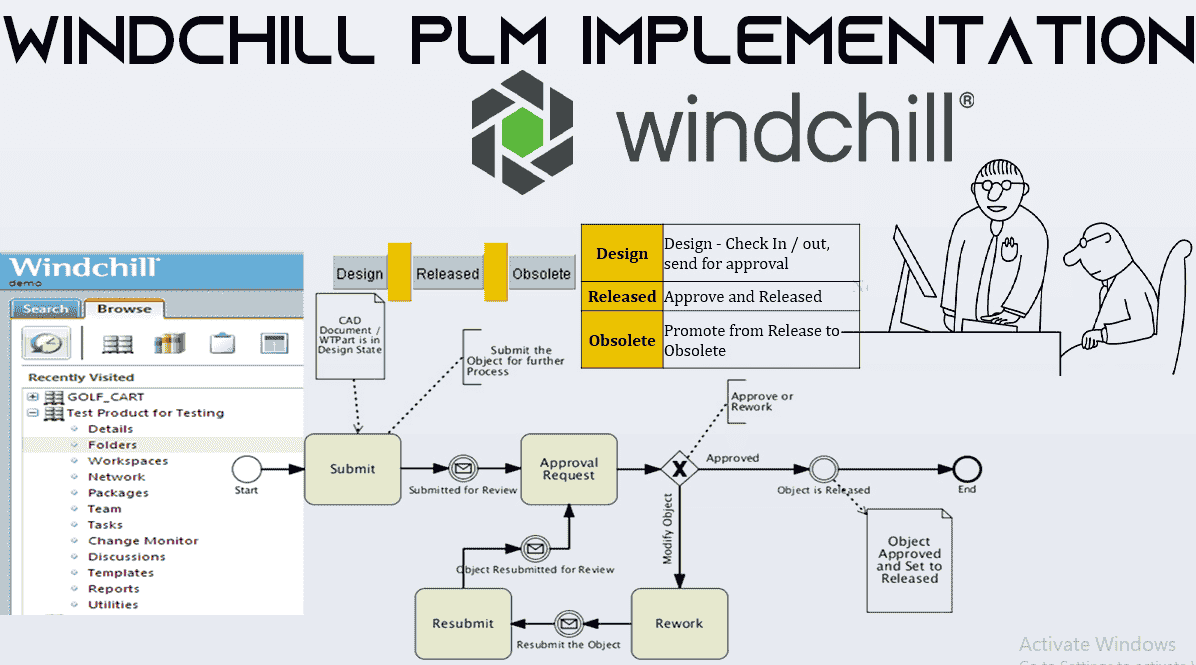
Windchill uses a multi-tier implementation that scales from a single server to thousands of end users at global scale. Practitioners describe the three tiers as the foundation of its reliability.
Those three tiers are the Client tier, Application tier, and Database tier. It runs on Microsoft Windows and Linux.
Core Technical Facts
- Category: product lifecycle management under a proprietary license
- Vendor: PTC Inc., based in Boston
- Support channels: email support, phone support, live support, training, and tickets
- Languages: English, Chinese Simplified, Chinese Traditional, French, German, Italian, Japanese, Korean, Spanish, Polish, Portuguese Brazil
User Reviews And Sentiment
Windchill holds an Overall Rating of 4.4, with strong marks for Customer support (4.0) and Functionality (4.0), though Ease of Use lags at 3.2. Reviewers call it a powerful software solution.
They praise its robust project management and product lifecycle management (PLM) capabilities, plus scalability and efficiency for task management and requirement management.
The Honest Trade-Offs
- New users report bugs and a real learning curve
- The home screen is hard to customize, though tasks assigned stay visible
- Central data handling shines for multiple users and data management in a huge organization with many design locations and factories
- The CAD interface, multiple part BOM download, and data analysis for managing files and 3D models (built in 3D modeling software like Creo) draw mixed but mostly positive notes
History Of Windchill
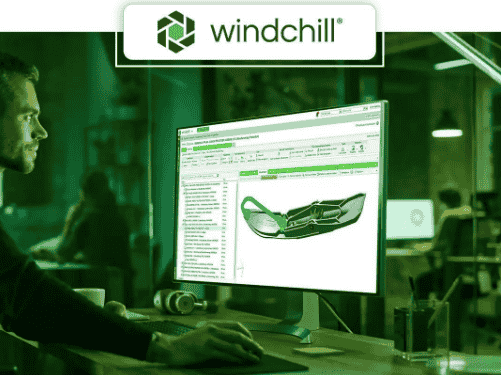
Windchill began at Windchill Technology Inc., later acquired by PTC, with Jim Heppelmann joining as senior vice president before becoming President and CEO. Practitioners often cite its first-mover status.
Released in 1998, it was first to market as an internet-based PLM offering.
- 2001: Windchill ProjectLink added project collaboration
- 2002: Windchill PDMLink brought product data management
- 2004: Updates aimed to simplify product management applications
Market Position And Competitors
Windchill’s user base spans individuals to large corporations across manufacturing market segments. Practitioners see it competing head-to-head with the biggest names in PLM.
Those segments include Aerospace & Defense, Automotive, Electronics & High-Tech, Industrial Products, Medical Devices, and Retail, Footwear & Apparel.
Directly Competitive Products
- Teamcenter by Siemens
- ENOVIA by Dassault Systèmes
- Agile by Oracle
- Empower PLM and Omnify
PTC reaches buyers through a direct sales force, an indirect sales channel, and commercial sales.
Pricing Overview
Windchill uses a starting price available only with pricing upon request, following a requirements-based pricing model. Practitioners advise budgeting early since detailed pricing is available upon request.
Worth noting: there’s no free trial and no free version, so plan a scoped evaluation with PTC directly.
Alternatives To Consider
The main alternatives to Windchill include Arena PLM, Aras PLM, Dozuki, Propel, and Creo. Practitioners suggest shortlisting based on company size and regulatory needs.
Depending on your stack, teams also weigh Jira, Genius ERP, and broader PLM Software options. For cloud-first evaluations, Arena Solutions (Arena) and Aras come up most often.
Support Options
Windchill offers support through email, phone, live support, training, and tickets. Practitioners recommend starting with training to flatten that learning curve early.
Supported Languages
Windchill supports eleven languages: English, Chinese Simplified, Chinese Traditional, French, German, Italian, Japanese, Korean, Spanish, Polish, and Portuguese Brazil. This range makes it practical for global teams spanning multiple regions.