

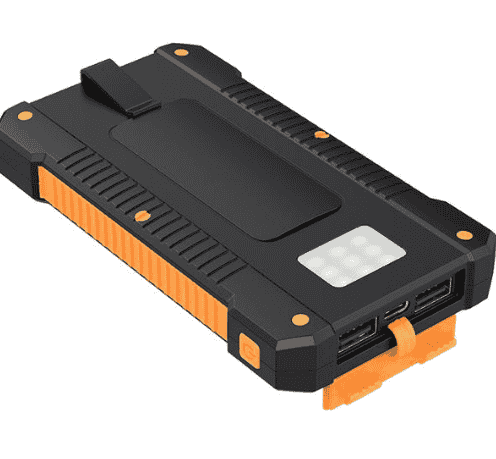
A Pom Gear 8000mAh portable rechargeable solar battery is a compact power bank that tops itself up in sunlight and works best as a supplementary power source, not as your only way to charge a phone.
- What Specs Matter Most on an 8000mAh Solar Battery?
- Why Are 8000mAh Solar Batteries Gaining Popularity?
- How Do You Choose an 8000mAh Solar Battery?
- Which 8000mAh Solar Battery Options Stand Out?
- How Long Does an 8000mAh Solar Power Bank Take to Charge in the Sun?
- Can You Charge Devices While the Solar Power Bank Is Charging?
- Can You Take a Solar Battery on an Airplane?
- What Does “8000-Cycle” Mean for a LiFePO4 Battery Like the TP ENERGY LF80?
- Is a Higher Buyer Repeat Order Rate a Reliable Indicator of Product Quality?
The listings I reviewed don’t confirm any specific Pom Gear model, so the figures in this article describe 8000mAh solar power banks in general rather than one verified spec sheet. Read them as category benchmarks.
Within that category, solar-powered variants usually pair a Lithium-ion battery with a foldable solar panel, and some add a hand-cranked generator as an emergency charging method. Listed specs commonly include 5V output and an LED indicator.
Outdoor use changes the checklist. For outdoor recreational activities, I would look for integrated LED flashlights and an IP65 or higher waterproof rating, the pairing the source page recommends for outdoor and emergency work. Emergency services and B2B buyers add procurement questions on top of that, covered further down.
What Specs Matter Most on an 8000mAh Solar Battery?
The specs that matter most on an 8000mAh solar battery are cell type, port layout, solar panel type and casing material.
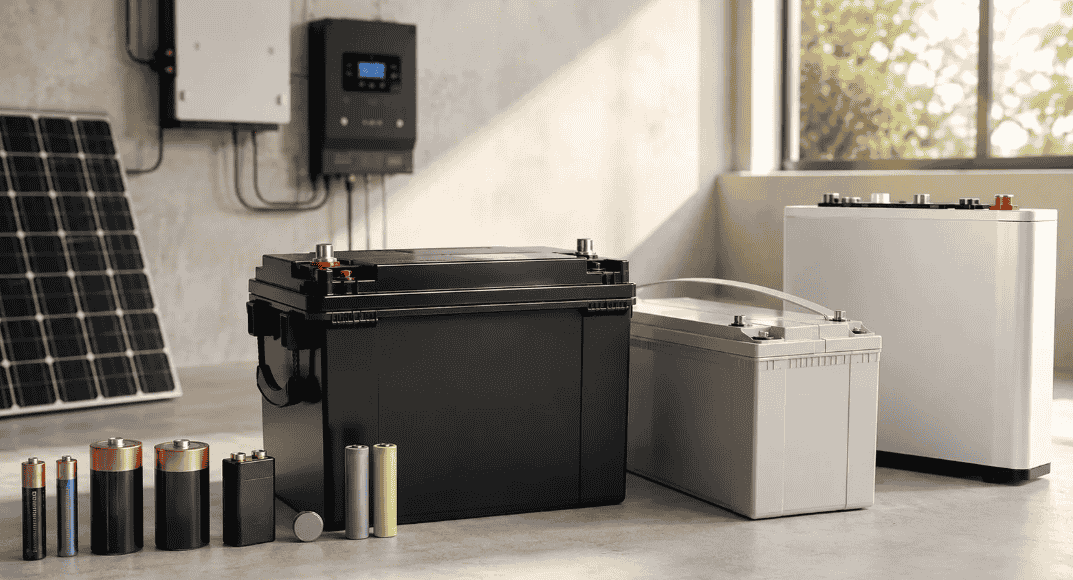
The source guidance recommends Li-Polymer cells for better safety and energy density. A durable, high-performance unit starts with that choice, not with the label printed on the shell. The table pairs the other hardware decisions with the reason the source gives for each.
| Component | Spec to look for | Reason |
| Ports | two USB-A ports | Device compatibility |
| Fast charging | USB-C Power Delivery (PD) and Quick Charge (QC) | Now common on newer units |
| Solar input | monocrystalline solar panels | Faster solar recharge |
| Casing | ABS+PC composites | Lightweight and durable |
Two sizing details deserve a second look. Charging time varies with panel size, so I would want the panel dimensions stated plainly; a reliable listing states them. At 8000mAh the bank also sits well under 100Wh, which keeps it within what carriers usually allow. Order minimums differ as well: one comparison listing starts at 1 pack, another at 4 pieces.
Why Are 8000mAh Solar Batteries Gaining Popularity?
Rising demand for off-grid power and sustainable energy is why 8000mAh solar batteries are gaining popularity, in a market the source describes as evolving rapidly.
Businesses are pushing the feature race. Listings advertise solar panel efficiency of 22%, and buyers are told to check conversion efficiency against that figure. The same attribute list gives an operating range of -20°C to 60°C.
Customization is part of the trend. The page’s filters offer customizable capacity, color and logo options, and OEM/ODM support appears as a buying criterion for branded orders.
Hand-crank charging is the backup route when weather is poor, because solar output depends on sunlight intensity. The source’s summary also groups products under labels such as Differentiated Advantage Picks, meaning units that excel at one critical metric.
How Do You Choose an 8000mAh Solar Battery?
Choose an 8000mAh solar battery by confirming safety features first, then the supplier’s track record, then the order terms.
Safety comes first. The attribute list names overcharge protection and short circuit protection, and the buying guide asks you to check which regulations apply in your target markets.
Buyer profiles have broadened. Teams in field operations and emergency preparedness now share the market with users shaped by remote work, the gig economy and a mobile workforce, and all of them need solar batteries that keep devices running.
Three filters narrow the supplier side quickly:
- Verified supplier status on the listing
- MOQ < 5 for trial purchases
- Review scores such as 4.3, 4.7 and 5.0, the range seen in the comparison
The source labels low-volume trial buys as Procurement-Friendly Options, so those filters work together.
Which 8000mAh Solar Battery Options Stand Out?
The 8000mAh solar battery options that stand out are the ones that clear a supplier checklist built on track record, rating and order size.
The market gives buyers plenty to choose from, since the global power bank market is projected to reach $27 billion by 2028. Products vary greatly, from pocket power banks to large storage cells, and newer models often include hand-crank generators alongside the panel. Fixed benchmarks keep the comparison honest.
| Check | Benchmark |
| Operating history | 5+ years |
| Supplier rating | 4.5+ supplier rating |
| Minimum Order Quantity | 1-50 pieces |
| Compliance | FCC certifications for target markets |
| Supplier type | manufacturer only filter |
| Durability | 1000+ cycle life |
A review score of 4.5/5.0 is the cutoff the source suggests, and repeat customers are the other signal of reliability, which the last FAQ examines. For a first order, the ideal shortlist is two or three suppliers that meet every row.
How Long Does an 8000mAh Solar Power Bank Take to Charge in the Sun?
Charging an 8000mAh solar power bank from the sun takes about a day or more of good light, so solar works as a slow top-up rather than a quick refill.
Real-world speed depends on sunlight conditions, and extreme weather events are one reason emergency users want a second charging route. Consumer skepticism about smaller panels is fair, since the source flags doubts about real-world recharge performance. A model such as the Sasum SS018, listed at 8000mAh with 5V2A output, shows what the category looks like in practice.
Slow solar is easier to live with because of pass-through charging: through the bank’s USB ports you can power devices simultaneously while the bank refills from sunlight or a wall outlet.
A practical habit is topping the bank up before traveling, especially ahead of an airplane trip, so solar charging stays a bonus instead of the plan.
Can You Charge Devices While the Solar Power Bank Is Charging?
Yes, most current solar power banks can power a phone while the bank itself is being recharged.
Power goes out through the output ports and comes in through a USB Type-C input or the panel under direct sunlight. If the bank serves daily solar energy storage, cycle life matters more than headline capacity, and the longest rating in the source equals approximately 8000 times of use. Before buying, I check that the port labeling is clear, because a vague listing makes it hard to tell what the bank accepts.
That convenience travels well. Pack the bank in carry-on luggage, and because airlines differ, check with airline guidance before relying on it.
Can You Take a Solar Battery on an Airplane?
Yes, an 8000mAh solar power bank is generally allowed in cabin baggage on most flights because it sits well below the 100 watt-hour mark, though airline rules differ.
Plan travel around charging: fully charge the bank at home, because solar alone can take 20-30 hours and will not help much between connections. A full bank can then charge devices in the terminal and in the air.
Age matters for travel gear too. Longevity is measured in cycles, meaning how many times the bank is charged and discharged before capacity degrades; the source’s cycle-rating explanation puts the endpoint near 80% of original capacity. Buyers who care most about safety paperwork should start with the source’s Core Compliance Leaders category.
What Does “8000-Cycle” Mean for a LiFePO4 Battery Like the TP ENERGY LF80?
An 8000-cycle rating tells you how many full charge-and-use rounds a LiFePO4 cell is rated to deliver before it wears down noticeably.
The TP ENERGY LF80 from ShenZhen TPENERGY Electronic Co., Ltd. is a 3.2V 80Ah 256Wh cell described as CE/RoHS certified, and the source recommends it for deep-cycle use. It is a cell, not an 8000mAh power bank: the 8000 in its listing is the cycle count, and the listing shows $15.78-20.85.
For buyers, price per unit at your expected order volume drives total cost of ownership, and a cycle rating alone doesn’t prove good quality. The same logic applies to modern solar power banks: a cycle figure only helps when you know which cell sits behind it.
Because this is a 256Wh cell, what is permitted in carry-on bags for banks under 100 watt-hours does not automatically carry over to it.
Is a Higher Buyer Repeat Order Rate a Reliable Indicator of Product Quality?
A higher buyer repeat order rate is a strong positive signal, but it records buying behavior rather than tested product quality.
The source says a high rate suggests earlier buyers were satisfied enough with the product or the supplier service to return and buy again, and that this often correlates with sound products. It also treats anything above 20% as a sign of customer satisfaction.
| Supplier | Buyer repeat order rate |
| Dongguan Xionel Electronic Technology Co., Ltd. | 32% |
| HK AOXIN TECHNOLOGY LIMITED | 55% |
| Shenzhen Sasum Technology Co., Ltd. | 7% |
A fourth supplier in the comparison sits at 30%. Minimum orders differ as well, 10 pieces at HK AOXIN against 500 pieces at Sasum, so I would read a low rate beside the order size, not on its own.