

Cell phone stands are hands-free phone holders that improve viewing comfort, stability, productivity, and convenience across desk setups, car use, travel, video calls, and content creators’ workflows. The right choice depends on where and how the stand will be used, whether the priority is portable use, recording support, desk use, travel fit, car use, or magnetic attachment.
- What Are Cell Phone Stands and Why Do People Use Them?
- Which Types of Cell Phone Stands Are Available Right Now?
- How Do Different Cell Phone Stands Compare?
- Which Stand Style Works Best for Desk Use, Travel, or Recording?
- What Features Actually Matter When Choosing a Cell Phone Stand?
- Where Can You Use a Cell Phone Stand and Which Style Fits Each Situation?
- Why Would You Use a Phone Stand in the First Place?
- Can a Cell Phone Stand Help With Posture and Comfort?
- Do Cell Phone Stands Work With All Phones and Cases?
- Are MagSafe Cell Phone Stands Actually Worth Buying?
- How Stable Are Cell Phone Stands During Everyday Use?
- Are Promotional Cell Phone Stands Good for Branding and Giveaways?
- How Long Does It Take to Order Custom or Bulk Phone Stands?
- Are There Eco-Friendly Cell Phone Stand Options?
- Can You Customize a Cell Phone Stand for Your Brand or Event?
- Do Cell Phone Stands Fit All Smartphone Sizes?
- What Materials Are Cell Phone Stands Made From?
- Are Wireless Charging Cell Phone Stands Available?
- How Do You Choose the Right Cell Phone Stand for Your Needs?
- What Trends and Buying Patterns Show Up Across the Cell Phone Stand Market?
- What’s the Simplest Way to Understand the Cell Phone Stand Market?
A lot of people start with the idea that a stand is just an accessory, but in practice a stand often changes how a phone fits into work settings and travel settings. A cell phone stand can keep an auxiliary screen visible during working, keep a recipe upright while reading, or make video viewing easier without forcing the user to stay locked to a desk.
What I’ve seen over time is that the category looks simple until real-life use begins. Once watching, working, calling, and everyday interact patterns get mixed together, the need for support, organization, and a clean setup becomes obvious. That broader broad picture matters more than marketing copy, especially for modern audiences who want a useful, portable, upright, and accessible tool that holds its place in daily routines.
What Are Cell Phone Stands and Why Do People Use Them?
Cell phone stands are devices that hold a phone in place to improve productivity, support, organization, and everyday convenience during working, watching, reading, and calling. The practical reason people keep buying them is that a phone becomes easier to live with when it stays visible, upright, and accessible instead of getting lost in clutter or buried among other accessories.
From a use-case angle, the appeal is not only video conferencing or an auxiliary screen. A stand adds multitasking freedom, which is why smartphones now sit inside daily routines more like small workstations than casual gadgets. A stand also supports space-saving placement, especially when adjustable viewing angles matter more than raw device specs.
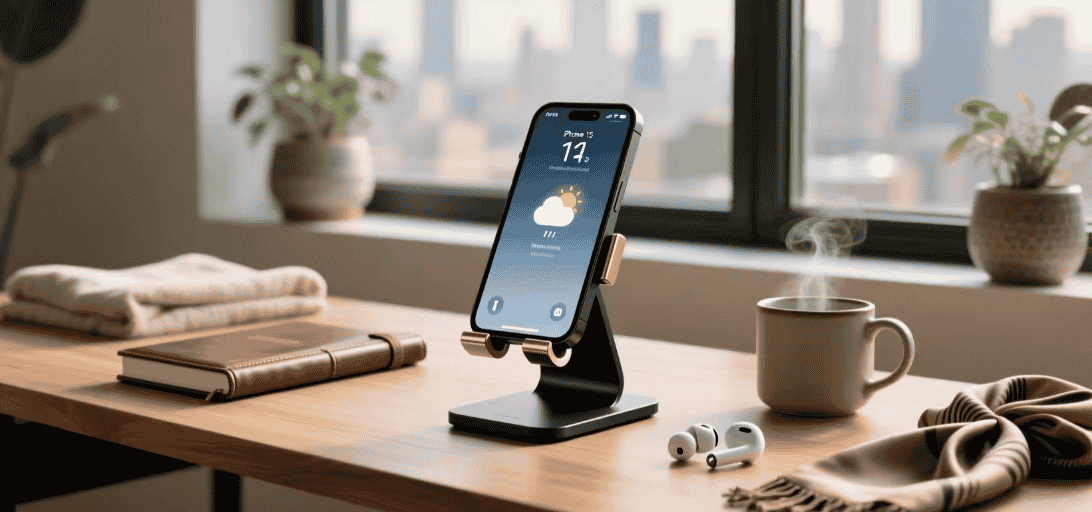
That is why the market includes everything from storefronts built around design and lifestyle use cases to models aimed at modern audiences who want productivity without friction. The core benefits sound ordinary on paper, but in use they turn a phone into something far more portable, accessible, and easy to keep in motion across the day.
Which Types of Cell Phone Stands Are Available Right Now?
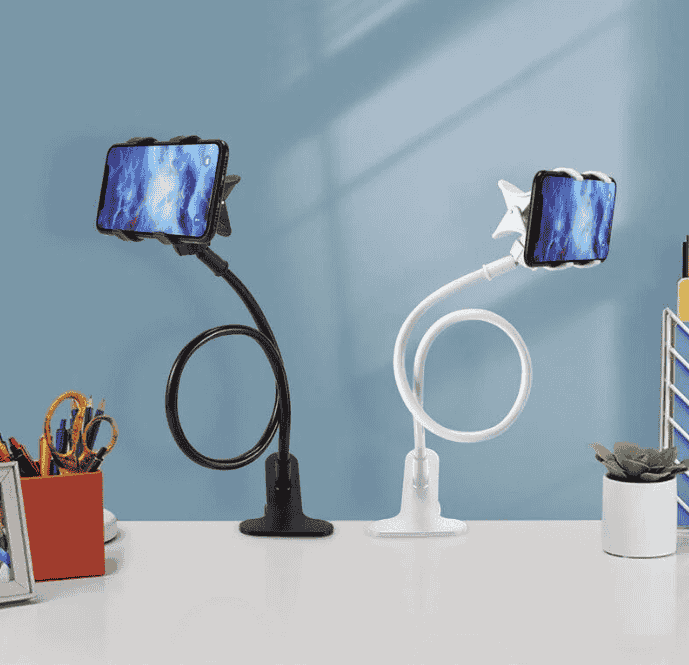
The cell phone stand market includes foldable, fixed-angle, gooseneck-style, tripod, wallet, magnetic, and desktop designs, plus a growing group of hybrids that mix charging, mounting, or grip features. That variety exists because the category has moved far beyond simple clamp mounts and now covers everything from recording rigs to compact wallet accessories.
Some types are easy to recognize. A tripod or gooseneck-style option leans toward recording, while a wallet or grip model fits quick daily carry. A trackable or adhesive design suits people who want a phone stand on the device all the time. A desktop model usually favors steadier posture and longer viewing.
There are also more specialized variants: clear acrylic, bamboo, silicone, and MagSafe products; ring stands, finger loops, popsockets, and popgrips; even novelty items like moptoppers, beach chairs, or shoes. On the functional end, the market also includes a wireless charger, vent holder, cup holder, dashboard holder, multi-port hub, stress reliever, silicone speaker, and even object tracking options.
How Do Different Cell Phone Stands Compare?
Different cell phone stands compare best when judged by stability, portability, stowability, style, and how well they handle real tasks like desk work, travel, or filming. In one major comparison table, the strongest performers were not simply the cheapest or the flashiest; they balanced adjustable angle, tablet support, and secure everyday use.
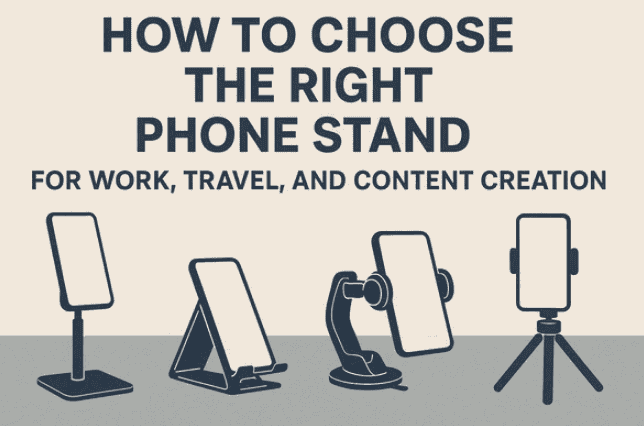
Here’s the most useful way to read the category: some stands are sturdy and better for permanent desk placement, while others are ultralight and tuned for travel. A fixed stand with a large base can win on steadiness, but a flat-folding travel stand may fit a bag far better. The tradeoff is often between comfort and carry.
| Stand Style | Main Strength | Typical Weakness | Best Fit |
| Fixed Stand | Stability and secure desk positioning | Less portable | Office or home desk |
| Flat-Folding Stand | Easy packing and travel convenience | Lighter build | Commuting, bags, and mobile setups |
| Gooseneck-Style Stand | Exceptional adjustability | Movement under touch | Filming and overhead work |
| Multi-Purpose Stand | Supports multiple devices, including Apple Watch | Can feel bulky | Users with several devices |
| One-Piece Stand | Simple and durable construction | Less flexibility | Basic daily viewing |
The real bottom line is that a stand should match the user’s niche and workflow. A flexible rod mount may look extreme until the job involves recording or odd angles, while a value-oriented folding option can be ideal if the goal is only to keep a phone steady in a household or compact office setting.
Which Stand Style Works Best for Desk Use, Travel, or Recording?
The best stand style depends on the task: desk use favors a sturdy base, travel favors a portable and foldable option, and recording benefits from a clamp or articulated mount with range of adjustability. In practice, the right pick is usually less about hype and more about the surface, the angle, and whether the user needs real overhead or front-facing framing.
A fixed desk stand shines when one-handed use matters. A wider footprint, a solid silicone base, and a rubberized base or backing make the phone easier to tap without shifting. For office setups, that kind of stand supports notifications, charging, and longer upright viewing better than flimsier designs.
A portable folding stand behaves differently. It travels well, slips into a bag, and can work in a mobile office, but there are compromises. Charging position, headphones, landscape view, and vertical view all change how convenient it feels once real use begins. For recording, a sturdy edge matters, because a nightstand, kitchen counter, or desk clamp changes whether top-down angles feel natural or frustrating.
| Use Case | Best Stand Style | Why It Works |
| Desk Workflow | Fixed or Weighted Stand | Provides stable touch response and makes nearby typing easier |
| Travel | Folding Travel Stand | Offers compact carrying and quick setup |
| Video Recording | Clamp or Articulated Arm | Allows better framing and top-down camera angles |
| Casual Kitchen or Bedside Use | Simple Adjustable Stand | Makes angle adjustments easy on a kitchen counter or nightstand |
| Long Sessions | Sturdy Base with Angle Control | Reduces the need for hand support |
The most overlooked issue is motion. Some designs look flexible but become irritating when a user starts dialing angle changes or tapping the screen and gets wiggling instead of support. That is usually where desk stands and flexible recording arms split into very different tools.
What Features Actually Matter When Choosing a Cell Phone Stand?
The features that matter most are adjustability, stability, portability, charging access, material quality, and case compatibility because those determine whether the stand feels helpful or annoying after a week. Most buyers focus on appearance first, but the better test is whether the stand stays securely in place, supports the device angle you actually use, and matches your routine.
A useful evaluation starts with anti-slip design, tablet support, and the kind of positions the stand can hold. Some people assume more moving parts always help, yet too much complexity can reduce balance or make a setup harder to trust. In my experience, multifunctionality only matters when the added functions do not compromise the core hold.
A second filter is body construction. Material quality, common materials, and finishing details affect daily feel more than the packaging suggests. A stand with better rubber grips, good customizability, and reliable secure attachment is usually more useful than one with decorative extras. Even magnetic alignment or trackable designs only matter if the stand stays stable, fits the phone case compatibility reality, and supports natural use over time.
| Feature | Why It Matters | Best For |
| Adjustability | Supports better viewing angles | Desks, kitchens, and bedside use |
| Portability | Makes the stand easier to carry | Travel and commuting |
| Stability | Reduces shaking and slipping | Tapping and office tasks |
| Charging Access | Keeps the phone powered while mounted | Desk setups and long-session use |
| Material Quality | Improves long-term durability, feel, and reliability | Repeated daily use |
| Case Compatibility | Prevents fitting problems with phone cases | Thicker or rugged phone cases |
Where Can You Use a Cell Phone Stand and Which Style Fits Each Situation?
Cell phone stands can be used on desks, in offices, across home workspaces, inside a car, on a kitchen counter, beside a bed, and even for events like trade shows, with the right style changing by environment. The simplest way to think about it is that each setting asks for a different balance of angle control, footprint, and mounting method.
For work-focused setups, professional setting choices matter most. A user in remote employees’ workflows or students watching lectures often needs a stand that sits cleanly among bags, pockets, and everyday gear but still keeps the display accessible. In a fixed work area, more weight and a wider base help far more than novelty.

For mobile or public situations, the demands shift. Commuters, rideshare drivers, and navigation-heavy users often care more about car mounting, vents, cup holders, or dashboard placement. For events such as trade shows, recruitment booth setups, training sessions, or presentations, the best stand is the one that keeps the phone visible without distracting from the interaction.
- Desk workflow: best for offices, home workspaces, and extended phone viewing.
- Kitchen use: useful when recipes or timers need to stay visible on a kitchen counter.
- Bedside or casual viewing: simple adjustable stands work well around the bed or couch.
- Vehicle use: car mounts, vents, cup holders, and dash options help safer drivers.
- Events and outreach: stands suit trade shows, recruitment booth displays, and brand kits.
- Creative work: some models suit content creators and even younger audiences who value visual style.
The less-discussed angle is audience fit. Tech enthusiasts, students, and remote employees often want function first, while client appreciation, corporate gifts, employee appreciation, or even community fairs and fests may call for something lighter, more visual, and easier to hand out.
Why Would You Use a Phone Stand in the First Place?
A phone stand is worth using because it makes a phone easier to see, easier to place, and easier to use during normal tasks. That improvement comes from better notifications visibility, a steadier easy-to-view angle, and less strain during longer sessions.
The practical gain is not abstract. During video conferencing, video viewing, or recipe checking, a phone stand keeps the device where the eyes already are. That makes it easier to interact naturally and can reduce strain that builds when a phone is constantly picked up and set down.
I’d also argue that the appeal is cumulative. A stand rarely feels dramatic on day one, but over daily use the small friction points disappear. That is why people often notice the core benefits only after they stop balancing a phone against random objects.
Can a Cell Phone Stand Help With Posture and Comfort?
A cell phone stand can help posture and comfort by raising the screen and improving ergonomics during repeated phone use. The biggest gain is not medical magic; it is simply less time bending the neck and shoulders into awkward viewing habits.
A good stand brings the phone closer to eye level, especially in a seated desk setup. That shift can make long work blocks feel more natural, and it often reduces how often a user needs to look down. Even a small lift changes comfort more than many buyers expect.
From experience, the comfort effect becomes obvious only after several days. A stand does not erase fatigue, but it can make phone use less physically tiring when the device no longer has to be held up through every task or message check.
Do Cell Phone Stands Work With All Phones and Cases?
Many cell phone stands work with a wide range of devices, but compatibility still depends on design, thickness, and how the phone cases are built. The safest assumption is that universal stands handle most phones, while magnetic systems require more careful matching.
Some products are built for compatible iPhone devices, and some include accessories that support non-iPhone devices as well. Others rely on open cradles and broad support arms, which makes them better for mixed households using smartphones of different shapes.
The part people miss is daily fit. A phone may technically mount but still feel wrong if a thick case blocks charging cord space or if the holder is too narrow. True secure connection depends on more than the marketing label; it depends on whether the stand really supports all sizes, larger models, or foldable phones in practice.
Are MagSafe Cell Phone Stands Actually Worth Buying?
MagSafe cell phone stands are worth buying when fast attachment, consistent alignment, and cleaner everyday use matter more than universal compatibility. A strong magnetic hold reduces setup friction and makes quick repositioning much easier than clamp-based stands.
The value is clearest for a compatible iPhone user who wants a clean look and a seamless routine. A good magnetic stand removes extra clips, reduces visible hardware, and can support built-in charging cables or MagSafe charging without awkward rethreading.
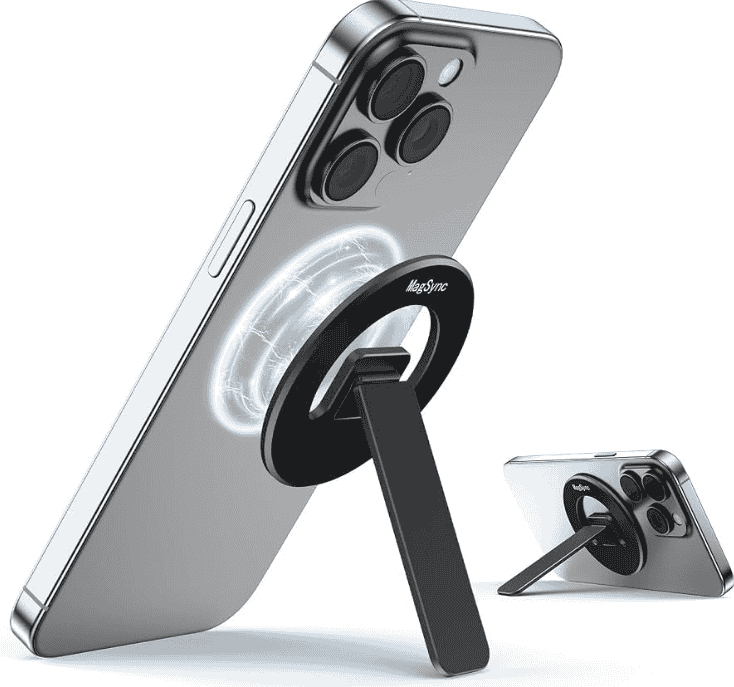
That said, not everyone benefits equally. If the priority is mixed-device flexibility, the user may care more about broader compatibility than a secure attachment without adjustments. For people who constantly switch angles between calls, recipes, and small desk tasks, though, the speed of magnetic placement feels genuinely useful.
How Stable Are Cell Phone Stands During Everyday Use?
Cell phone stands are stable when the base design, grip, and surface match the way the phone is actually used. The part that determines real stability is not only material; it is whether the stand can stay steady during taps, browsing, and repeated viewing on flat surfaces.
In use, bump resistance becomes the hidden test. A stand may look sturdy until the phone is touched several times and the screen starts to drift. Good models keep a stronger balance, while weaker builds shift, bounce, or lose their stick on smoother surfaces.
There is also the question of touch input. A stand that feels fine while idle may struggle when the user interacts. That is where security, resistance to disconnect, and even improvised fixes like a heavy book under a base can reveal how much genuine stability the design really offers.
Are Promotional Cell Phone Stands Good for Branding and Giveaways?
Promotional cell phone stands are effective when the goal is repeated visibility, practical utility, and low-friction distribution at scale. They work because a promotional item that lives on a desk or in a bag keeps a brand noticed in a way many throwaway giveaways do not.
This category also fits a wide spread of demographics. A branded stand can sit in onboarding kits, event packs, and meeting gifts without asking much from the recipient. That makes it attractive for branding, conferences, fundraisers, and internal kits built for onboarding or outreach.
The hidden strength is persistence. A stand tends to remain useful, which is why promo marketers and event buyers value it. Between bulk pricing, simple shipping, and the ability to distribute in bulk, these products often hold attention longer than decorative freebies.
How Long Does It Take to Order Custom or Bulk Phone Stands?
Custom or bulk phone stands usually depend on approval time, production scheduling, and the size of the order. In many cases, the buyer must first approve a digital proof from the art team before production starts.
Lead time changes by supplier and item, but the practical pattern is consistent: the product page lists timing, some products offer one-day rush production for an additional fee, and many standard orders fall generally into the 1-12 days range. That timing is shaped not just by printing but also by shipping and finishing steps.
For larger orders, minimum order quantities, bulk pricing, and the lower cost per item can make the wait worthwhile. The tradeoff is that true custom ordering is less about instant delivery and more about balancing branding goals against realistic lead times.
Are There Eco-Friendly Cell Phone Stand Options?
Yes, eco-friendly cell phone stand options exist, especially in wood-based and lower-impact material categories. The strongest examples use bamboo, wood, rosewood, or vegan leather instead of only conventional plastics.
The real advantage is not merely image. A stand built from durable materials can still feel polished enough for gifting while aligning with eco-friendly expectations. Some buyers want a natural texture or more premium presence, which is where engraved bamboo and luxury presentation become relevant.
That said, sustainability claims should be read carefully. The broad category ranges from decorative eco styling to genuinely sustainable choices, so the buyer still has to check construction, finish, and how the stand fits the intended use.
Can You Customize a Cell Phone Stand for Your Brand or Event?
Yes, a cell phone stand can usually be customized for logos, campaigns, and event use through several imprint methods. The common options include one-color imprint, full-color decoration, and other personalized treatments based on the product and the artwork provided.
In practical terms, customization works best when the design fits the stand’s form instead of fighting it. A slim holder may suit a clean mark, while a larger stand gives more room for bolder printed branding. The strongest results come from choosing among the actual options rather than forcing one design across every product.
For teams planning outreach or kits, that flexibility matters. Branded stands work across events, internal programs, and conference distribution because logo visibility stays tied to a genuinely useful object instead of a novelty that gets discarded.
Do Cell Phone Stands Fit All Smartphone Sizes?
Many cell phone stands fit a broad range of sizes, but not every stand fits every phone equally well. The better universal designs can support Android, iPhone, and mixed devices, though fit still depends on the phone model and body shape.
This matters most for bigger hardware. Some stands handle smartphone sizes cleanly across categories, while others struggle with larger models or newer foldable phones. A stand that looks wide enough can still fail if the angle or lip shape does not truly support the device.
From a practical buying angle, the safest move is to match the stand style to the phone’s weight and shape rather than relying on one broad compatibility line.
What Materials Are Cell Phone Stands Made From?
Cell phone stands are commonly made from lightweight plastic, silicone, aluminum alloy, acrylic, and wood, with some models using faux leather or trim details like neoprene. Material choice affects weight, grip, feel, and how durable the stand feels over time.
Rigid bodies such as aluminum or acrylic tend to look cleaner and feel more structured on a desk. Softer or grippier materials like silicone can improve contact and reduce movement, especially in portable styles that trade mass for convenience.
The important point is that material alone does not define quality. The best build is the one whose form, grip, and use case all line up with how the stand will actually be used.
Are Wireless Charging Cell Phone Stands Available?
Yes, wireless charging cell phone stands are available, and many combine a holder with a charging station so the phone stays powered up while mounted. The most useful versions add charging support without turning the stand into a bulky compromise.
Some models are based on Qi technology, while others lean into magnetic ecosystems for easier placement. In real use, the key benefit is a charger without cables draped across a workspace, especially when a user wants a cleaner desk or bedside setup.
That does not make every model ideal. The better versions feel available for real everyday use because the alignment is easy, the charging stays consistent, and the stand still works as a stand rather than just a dock.
How Do You Choose the Right Cell Phone Stand for Your Needs?
The right cell phone stand is chosen by matching the stand’s strengths to the user’s space, device, and routine rather than by buying the most popular model. If you are unsure, the easiest selection method is to begin with where the stand will live and how it will be used.
Start with the actual job. A phone used beside a keyboard for a workstation needs different support than a mount used for the car or for travel. A good choice becomes easier when findings are measured against real daily use, not just packaging. That is how product compare work turns into practical aid rather than noise.
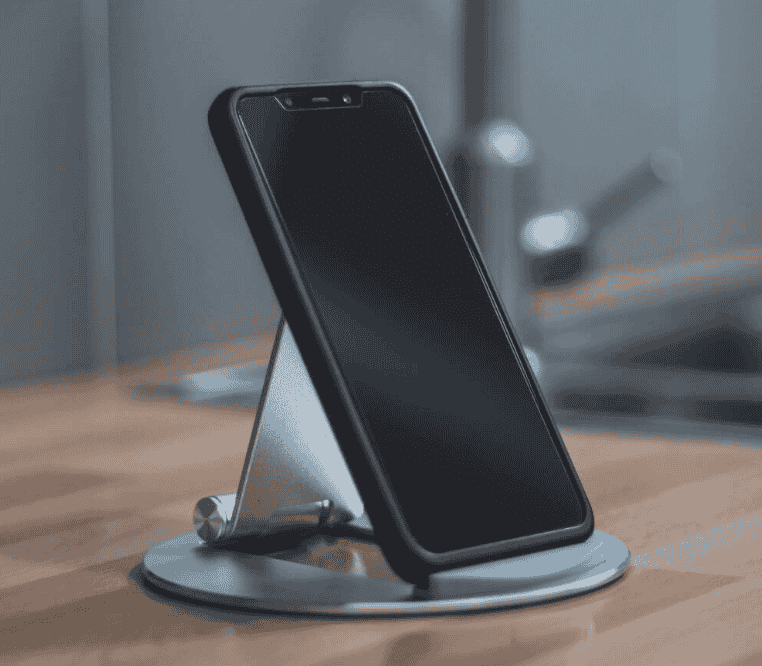
- Use case first: choose by desk use, travel fit, car use, or recording support.
- Feature match next: weigh portable design against magnetic attachment and angle flexibility.
- Needs check last: confirm charging, fit, and whether the best option truly matches your needs.
In my experience, most buying mistakes come from skipping that order. People chase reviews before naming the job. Once the space, phone, and routine are clear, the stand almost picks itself.
What Trends and Buying Patterns Show Up Across the Cell Phone Stand Market?
The cell phone stand market shows a clear split between practical utility, aesthetic positioning, and specialized add-on functions. Across the category, popularity tends to cluster around products with strong review count, familiar features, and easy desk or travel use.
What stands out is how different the buying groups are. Consumer desk users, travelers, digital nomads, office gift buyers, and promo and event marketers are shopping the same category for very different reasons. That is why the market spans ultra-budget, mid-range, and premium bands without collapsing into one standard design.
Another pattern is category expansion. Feature-rich titles, specialized bundles, and the rise of cheap acrylic stands at one end and premium magnetic tripods at the other show just how broad the space has become. The result is a market with real buying segments, not a single generic accessory aisle.
What’s the Simplest Way to Understand the Cell Phone Stand Market?
The simplest way to understand the cell phone stand market is to see it as a mix of performance gear, convenience tools, and branded merchandise rather than one uniform accessory class. That broad market contains review and editorial thinking on one side, and customization with event-driven buying on the other.
From a practical angle, the category sorts itself into everyday utility first. People want cleaner placement, easier performance, and less friction. From a business angle, suppliers care about lower price points, materials, production speed, and event suitability. Both views are valid, but they answer different questions.
The easiest filter is functional reality. Ignore the noise, look at the source material as a set of patterns, and focus on how products are compared side-by-side around common applications. Once that is clear, the category stops feeling oversized and starts feeling much easier to navigate.