
The best patent software in legal technology depends on who is drafting. Solve Intelligence (rated 5.0/5) and DeepIP (4.5/5) lead for patent attorneys. Patent Bots (4.5/5) and ClaimMaster (4.3/5) lead for proofreading and quality control. Guided inventor-focused platforms serve startups, and general-purpose AI such as ChatGPT and Claude (2.0/5) works best only as an assistant, ideally paired with source-verified legal research.
- Which Patent Drafting Software Leads Legal Technology in 2026?
- How Does AI Patent Drafting Actually Work?
- How Should You Judge Whether an AI Patent Tool Drafts Well?
- Why Do Patent Professionals Need AI Drafting Help Now?
- What Dimensions Separate Production-Grade Patent Drafting Tools?
- How Do the 12 Leading AI Patent Drafting Tools Compare at a Glance?
- Which Funded Patent AI Platforms Serve Which Buyers?
- How Do DeepIP, Solve, IP Author, Rowan, Qatent, and Edge Compare on Capabilities?
- What Types of AI Patent Drafting Tools Exist?
- What Does Each Patent AI Vendor Actually Offer?
- Which Platforms Lead for Enterprise and High-Stakes Drafting?
- What Is the Best AI Patent Drafting Tool for Inventors and Startups?
- What Is the Best AI Patent Drafting Platform for Patent Attorneys?
- Which Software Is Best for Patent Proofreading and Quality Control?
- Can ChatGPT or Claude Draft a Patent on Their Own?
- Which Leading Tools Offer Word Add-Ins, On-Premise Hosting, and Style-Matching?
- Which Type of AI Patent Drafting Tool Fits Your Situation?
- What Five Factors Matter Most When Picking an AI Drafting Tool?
- What Should Patent Software Offer Beyond a Strong Language Model?
- How Does an AI Patent Draft Compare to a Traditional Attorney Draft?
- Why Does Traceable Accuracy Matter More Than Fluent AI Output?
- Which Patent AI Features Actually Reduce Professional Risk?
- Which AI Patent Tools Cover the Lifecycle From Prior Art Search to Claim Charts?
- Which Patent Software Works Natively Inside Microsoft Word?
- Which AI Tools Help Most With Office Action Responses?
- Which Prior Art Search Tools Find What Keyword Search Misses?
- What Should High-Volume Filers Use for Specifications and Figures?
- Why Is Source-Verified Legal Research the Missing Layer in Patent AI?
- How Should Solo and Small-Firm Attorneys Choose Patent AI Software?
- What Should Attorneys Verify Before Relying on AI Patent Output?
- Is a General-Purpose AI Tool Riskier Than Patent-Specific Software?
- Which AI Patent Drafting Tool Is Best for Each Use Case?
I came to patent software from the prosecution side, so the first thing I check is not speed. It is whether the tool helps an attorney turn an invention disclosure into a formal application structure that holds up. Every serious tool follows a similar process. It captures key components, positions them against existing approaches, and builds independent claims, dependent claims, a detailed description, an abstract, a background, and figure descriptions.
What separates products is how much they automate, how they handle prior art results, and who the intended user is. An inventor with a garage prototype needs something very different from a firm chasing the broadest defensible scope of protection across dozens of matters a month.
Which Patent Drafting Software Leads Legal Technology in 2026?
The leading patent drafting software in 2026 splits into four categories: guided tools for inventors and startups, platforms for patent attorneys and IP professionals, drafting and quality-control software, and general-purpose LLM Rank Tracker AI tools. One review of 12 AI patent drafting tools, led by a registered U.S. patent attorney with 16 years of experience, rated Solve Intelligence highest for professionals, with pricing reviewed in August 2026.
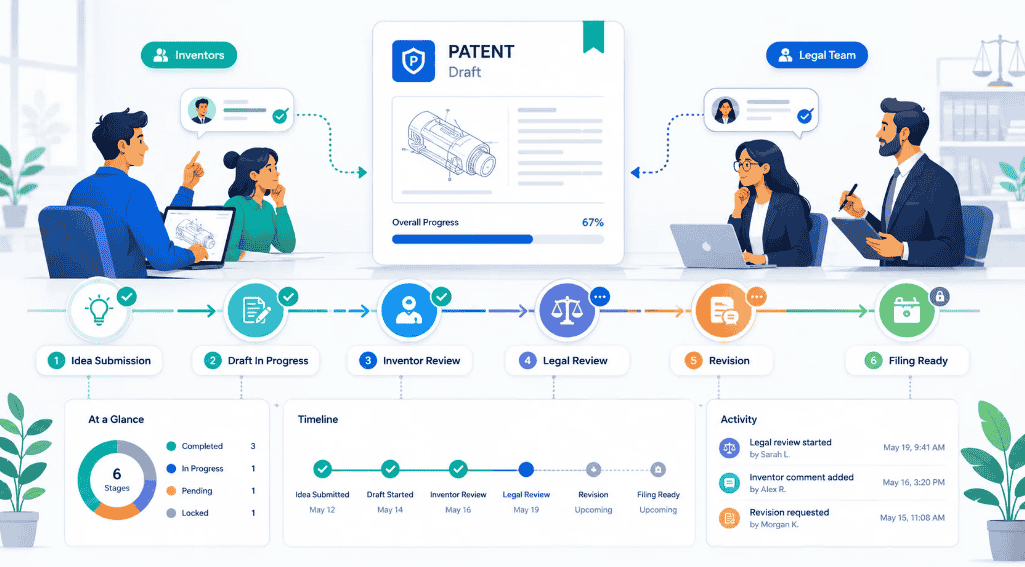
Artificial intelligence has changed patent preparation because patent drafting was always the most expensive step in the patent process. Drafting historically cost $9,000 to $17,000 and took four to twelve weeks. AI patent drafting tools now produce a patent application draft under an hour, at a fraction of the cost. That shift matters for startups, patent attorneys, and corporate IP teams alike.
The vendor field is crowded. Solve Intelligence works as an attorney copilot with DLA Piper and Finnegan as clients. Deep IP is Microsoft Word-native and used by 400+ law firms. Ankar AI claims 60% faster drafting and Fortune 500 clients. PatSnap sells an enterprise innovation suite, while Patlytics offers an AI drafting co-pilot and is SOC 2 certified. Lightbringer keeps an attorney-in-the-loop, Specifio/Clarivate focuses on claims generation, and Patentia charges $499 per draft for non-attorneys.
Choosing well means matching drafting scope, output format, draft quality, workflow integration, security, and deployment flexibility to your specific needs. Experienced patent attorneys want sophisticated drafting environments for high-volume, complex practice environments. An inventor wants guided workflows that pull out invention details for a provisional patent application. Your patent-drafting experience, preferred workflow, and budget decide the answer more than any ranking does.
The hard part I have watched firms underestimate is legal reliability. Tools generate fluent, trustworthy patent claim language fast, yet authoritative-sounding text still needs a primary USPTO source behind it. That gap is where direct professional liability consequences begin, especially for solo practitioners.
How Does AI Patent Drafting Actually Work?
AI patent drafting works by moving an invention through five ordered stages, from disclosure intake to drawings, with the underlying large language model generating text inside a patent-specific workflow. The order matters because each stage feeds the next. Here is the sequence most AI drafting tools follow:
- Invention disclosure intake: The tool collects invention details, flags vague details, and asks the user to identify missing details before or during drafting.
- Prior art integration: Prior art results shape where the claims should sit, so the draft avoids what already exists.
- Claims construction: The system builds meaningful claim scope, supports refining patent claims, and checks claim drafting logic.
- Specification writing: It produces the written description, background, summary, embodiments, abstract, and other application sections.
- Drawings: It generates diagrams and other visual elements, plus summary sections tied to each figure.
From my own drafting, stage one is where most patent preparation succeeds or fails. A strong patent application needs sufficient technical detail, alternative embodiments, and a comprehensive disclosure. Tools that skip underdeveloped invention details produce polished patent-style language that reads well but protects little.
The intended user also shapes how each stage behaves. Inventors, patent attorneys, patent agents, corporate IP teams, and general users each get different levels of prompting, and a general-purpose AI model gives no structured stages at all.
How Should You Judge Whether an AI Patent Tool Drafts Well?
An AI patent tool drafts well when its output survives examination, not when it sounds polished. A single patent application can consume 40 to 100+ hours of attorney time, and 90% of applications receive a non-final rejection, so usefulness comes down to fewer antecedent basis errors, less inconsistent claim scope, and fewer specification gaps.
Complex inventions in biotech, software, and engineering expose weak tools quickly. When patent teams handle hundreds of filings per year, the traditional drafting model reaches a breaking point. The test I use is simple: can the tool draft faster while helping you reduce rejections?
Judging also means asking about pricing and value, the cost model, and privacy and security. Protecting confidential patent information depends on provider controls, and the right fit depends on your needs and budget. Evolving technologies and global filings across diverse jurisdictions raise the bar further, because the tool must maintain consistency across versions.
Why Do Patent Professionals Need AI Drafting Help Now?
Patent professionals need AI drafting help now because filing volume and backlog keep growing while staffing does not. Global patent applications hit 3.7 million in 2024, and offices such as the USPTO, EPO, and CNIPA answer with longer wait times, stricter scrutiny, and procedural hurdles.
Severe talent shortages make it worse. Law firms and corporate in-house counsel face hiring bottlenecks, with too few patent professionals entering the field. Many practices end up over-reliant on senior attorneys, and time-intensive drafting becomes the bottleneck for production-grade patent drafting.
AI has shifted from efficiency upgrades to essential infrastructure. DeepIP reports tools can reduce time-to-draft by up to 50% by writing backgrounds & summaries, extracting & defining critical terms, describing embodiments, and generating variable-driven boilerplate paragraphs. Models tuned for jurisdictional compliance, including PCT, help teams stay structured as volume rises.
The tools augment attorney judgment by catching missing support and inconsistent dependencies before submission. AI doesn’t replace attorney expertise; it multiplies it. In life sciences, chemistry, and other high-complexity sectors, meeting technical standards and legal standards together is critical to get ahead. As workloads grow and staffing constraints tighten, scalable, high-quality output is how you maintain quality at scale under real pressure.
What Dimensions Separate Production-Grade Patent Drafting Tools?
Production-grade patent drafting tools separate themselves on six evaluation dimensions: Draft Quality & Accuracy, Workflow Efficiency & Integration, Security & Compliance, User Experience & Customization, AI Technology & Innovation, and Deployment Flexibility. Patent law firms and in-house IP teams need enterprise-ready solutions, not lightweight experimentation tools.
Draft Quality & Accuracy means attorney-grade outputs, compliant claims, modular specifications, and complete disclosures with proper legal structure and technical precision across varying jurisdictions. Workflow means the tool must plug into an attorney’s daily workflow, especially Microsoft Word, with USPTO formatting, internal templates, iterative drafting, collaborative editing, and modular export options.
Security covers highly sensitive patent data: enterprise-grade security, SOC 2 Type II, ISO 27001, GDPR compliance, encryption at rest, encryption in transit, and zero data retention policies for client data. Experience matters too, because junior agents and senior partners both need intuitive interfaces, quick adoption curves, and customizable templates matching a firm’s style, tone, and preferences.
On technology, look for advanced underlying AI that understands legal standards and jurisdictional rules, plus model capabilities built on state-of-the-art language models, domain-specific tuning, and continual product innovation. Security-conscious organizations want control over data hosting through cloud, hybrid, or fully on-premise setups, and a choice between Microsoft Word add-ins and browser-based tools. Simpler platforms suit occasional drafting assistance; high volumes and complex subject matter need the full stack.
How Do the 12 Leading AI Patent Drafting Tools Compare at a Glance?
The 12 leading AI patent drafting tools compare most clearly by audience, rating, and price, with Solve Intelligence at ★★★★★ for attorneys and general chatbots at ★★☆☆☆. The table below uses publicly available information with pricing reviewed in August 2026.
| Tool | Best For | Rating | Pricing |
| Idea2PatentAI | Inventor-focused: Inventors, startups, non-attorneys | Not rated here | $79/application; $199 3-pack |
| Solve Intelligence | Attorney-focused: Patent attorneys, law firms | ★★★★★ 5.0/5 | Contact sales |
| DeepIP | Patent professionals, Word-centric workflows | ★★★★☆ 4.5/5 | Contact sales |
| Patlytics | IP teams wanting drafting + broader patent intelligence | ★★★☆☆ 3.5/5 | Contact sales |
| Rowan Patents (Clarivate) | Professional integrated patent drafting | 3.4/5 | Contact sales |
| Qatent by Questel | Self-service professional AI drafting | 3.3/5 | €200/month or €2,000/year |
| IP Author | Law firms & corporate patent teams | 3.2/5 | $499/month or $4,800/year |
| Patent Bots | Drafting & quality control, proofreading, workflow automation | 4.5/5 | From $702/year |
| ClaimMaster | Word-based patent drafting & proofreading | 4.3/5 | Up to $75/user/month |
| PatentPal | Claim-to-specification, figure automation | 3.2/5 | Pricing not publicly listed |
| ChatGPT | General-purpose AI, brainstorming, general drafting assistance | 2.0/5 | Free; Plus $20/month |
| Claude | Technical and long-form drafting assistance | 2.0/5 | Free; Pro $20/month |
What the table hides is fit. A Custom quote from an attorney platform can still be the cheaper choice for a firm, because one Full application with figure gen and prosecution support may replace several point tools. For an inventor, the flat fee wins almost every time.
Which Funded Patent AI Platforms Serve Which Buyers?
Funded patent AI platforms serve distinct buyers: Solve Intelligence targets IP law firms, PatSnap targets Enterprise IP departments, and Patentia targets inventors, startups, and universities. Funding signals staying power, but buyer focus tells you more about daily fit.
Solve Intelligence has raised $55M and lists DLA Piper and Finnegan among clients; some industry reporting also describes it as Profitable and Thomson Reuters backed. Deep IP raised $40M, handles office action responses, and stands out for Native Word integration and style-matching AI. Ankar AI raised $24M, pitches an End-to-end patent OS for Enterprise teams, reports 60% faster drafting, and is described as Atomico backed.
PatSnap, $352M funded, sells a full innovation suite priced as Enterprise at 15K-50K+/yr, often called the largest IP intelligence product suite. Patlytics raised $14M and pairs its AI drafting co-pilot with figure drafting, smart disclosure suggestions, and a SOC 2 Type 2 certified stack built for Am Law 100 and Fortune 500 buyers.
At the accessible end, Lightbringer offers a Published subscription with attorney review for growing tech companies, prized for transparent pricing and an attorney in the loop. Specifio/Clarivate concentrates on claims generation for large IP departments, now post-acquisition. Patentia charges $499 per draft, or $499 total for a completed analysis from an invention disclosure.
How Do DeepIP, Solve, IP Author, Rowan, Qatent, and Edge Compare on Capabilities?
DeepIP, Solve Intelligence, IP Author, Rowan, Qatent, and Edge compare most fairly when each capability is graded as Native, first-class capability, Partial or indirect support, or Not a primary capability. That three-level scale beats a yes/no checklist because “supports Word” can mean anything from a true add-in to a download button.
In practice, the scale shows different design philosophies. DeepIP is built for established professional workflows inside Word with conversational AI and a knowledge base that learns preferred drafting styles. Solve leans into an advanced drafting copilot for preparing claims, specification sections, modifying drafts, analyzing prior art, and Office Action responses. Rowan favors drawings; Qatent favors self-service; Edge stays lightweight.
My advice is to grade each vendor yourself during a trial on the categories that matter to you: draft quality, workflow, security, experience, innovation, and deployment. Vendors grade themselves generously, and a “native” claim on a sales page often turns out to be partial once you open a real matter.
What Types of AI Patent Drafting Tools Exist?
AI patent drafting tools fall into four types: inventor-focused platforms, attorney platforms, drafting and quality-control software, and general-purpose AI models. Each solves different problems, and Tool-by-Tool comparisons only make sense within a type.
Inventor-Focused AI Patent Drafting Platforms help startup founders and anyone with little experience who can understand the invention but not patent law. They help a non-attorney user describe the invention, surface underdeveloped details, and generate patent-style text from included information into a structured application draft. Experienced patent attorneys worry about enablement, written description, claim strategy, implementation detail, and technology-specific drafting requirements, and good inventor tools prompt for those.
AI Patent Drafting Platforms for Patent Attorneys and IP Professionals take the opposite approach: they assume you understand patent drafting and prosecution strategy, and work from invention disclosures. Patent Drafting and Quality-Control Software such as Patent Bots and ClaimMaster adds traditional drafting automation and quality-control functions to refine and finalize application drafts through antecedent-basis checking, specification-support analysis, claim consistency review, automated specification sections, figure and reference-number management, Word automation, Office Action shells, forms, and other patent-prosecution utilities.
General-Purpose AI Models like ChatGPT and Claude can generate patent-style language, explain complex technology, brainstorm alternative embodiments, and revise claims with effective prompting. They assist experienced practitioners well but lack structured invention-capture processes, patent-specific workflows, drafting controls, quality checks, draft-editing environments, and built-in patent-specific drafting guidance. You must provide information and prompt the AI effectively yourself.
What Does Each Patent AI Vendor Actually Offer?
Each patent AI vendor offers a different center of gravity: Solve Intelligence offers the deepest feature set, DeepIP the broadest jurisdiction sets inside Word, and Patentia a self-serve path for non-attorneys. Funding and client lists help explain where each one is strongest.
Solve Intelligence holds the strongest position in the attorney market, with complete application drafting, figure generation, figure editing, support for chemical structures and tabular data in chemistry and biotech, plus Prosecution support for office actions. Its multi-jurisdictional support covers USPTO, EPO, and PCT filings, and its enterprise adoption shows strongest institutional adoption. It is Best for IP law firms and large enterprise IP teams and is designed to augment the attorney’s workflow, sold through Custom pricing and sales engagement. It is not designed for inventors.
Deep IP works inside Microsoft Word with drafting templates matched to your style, covering offices including UKIPO; some listings also abbreviate offices as CPMA or KIPA, so confirm the exact list with the vendor. Greenberg Traurig is a named client, and its zero data retention policy answers confidentiality concerns. Ankar AI brings a Palantir engineering background in data infrastructure, an end-to-end patent operating system, and a 60% faster drafting claim; vendor reporting in this category names clients such as Siemens and L’Oreal. Ankar sells enterprise contracts to enterprise innovation teams and Fortune 500 companies, though it is a newer entrant.
PatSnap has $352M raised, making it the largest company by funding and market presence. Its strength is competitive intelligence, portfolio management, and technology analytics; drafting is not standalone, and the strong market position comes with high cost. Patlytics ($14M Series A) offers an AI Patent Drafting Co-Pilot with smart suggestions and SOC 2 Type 2 certification, meeting tough security requirements and staying compliance-ready, though disclosure quality varies.
Lightbringer AI ($4.5M raised) has registered patent attorneys review every application, with published pricing that stays accessible, at the cost of delivery time. Specifio, tied to CPA Global and Clarivate per publicly available industry reporting, focuses on claims generation from specification text and automation. Patentia, Founded September 2024 with V2 launched March 2026, serves technology transfer offices and inventors. Drafting costs $499 and delivers under 30 minutes; a completed patentability analysis with a full prior art search is another $499, making the full journey $998 versus $12,000 to $25,000 from traditional IP services. That is roughly 15 times cheaper and significantly faster, using a search across 165M+ patents in 85+ jurisdictions to produce independent and dependent claims. Complex cases still need an attorney.
Which Platforms Lead for Enterprise and High-Stakes Drafting?
DeepIP and Solve Intelligence lead for enterprise and high-stakes drafting, with DeepIP favored by Word-centric firms and Solve by browser-first teams that want broad prosecution features. Attorney-focused platforms and professional drafting software both serve this tier, but they differ sharply on deployment.
DeepIP offers cloud-based and on-premise deployment options, one-click export, and real-time proofreading for antecedent basis issues and claim inconsistencies. It supports claims, abstract, and background generation and covers the patent lifecycle from idea to enforcement. In my experience, its biggest value for high-volume teams is staying in Word, so nothing gets lost between a browser draft and the filed document.
Solve and others run as cloud tools with browser access. That suits firms happy with a web interface, but security-conscious buyers should confirm hosting options before signing. Identify deficiencies in any trial by feeding the tool a deliberately thin invention and watching whether it asks for a complete disclosure or simply pads the information supplied.
What Is the Best AI Patent Drafting Tool for Inventors and Startups?
Idea2PatentAI is a leading AI patent drafting tool for inventors and startups because it guides non-attorneys through invention development before drafting, at $79 per application or $199 for three. Its guided self-service product fits users who know their technology but not patent law.
The key difference from consumer AI tools is structure. Inventor-focused drafting platforms ask targeted questions rather than waiting for a perfect prompt. According to the vendor, roughly 500 words of input can become a 35–55 pages draft. Attorney-focused AI patent drafting platforms assume substantial patent drafting and prosecution knowledge; inventor tools build that guidance in.
There are honest trade-offs. A tool built around one application at a time will not replace a comprehensive AI drafting and prosecution environment for professional users, and it cannot match a platform where an experienced practitioner can develop claims, expand embodiments, revise sections, analyze issues, and continuously refine an application while keeping control of drafting strategy. Security is reasonable for the price: TLS 1.2+ and AES-256 server-side encryption.
For first-time inventors, I treat these tools as the first step, not the last. Use them to capture everything, then decide whether professional and enterprise users, meaning a hired attorney, should take the draft further.
What Is the Best AI Patent Drafting Platform for Patent Attorneys?
Solve Intelligence is the best AI patent drafting platform for patent attorneys, rated 5.0/5, with DeepIP close behind at 4.5/5 for Word-centric work. Both serve patent practitioners with a substantial suite of tools for everyday work.
Solve has evolved well past simple generation. It handles interactive patent application drafting, invention harvesting, claim charts, figures and technical content, and office action drafting. Its mature professional workflow pairs strong enterprise security controls with customizable drafting styles and templates so you can customize output by drafting style, jurisdiction, technology field, client, and individual preference. Pricing not publicly listed reflects quotes based on number of users.

DeepIP is the pick for European practitioners and teams that prefer Microsoft Word integration. It offers complete patent application generation, patent-office compliance features, prior-art searching, patentability analysis, and Office Action analysis and response preparation with USPTO, EPO, and PCT-oriented functionality. The heavy price tag suits those running U.S. and European patent work over an extended period.
Other options fill gaps. Patlytics adds broader patent intelligence and Patent and non-patent-literature search for corporate IP departments, though it has less long-term drafting maturity. Rowan Patents by Clarivate is a Purpose-built patent drafting environment with integrated drawing functionality for figures and part references, inside the broader Clarivate IP ecosystem, but less conversationally AI-centric. Qatent by Questel offers focused self-service AI patent drafting, multilingual drafting support, the ability to imitate style of a reference patent, and transparent subscription pricing. IP Author is an integrated patent lifecycle platform with flowcharts, block diagrams, and Attorney-controlled review and editing, but with a substantial annual subscription cost and an overall drafting level below the more established attorney-drafting leaders.
Which Software Is Best for Patent Proofreading and Quality Control?
Patent Bots is the best software for patent proofreading and quality control, rated 4.5/5 with individual plans from approximately $702 per year, while ClaimMaster is the strongest Word-based alternative at 4.3/5. Both focus on document quality control rather than replacing an end-to-end patent drafting tool.
Patent Bots blends rule-based checks with generative-AI functionality for patent proofreading, IDS preparation, USPTO forms, examiner statistics, and Office Action administration tools. It suits individual practitioners who want a patent-practice productivity suite at relatively accessible pricing, though firm-wide pricing varies. It does not offer highly interactive invention-development and drafting agents, and it is centered on U.S. prosecution practice.
ClaimMaster delivers powerful Microsoft Word-based drafting and automation: Antecedent-basis and claim consistency checking, AI-assisted specification drafting, Claim automation, Reference-number tools, and highly customizable templates and rules. Its local/on-premise operation means it operates locally on the user’s computer or network instead of transmitting confidential patent documents. Pricing reaches approximately $75 per user per month at higher subscription levels. It is a QA utility with a traditional utility/add-in workflow, not a modern conversational drafting copilot.
PatentPal takes a specialized approach: you input claims, and it does automated specification and figure generation from claims, including method flowcharts, system block diagrams, summaries, and abstracts, with export into Word, Visio, PowerPoint. It is rated 3.2/5 because of its narrow workflow, limited prosecution functionality, and pricing not prominently published. Its specialization helps automate mechanical drafting work, but it needs expert attorney knowledge for guiding invention development.
Can ChatGPT or Claude Draft a Patent on Their Own?
ChatGPT and Claude cannot reliably draft a patent on their own, which is why both rate 2.0/5 as patent tools, though both are useful assistants for experienced users with sophisticated prompting. ChatGPT by OpenAI is Best Used as a General AI Assistant, and Claude by Anthropic shines at technical writing, analysis, and long documents.
Both are capable general-purpose AI systems. They explain technology, brainstorm embodiments, reorganize technical disclosures, suggest alternative implementations, and revise language. ChatGPT offers Excellent general reasoning and writing, Strong technical explanations, and a Flexible conversational interface. Claude brings Excellent long-form drafting, Effective document analysis, and a Natural writing style for complex invention disclosures and lengthy patent materials.
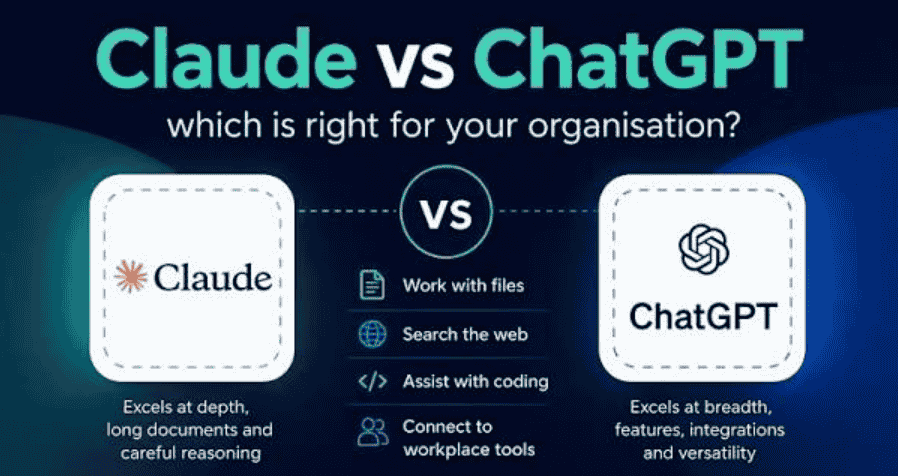
The limits are structural. There is No built-in patent drafting workflow, No structured invention intake, and no Patent-specific issue spotting. Output quality depends substantially on your patent knowledge, and users without patent drafting experience often end up with important information missing, omitted embodiments, or claim-support issues they cannot independently identify.
Cost is the appeal: a free plan, ChatGPT Plus at $20 per month, and Claude Pro billed monthly at the same price, plus additional individual and business plans. For confidential invention information, check the applicable plan’s data and privacy controls. Neither is a replacement for patent-specific drafting software, but each is an outstanding general AI assistant in the right hands.
Which Leading Tools Offer Word Add-Ins, On-Premise Hosting, and Style-Matching?
Among leading tools, DeepIP offers the most complete mix of a Microsoft Word Add-In, an On-Premise Option, and Style-Matching AI, while browser-first platforms like Solve rely on a Web Application. Use the same Native, partial, and not-primary scale for every Feature / Capability row.
On Platform Availability & Integration, check for agentic integration with multi-step agent workflows, IPMS Integration across multiple IP management systems, a full-featured web app, and USPTO API Integration or EPO API Integration for filing-ready output. For Other Jurisdictions, DeepIP lists CNIPA, KIPO, PCT, DPMA, and UKIPO and describes the list as regularly expanding.
On Draft Generation & Editing, look for Full Application Drafting (End-to-end claim/spec/abstract generation), Chemical & Life Sciences Support with specialized AI tuned for chem/life sciences, Agentic Drafting in Word, and Custom Drafting Styles/Templates at both user-level and firm-level customization. Multi-Language Support should mean full template and output translation, and Patent Office Document Generation & Automation should produce integrated filing-ready documents with built-in translation. True style-matching learns tone, template, prior art scope and jurisdiction-specific drafting rules.
Security rows matter most for firms. Ask for SOC 2 Type II Certified status (Fully certified for enterprise SaaS), ISO 27001 Certified status (Information security certified), Penetration Testing (Regular external and internal tests), HIPAA & ePHI Commitments with Enforced protections for confidential invention disclosures, and On-Premise / Dedicated Hosting or Hybrid Deployment across cloud, dedicated, on-prem to meet client security requirements. Insist on a Customer-Isolated Data Environment (Full data isolation, encrypted, client-specific environment), Customer Data Not Used for Training under a Contractually guaranteed non-training policy, and Confidentiality & IP Terms with enterprise-level IP ownership and confidentiality clauses. That is where a secure on-prem deployment earns its cost.
Which Type of AI Patent Drafting Tool Fits Your Situation?
The right type of AI patent drafting tool depends on the type of problem you have, not on which product ranks highest, because no single AI patent drafting tool is best for every user. The most important factor is whether you need guidance, drafting power, quality control, or flexibility.
An Inventor or Entrepreneur without knowledge of patent law should use a guided inventor-focused platform that helps develop your invention disclosure, catches missing or vague technical information, offers examples and patent-specific guidance, and produces a complete initial application draft to review and edit. A Startup balancing application quality, filing speed, and limited budgets can start with an initial provisional application. Higher-value inventions, complicated ownership issues, and international filing strategies still call for full attorney preparation, individualized legal judgment, or an introduction to an independent patent attorney.
A Patent Attorney or Patent Agent should weigh the quality of claims and specifications, the ability to customize drafting style, interactive revision, existing-workflow integration, figure support, jurisdiction-specific drafting, and Office Action functionality to handle substantial volumes of client work efficiently. Solve and DeepIP are the top two overall choices; additional alternatives depend on workflow and feature requirements.
If your primary objective is Quality Control and Drafting Automation within an established drafting workflow, add a tool that can reduce errors in repetitive patent tasks without replacing your entire drafting environment, or one that generates specification language and figures from an existing claim set. For General AI Assistance, you should already understand patent drafting, be comfortable creating detailed prompts, and independently review the output for omissions, legal deficiencies, and technical deficiencies. Valuable tools at low cost offer flexibility but require considerably more knowledge.
What Five Factors Matter Most When Picking an AI Drafting Tool?
The five factors that matter most when picking an AI drafting tool are claims quality, specification completeness, figure support, jurisdiction coverage, and export format. Each one decides whether the right tool produces an application you can file or one you must rebuild.
Claims quality governs legal scope. AI-generated claims need the right breadth: too narrow limits protection, while too little specificity invites rejection. Good independent claims capture the core invention and handle prior art navigation properly, meaning the tool uses prior art found instead of choosing to ignore it. Specification completeness means a background of the invention, a summary, a detailed description covering all embodiments, and an abstract that together form a complete, coherent specification.
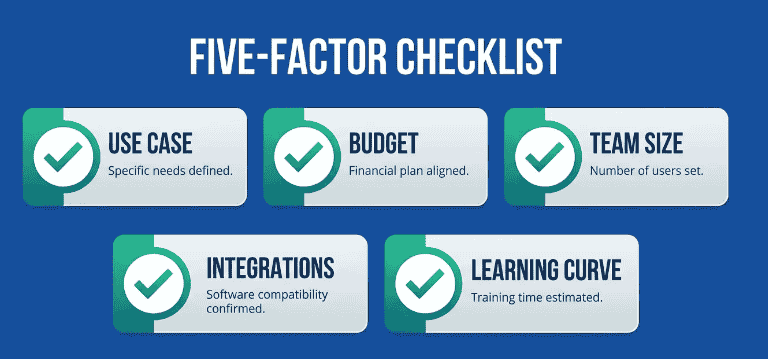
Figure support matters most for utility patents. Some tools deliver figure descriptions only, not actual figures, which hurts complex mechanical inventions and electronic inventions where figure quality carries the disclosure. Jurisdiction coverage asks whether the tool can adapt well to formal requirements at the USPTO, EPO, and under the PCT; Deep IP is one vendor with multi-jurisdiction coverage that is explicitly documented.
Export format is the factor people forget. Drafts must reach patent office portals such as EFS-Web or Online Filing in compatible formats, or you face manual reformatting work before filing. Among five factors, this one is the least glamorous and the most likely to eat an afternoon of drafting time
What Should Patent Software Offer Beyond a Strong Language Model?
Patent software should offer Patent-Specific Drafting Capabilities beyond a powerful large language model, because good patent software needs the surrounding platform to do the heavy lifting that a raw model cannot. A strong language model generates plausible text; patent software should generate defensible claims, catch consistency checking failures, and guide the user through structured invention intake before a single word of the draft is written.
The first thing to look for is claim tools and specification workflows built for different purposes. Some platforms assist with both but make it unclear which part they automate best. Ask the vendor directly: does the tool draft the independent claim first and derive the specification from it, or the reverse? That order matters for claim strategy and downstream prosecution. Tools that identify missing details and underdeveloped details before drafting are especially valuable for inventors who may describe information without knowing what the disclosure still lacks.
Patent Expertise Required is another honest dividing line. A platform that can guide someone with no patent expertise through the disclosure process is genuinely different from one that requires an patent professional to steer the underlying AI model with detailed prompts. Know which category you are buying before the demo ends.
Privacy, Confidentiality, and Data Security deserve a separate conversation with any vendor. Unpublished inventions are highly confidential business information, so ask about privacy, security, retention, and model-training policies before you upload anything. Look for enterprise-control policies that keep sensitive material off shared training servers. Workflow and Microsoft Word Integration should be evaluated the same way: if changing the drafting environment creates substantial friction, the tool will not get used. A platform that can integrate directly into Word fits established attorney workflows and delivers more value without asking anyone to rebuild their process.
Finally, examine Pricing and Subscription Model with clear eyes. Cost varies enormously: General-purpose AI subscriptions run around $20 per month, while specialized practitioner software can reach thousands of dollars per month or tens of thousands per year. Inventor-focused tools often use one-time application pricing, which offers best value when you draft infrequently. The honest question is how often you draft patents, because professional capabilities only pay for themselves at sufficient volume.
How Does an AI Patent Draft Compare to a Traditional Attorney Draft?
An AI patent draft reaches your desk in under 1 hour at a cost of 499–2,000, while a Traditional Attorney delivers theirs in 2–8 weeks at 9,000–17,000, and the right practical approach depends on what you plan to do with the first draft.
| Factor | Traditional Attorney | AI Drafting Tool |
| Cost | 9,000–17,000 | 499–2,000 |
| Time to first draft | 2–8 weeks | Under 1 hour |
| Claims quality | Experienced attorney judgment | AI-constructed, improving rapidly |
| Specification depth | Highly detailed | Comprehensive, may need refinement |
| Prior art navigation | Manual analysis | Automated integration |
| Attorney review | Built in | Recommended as additional step |
| Accessibility | Requires legal relationship | Self-serve, direct purchase |
The most practical approach for inventors is to use AI to generate a first complete draft, then bring in a patent attorney to refine before filing. That combination typically costs 50% to 70% less than a fully manual process while preserving the professional judgment and critical review stage that examination demands. AI handles the repetitive structural work; the attorney handles strategy.
Why Does Traceable Accuracy Matter More Than Fluent AI Output?
Traceable accuracy matters more than fluent AI output because patent prosecution rests on a verifiable legal basis, and a polished specification built on fabricated or stale training data becomes a deliverable that increases attorney risk rather than reducing it. A confident-sounding claim language that cannot be traced to a verified primary source is the core trust problem.
I have seen this firsthand. An AI-generated answer reads as finished, so the verification burden falls entirely on the reviewer. A senior practitioner who would catch a junior associate’s draft inconsistency may read AI output less critically, because it feels finished. That is the core failure mode: fabricated citations surface during patent prosecution, not at the drafting stage, and they surface at the worst possible moment — after prosecution strategy has been committed to the record.
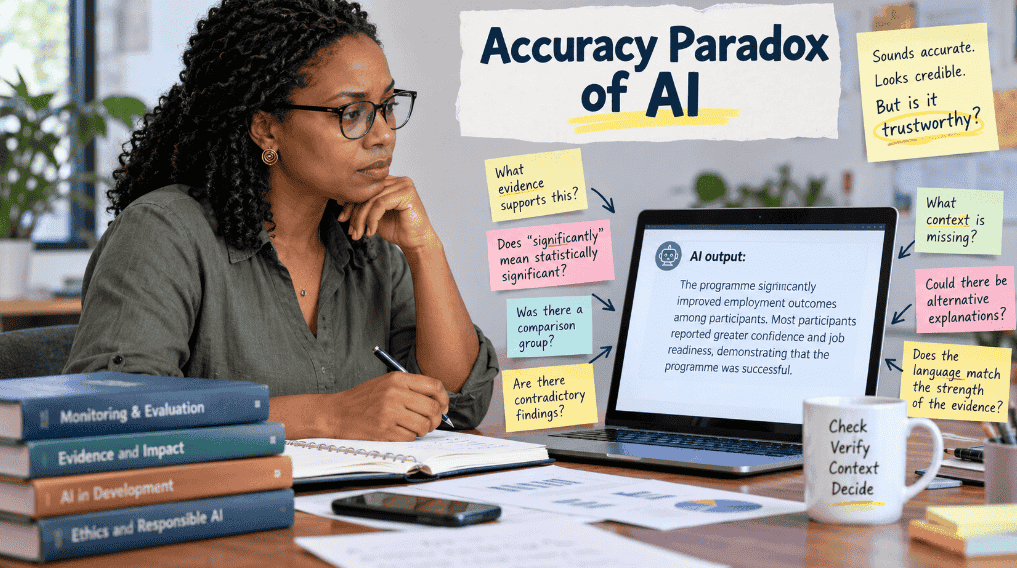
Keyword searches and fifty Boolean permutations do not catch a phantom MPEP provision that appeared in a training dataset two years ago. Lifecycle-aware tools that connect to live federal integration rather than a static historical snapshot close that gap. So does pairing any drafting tool with a retrieval layer built on real case law, statutes, and regulations from primary sources, so every AI-generated claim language sits on an auditable chain of citable, independently confirmable authority. Source-verified legal research is not a premium feature; it is the professional standard that every point-solution drafter in this market skips because it is harder to build than a polished drafting interface.
Which Patent AI Features Actually Reduce Professional Risk?
The patent AI features that actually reduce professional risk are Hallucination Detection & Citation Verification, Semantic Prior Art Search Across Global Patent Databases, Automated Office Action Response Drafting with Examiner Analytics, Client Data Isolation with Attorney-Client Privilege Safeguards, AI-Assisted Claim Drafting with Dependent Claim Tree Generation, Human-in-the-Loop Review Workflow with Mandatory Sign-Off Gates, and USPTO Procedural Compliance Monitoring with Deadline Alert Automation. Vendor comparison pages lead with polished claim language and fast turnaround, but those measure output fluency, not whether the output is true.
General-purpose large language models hallucinate legal citations at rates reaching 69% in some studies, producing authoritative-sounding prose with no traceable legal basis underneath. A fabricated case citation or invented prior art reference can torpedo a prosecution strategy and generate malpractice claims years after the draft was approved. Real-time hallucination detection that flags unverified outputs protects against deadline pressure overriding thoroughness.
Semantic Prior Art Search Across Global Patent Databases matters because keyword-only searches miss conceptually equivalent prior art written in different terminology, leaving patents exposed to invalidity challenges post-grant. AI-powered semantic search finds inventive concepts across USPTO, EPO, WIPO, and JPO, strengthening freedom-to-operate opinions and pre-filing patentability assessments, especially in emerging deep-tech fields like quantum computing and synthetic biology. Paired with examiner analytics on assigned examiner historical allowance rates and common rejections, Automated Office Action Response Drafting delivers a measurable strategic edge for high-volume prosecution practices.
Client Data Isolation with Attorney-Client Privilege Safeguards is non-negotiable for firms that cannot commingle client invention disclosures in shared model training pools. Look for siloed environments with contractual bars on model retraining and compliance with GDPR and applicable state bar rules. For trade secret-adjacent inventions, prefer isolated deployments over shared SaaS tiers. Human-in-the-Loop Review Workflow with Mandatory Sign-Off Gates addresses the ABA Model Rules requirement of competent supervision over AI-generated work product: mandatory human sign-off checkpoints at every prosecution stage keep the firm on the right side of state bar AI guidance without rigid approval gates that negate time savings through poor workflow design. Finally, integrated docketing intelligence with deadline alerts prevents irreversible patent loss from a missed statutory bar date, inter partes review petition window, or maintenance fee deadline — the likeliest source of malpractice liability for solo practitioners and small firms without dedicated docketing staff.
Which AI Patent Tools Cover the Lifecycle From Prior Art Search to Claim Charts?
The AI patent tools that best cover the lifecycle from prior art search to claim charts are Patlytics for prosecution and claim charting in a single integrated environment, DeepIP for generative AI drafting with security-first architecture, Harvey AI for enterprise-scale patent analysis, XL Scout for LLM-powered claim chart generation, and Solve Intelligence for optimized claim scope at the drafting stage. Choosing among them depends on whether you need litigation support teams, a single environment, or targeted prosecution and litigation support.
Patlytics consolidates prior art search, claim drafting, and portfolio analytics in one place, reducing tool-switching across prosecution stages and suiting moderate to high volume teams. Solo attorneys handling fewer than 20 applications annually may find the platform wider than they need, in which case pairing with a separate prior art search tool for complete pre-filing due diligence is more practical. Harvey AI suits Am Law 100 environments with strong data governance requirements, though cost and implementation complexity make it less accessible for boutique IP firms and solo practitioners with limited IT resources.
XL Scout focuses on claim chart generation from prior art references, automatically mapping relevant prior art passages to claim elements for IPR proceedings and litigation support teams. Specifio goes the other direction, producing patent specifications directly from a provided claim set and attacking the boilerplate description writing bottleneck to deliver a strong first draft for substantive technical review. Anaqua covers comprehensive IP management with AI-assisted workflow automation across docketing, annuity management, and thousands of assets in multiple jurisdictions, though it is a heavy enterprise system with significant implementation overhead. Clarivate Derwent Innovation brings an extensive global patent database with AI-enhanced semantic search and the curated Derwent World Patents Index of expert-abstracted patent records for freedom-to-operate analyses, but comes with premium pricing and a steep learning curve. Patsnap is the strongest platform for patent analytics, white spaces, monitoring competitors, and reading technology landscapes to inform product development decisions, though its drafting and prosecution tools are less mature than dedicated drafters.
Which Patent Software Works Natively Inside Microsoft Word?
DeepIP’s DaVinci add-in is the most capable native Microsoft Word patent drafting tool in 2026, letting attorneys generate, edit, and refine claims and prosecution documents inside the document the attorney will actually file, with no copy-paste transfer step between environments. Legal drafting professionals treat contracts and legal instruments as environments where a single untracked edit carries downstream liability, and patent drafts are no different.
Every transfer between a browser-based AI tool and a Word document is an untracked mutation point. Formatting shifts, claim numbering drifts, and the tool loses sourcing context from pasted text, creating a transcription and formatting error vector that requires a re-verification step before filing. Native Word integration removes that step entirely, making it a risk-reduction criterion rather than a convenience preference.
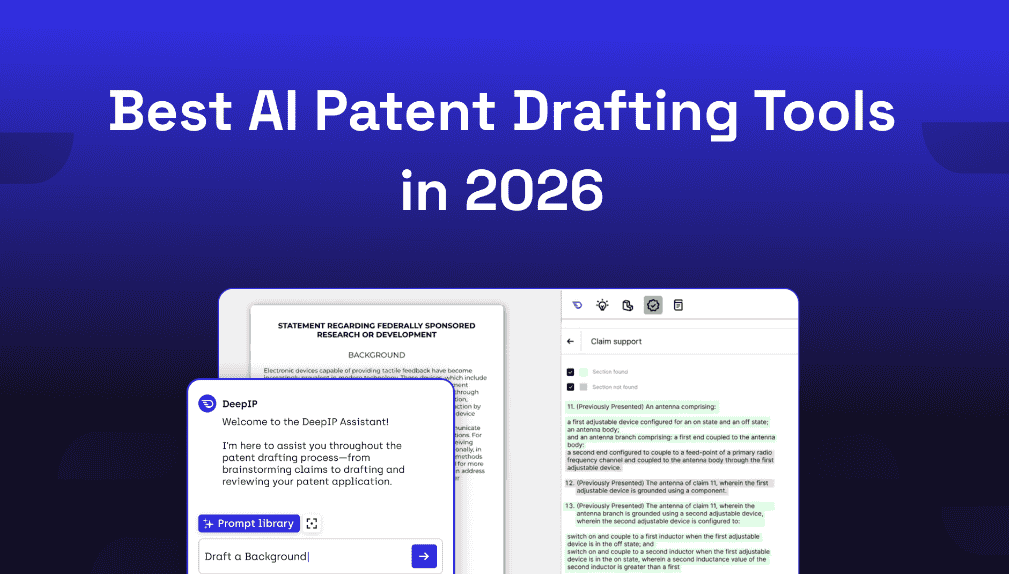
ClaimMaster is the established Microsoft Word Plugin for Automated Patent Proofreading and Error Detection, giving solo practitioners and small firms strong claim numbering validation, antecedent basis checking, and office action shell generation at a lower price point than enterprise AI platforms. It handles rule-based automation well but is not designed for generating new claim language at the level of a generative drafting engine. Patlytics consolidates prior art search, claim drafting, and portfolio analytics into one platform, though final drafts still move to Word through a browser workflow rather than a Word-native environment.
Solve Intelligence delivers AI-Assisted Claim Drafting with Real-Time Collaboration, claim dependency mapping, and automated consistency checks that cut manual review burden, but its specification drafting capabilities are built around a cloud-based interface rather than a Word add-in, making it a less natural fit for firms where workflow continuity inside Word is a hard requirement. WunderIP acts as a Microsoft Word-Centric Workflow Optimizer through Patent-Specific Templates, formatting automation, and AI add-in guidance aligned to patent application conventions, though it functions as a workflow enhancement layer rather than a full generative AI drafting engine. Idea2PatentAI generates high volumes of early-stage filings efficiently for inventor clients, optimized for the provisional application structure, but stops short of complex non-provisional drafting, office action response generation, and full prosecution lifecycle management.
Which AI Tools Help Most With Office Action Responses?
Deep IP and IP Author lead for office action responses and active prosecution workflows, combining examiner analytics, docketing compliance, and claim-mapping tools on the attorney-control axis that most vendors ignore. The practical reason this matters: the average first-action pendency at the USPTO runs roughly 16 months, which means training data for any model trained in 2025 is well over a year stale by the time the first office action arrives. A confident-sounding output built on that lag carries real liability if the MPEP section cited was amended after the model’s last update.
Deep IP delivers Automated USPTO Rejection Analysis with Prior Art Validation, surfacing current USPTO examination guidance and providing automated rejection breakdowns as a structured starting point for analytical throughput. It does not do nuanced legal argument construction or claim differentiation strategy automatically; it creates the foundation that an attorney builds from. IP Author captures invention details through an inventor-attorney interview process, auto-generates figures and flowcharts, and uses approval-rate data from the assigned examiner to steer argument structures, making it well suited to high-volume practices that want data-driven prosecution strategy without heavy manual research.
Patlytics provides End-to-End AI Platform coverage, connecting office action responses, claim analysis, and portfolio-level insights for teams running diverse portfolios under one AI layer. The trade-off is breadth over depth: individual features like prior art depth fall below specialist tools. Questel AI Assistant adds Prosecution Workflow Automation with team collaboration, task assignment, and audit trails, backed by established patent database infrastructure, though its enterprise orientation and pricing keep it out of reach for solo practitioners and small boutique firms. Clarivate CPA Global handles Global Patent Prosecution Deadline and Docketing Compliance across multiple jurisdictions and multi-country prosecution chains with AI-assisted compliance features, but it is best understood as a docketing and compliance platform rather than an argument-drafting tool.
Which Prior Art Search Tools Find What Keyword Search Misses?
The prior art search tools that find what keyword search misses are those built on semantic similarity, graph-based retrieval, and citation-network analysis, because keyword searches function as a retrieval layer that is structurally biased toward the cheapest to access rather than the most relevant. An attorney running fifty Boolean permutations with the relevant CPC code can still miss a Japanese utility model that uses different terminology for the same technical concept, and that document may be exactly what a USPTO examiner cites in a first office action.
IPRally searches at the graph and concept level rather than through claim-language matching or Boolean permutations, mapping technical-concept relationships across CPC codes to surface what conventional tools leave buried. Ambercite uses citation-network analysis to find patents that are structurally connected through citation families, reaching prior art that shares no vocabulary with the claims draft. GreyB X-Ray combines Deep Prior Art Search with Human Expert Augmentation for high stakes matters — IPR proceedings and high-value licensing disputes — where the result must be defensible and expert-reviewed; it includes non-patent literature but carries higher cost and longer turnaround. DeepIP’s Patent Search Tool offers relevance ranking that surfaces the most dangerous prior art references first, helping prosecution teams prioritize quickly across downstream patent analysis contexts without sliding into litigation-grade invalidation searches.
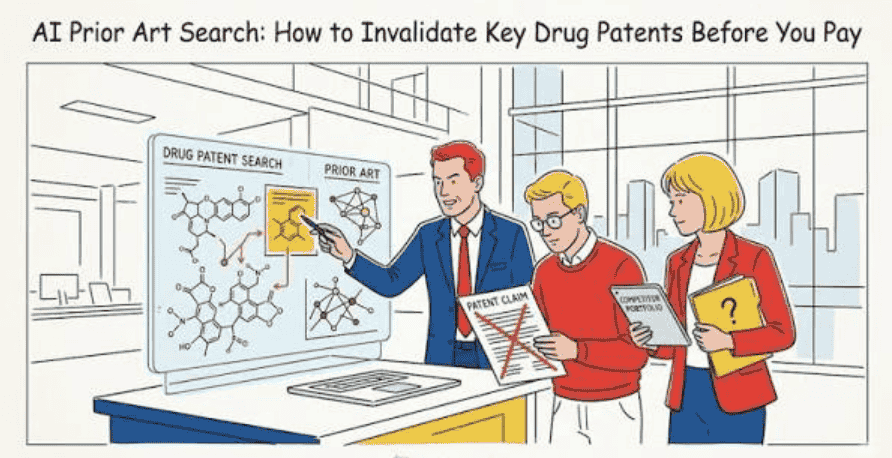
PatentScan finds terminology overlap and catches cases where domain-specific language causes keyword searches to underperform. Patently groups results into conceptual similarity clusters and a visual-first interface that works well for briefing clients and building claim charts. Graph Transformer Patent Search pulls from arXiv and uses research-grade graph-based prior art retrieval across citation networks and technological lineage, going beyond pure semantic search into methods that next-generation patent AI tools and sophisticated in-house teams are beginning to adopt.
One point I stress to solo practitioners: search quality is an upstream risk-control decision. The global novelty standard requires checking globally, across jurisdictions, languages, and publication types. Tools with only visual and keyword-based tools or 3D map-based patent visualizations serve as search aids, not as professional-grade retrieval meeting legal evidentiary standards. The prior art must satisfy preponderance of the evidence in prosecution context, which means obviousness is a legal-reasoning problem, not a retrieval one. The search layer finds the reference; the legal-reasoning layer interprets claim scope, analogous art doctrine, and obviousness standards against statute and regulation.
What Should High-Volume Filers Use for Specifications and Figures?
High-volume patent filers need tools that separate specification, figure, and embodiment automation from prosecution support, because the common assumption that one platform generates everything fast enough is wrong. Filing volume and throughput pressure at the USPTO create demand for generation-focused platforms, but those same pressures create hidden quality debt that appears as office actions later, when Patent Center is already clunky and slow to navigate.
PatentPal automates generation of specifications, flowcharts, alternative embodiments, and sections from base claims, optimized for high-volume filing throughput rather than bespoke, attorney-customized drafting. DeepIP handles End-to-End Patent Drafting with Figure Generation, including AI-generated patent drawings with auto-synced reference numerals and clean line art meeting USPTO and EPO standards, converting rough sketches to formal figures efficiently for software and mechanical inventions in specialized engineering domains, though complex CAD-level drawings still need human review. Patently Create goes further with an Integrated Drawings Editor and Claim-Linked Labels, extracting parts directly from claims and auto-generating flow and sequence diagrams multimodally, keeping the parts list and figures in sync to avoid switching between Visio, Figma, and other drafting tools.
Questel AI Drafting targets Enterprise IP Teams with 40–60% time savings in draft generation and optimization, plus multilingual support for global patent office compatibility across international PCT portfolios. The trade-off is enterprise pricing and implementation complexity that price out boutique IP firms and solo practitioners. Solve Intelligence positions claims strategically in competitive technology sectors such as semiconductors and biotech by pairing AI Claim Drafting with Prior Art Awareness and reliable database access, though attorney review is needed to calibrate claim scope for the specific matter. Specifio attacks Automated Specification Generation from Structured Claims, producing detailed description, embodiments, and summary sections from a provided claim set, which suits filers who draft claims first and need to build the specification quickly without sacrificing technical accuracy in novel technology areas.
ClaimMaster provides Automated Specification Consistency Checking for consistency between claims, specification, and drawings, catching antecedent basis errors, undefined terms, and figure reference mismatches before filing as a pre-filing quality control layer that reduces office actions and rejection rates. It works best as a complement to other drafting software rather than a standalone. Black Hills IP covers Docketing and Portfolio Management with AI-assisted drafting capabilities, prosecution tracking, and deadline management for corporate IP departments that need an integrated docketing hub more than they need a specialized drafting AI. For firms that generate specifications and embodiment sections at volume, Patentext offers a practitioner grounding through its editorial approach and real-world patent attorney input, though it lacks deep enterprise integrations and figure-generation capabilities at the same level.
Why Is Source-Verified Legal Research the Missing Layer in Patent AI?
Source-verified legal research is the missing layer in patent AI because the core trust gap is not in claim structure or prosecution mechanics — it is in the legal reasoning underneath those outputs, specifically statutory interpretation, obviousness doctrine, and claim construction standards that must trace to verified primary sources. Developers have repeatedly invested in prior art retrieval and drafting interfaces, but the lack of reliable prior-art discovery paired with unverified legal reasoning is a structural problem that a better language model alone cannot fix.
Stanford HAI’s 2024 benchmarking research found that legal AI models hallucinate in 1 out of 6 or more queries even with domain specialization. A fabricated MPEP citation committed to the prosecution record does not surface as an error until multiple office action rounds later, by which point the argument is built on a shaky foundation and the firm faces downstream prosecution debt. The cost is not just drafting time: it is the difference between a granted patent and a pending application grinding through avoidable rejections.
The Prior Art Discovery Gap compounds this. A prior art search that relies on curated patent corpora without exhaustive coverage of granted patents, related filing families, published applications, and non-patent literature delivers confident output that stops exactly where the examiner will not. Prior art gaps discovered late generate disproportionate prosecution costs, turning an obviousness rejection that a thorough pre-filing search would have caught into a multi-round record problem. Source-verified research changes this dynamic: catching a reference when it is cheapest to change — at the first claim set stage — costs far less than addressing it after earlier office action rounds have locked in an argument.
The remedy is pairing any drafting tool with a research tool that connects to verified databases including Cornell LII, daily-updated PACER filings, and the Federal Register, and that produces independently confirmable citations rather than confident-sounding prose. That combination gives prosecution decisions an auditable chain from legal reasoning back to primary authority, so the research record reflects confirmed coverage rather than assumed coverage. SOC 2 Type II, ISO 27001, and ISO 42001 together represent a certification combination that few legal AI platforms simultaneously hold, and that gap in the market means most firms are currently carrying hallucination risk without a systematic way to detect it before filing.
How Should Solo and Small-Firm Attorneys Choose Patent AI Software?
Solo and small-firm attorneys should choose patent AI software using a four-variable decision framework built around primary tech domain, weekly filing volume, budget ceiling, and tolerance for AI output without a traceable primary-source verification step. The ABA Legal Technology Survey Report 2024 confirms that solo and small-firm attorneys face distinct tool-selection pressures that a standard enterprise feature table cannot resolve.
The core tension is cost accessibility against proportional liability exposure. A solo attorney carries malpractice risk personally without multi-attorney review loops, so verifiability infrastructure — the ability to trace every surfaced argument to a confirmable primary source — matters more per dollar than it does at a firm with redundant review. Risk tolerance is the variable that feature tables most consistently underweight. An authoritative-sounding output with no traceable primary-source citations looks the same as a verified one until prosecution goes wrong.
The table below translates the framework into actionable categories:
| Attorney Profile | Primary Need | Recommended Tool Category | Avoid |
| Solo mechanical, ≤40 apps/yr | Prior art + verified legal research + drafting | Search tool + source-verified research layer + Word-native drafter | Enterprise lifecycle suite |
| Boutique biotech/chemistry | Structural search + data-handling controls | Semantic/graph search tool + SOC 2-certified research platform | High-volume throughput automation |
| In-house, small company | Docketing integration + cost predictability | IP management platform with docketing module | Research-only or drafting-only tools |
| High-volume filer, >100 apps/yr | Specification + figure automation | Throughput automation tool + post-filing research layer | Solo-tier prior art tools |
The first step when using this table is to match your row, then apply the cost-tier filter before opening any demo. ABA’s 2024 data confirms that solo and small-firm attorneys evaluate technology primarily through a cost-accessibility lens, which means the demo order matters: a premium tool demoed first anchors price expectations incorrectly. Start with the tools in your budget tier and work outward only if they fall short on the four variables above. Boutique biotech firms with high claim complexity need structural search capability and data-handling controls more than throughput; in-house counsel at a smaller company need docketing integration and cost predictability more than raw drafting speed.
What Should Attorneys Verify Before Relying on AI Patent Output?
Attorneys should verify that every AI-generated patent output traces to a confirmable primary source before relying on it in prosecution, because fluent output is a structurally misleading signal that can mask a fabricated MPEP citation compounding silently across multiple office action rounds. Treating the output as a first draft rather than a deliverable is the right mental model, not a precaution.
Domain specialization in a patent AI tool reduces but does not eliminate hallucination risk. The prosecution record is permanent, and an unverifiable output that enters the record becomes expensive at the most expensive stage to fix — amendment and appeal, not drafting. A research layer that traces every assertion to a confirmable primary source such as Cornell LII, daily PACER, and the Federal Register converts verification burden from a billable-hour drain into a structured step that can be audited and billed transparently. Solo practitioners carry this burden alone, without multi-attorney review loops to catch what the AI got wrong, so the cost-of-entry requirement for a source-verified output layer is actually lower for a solo practice than it appears — the alternative is absorbing the cost of unverifiable output personally, through malpractice exposure rather than through subscription fees.
Free up attorney time for judgment calls by letting AI handle structural drafting, but insist that any AI tools used in prosecution produce output that is independently open and confirm-able against primary authority. That is not a premium feature; it is the verification hours converted into a process. Make source verification and primary authority a cost-of-entry requirement before any tool enters the production workflow, regardless of practice volume, budget, or risk tolerance.
Is a General-Purpose AI Tool Riskier Than Patent-Specific Software?
Yes, a general-purpose AI tool is riskier for patent work than patent-specific software because general-purpose large language models hallucinate legal citations at rates as high as 69% in some studies, producing authoritative-sounding prose with no traceable legal basis, and they carry none of the Patent-specific tools safeguards around verifiability, primary USPTO sources, or live federal data. The danger is not that the output sounds wrong; it is that the output feels finished, triggering the trap where an attorney stops checking.
Patent-specific software is designed to log what the model produced so you can audit the output later, use logging model output tied to live USPTO data, and flag when the training dataset is months or years out of date. General-purpose tools offer none of that by default. They also carry no structured invention intake, no Patent-specific issue spotting, and no prompting for omitted embodiments or implementation details, all of which means the output quality depends entirely on the user’s own patent knowledge and prompting discipline.
For the check the AI’s work after it drafts something step, the difference is structural: patent-specific tools tell you what to check; general-purpose tools do not. A fabricated MPEP citation or a prior art reference introduced at the drafting stage is far harder and more expensive to fix once it surfaces later in prosecution. Solo practitioners who rely on general-purpose tools without a post-hoc verification step carry the full professional liability personally, with no associate to catch the error. Out-of-date context compounds this: the average first-action pendency of roughly 16 months means the first office action arrives in a wrong examination environment compared to what a static historical snapshot model was trained on, making current examination conditions invisible to the tool.
Low-risk patent AI tools distinguish themselves by providing citation verification against primary sources. High-risk patent AI tools produce confident prose and stop there. The choice between them is also a choice about patent documents inside Word: a browser-based AI tool that requires a transfer to Word introduces an untracked mutation point where formatting shifts and claim numbering drifts without any record of the change, adding hallucination risk to an already fragile handoff.
Which AI Patent Drafting Tool Is Best for Each Use Case?
The best AI patent drafting tool depends on who is using it and what problem they are solving, which is the most important takeaway from this entire guide.
- Best AI Patent Drafting Tool for Inventors & Non-Attorneys: Idea2PatentAI — guides users who need to identify what information should be disclosed before drafting begins, with a transparent, published pricing model and a guided self-service patent drafting option built for the non-attorney.
- Best Overall AI Patent Drafting Platform for Patent Attorneys: Solve Intelligence — the top choice among attorney-focused AI patent drafting platforms and the most capable for interactive patent application drafting, invention harvesting, and full patent workflows from a single environment.
- Best European-Based AI Patent Drafting Platform: DeepIP — strongest for Word-centric workflows and U.S. and European patent work, with the broadest jurisdiction sets and enterprise-grade security that satisfy professional control demands.
- Best for Broader Patent Intelligence: Patlytics — the right pick when you need both a sophisticated productivity platform and patent intelligence in one subscription, particularly for Am Law 100 and Fortune 500 IP operations.
- Best Quality-Control Platform: Patent Bots — the best effective drafting process support tool for everyday patent practitioners who need proofreading, IDS prep, and prosecution utilities without rebuilding their workflow.
- Best Proofreading Tool: ClaimMaster — delivers the most thorough Word-based proofreading and drafting automation for firms that need deep claim analysis, document generation, and customization without switching out of Microsoft Word.
- Best Specialized Claim-to-Specification Automation Tool: PatentPal — the narrowest and most efficient tool for **generating specification.